Introduction
TL;DR The AI coding assistant market exploded in early 2024. Cognition Labs launched Devin with massive fanfare. The proprietary AI software engineer promised to revolutionize development. Weeks later, the open-source community responded with OpenDevin.
Developers worldwide debated which approach serves teams better. Proprietary systems offer polish and corporate support. Open-source alternatives provide transparency and customization. OpenDevin vs Devin represents more than tool comparison. This debate shapes the future of AI-assisted software development.
Your team needs to understand the trade-offs clearly. Both platforms aim to automate coding tasks intelligently. Each takes fundamentally different approaches to the challenge. Capabilities, limitations, and philosophies diverge significantly. Making informed choices requires examining both options thoroughly.
The stakes extend beyond individual productivity gains. Companies invest heavily in development infrastructure. Lock-in risks affect long-term flexibility. Community support determines sustained viability. Your technology decisions ripple through organizations for years.
Table of Contents
Understanding Devin: The Proprietary Pioneer
Cognition Labs introduced Devin in March 2024 publicly. The startup raised substantial venture capital funding. Marketing positioned Devin as the first AI software engineer. Demos showed impressive autonomous coding capabilities. Industry attention focused intensely on the product.
Devin operates as a fully managed cloud service. Users access the platform through web interfaces. No installation or configuration requirements exist. Cognition handles all infrastructure and updates. Your team simply signs up and starts working.
The system tackles complete engineering tasks independently. Devin plans approaches to coding problems autonomously. Code generation happens across multiple files. Testing and debugging occur without human intervention. Deployment preparation completes automatically when successful.
Real-world performance exceeded initial expectations sometimes. Devin solved problems on freelancing platforms. Simple web applications emerged from natural language descriptions. Bug fixes happened through automated debugging. Certain task categories showed genuine competence.
Pricing remains enterprise-focused and undisclosed publicly. Early access programs limited availability significantly. Waitlists restricted broader adoption initially. Enterprise contracts determine actual costs. OpenDevin vs Devin comparisons face pricing opacity.
Introducing OpenDevin: The Community Response
OpenDevin launched weeks after Devin’s announcement. The All Hands AI team initiated development. Open-source contributors joined rapidly from worldwide. Transparency and accessibility drove the project philosophy. Community-driven development shaped every decision.
The architecture mirrors Devin’s conceptual approach. Autonomous agents tackle software engineering tasks. Planning, execution, and verification happen systematically. Multi-step workflows coordinate tool usage. Your development process gains AI augmentation.
OpenDevin embraces complete transparency fundamentally. Source code sits publicly on GitHub. Development discussions happen openly. Anyone contributes improvements freely. Community governance guides project direction. The contrast with proprietary Devin feels stark.
Installation requires more technical knowledge initially. Docker containers simplify deployment substantially. Configuration files need customization for environments. API keys come from users directly. Self-hosting provides complete control. OpenDevin vs Devin differs greatly in deployment.
Model flexibility distinguishes OpenDevin significantly. Users choose underlying language models freely. OpenAI, Anthropic, and local models all work. Cost control happens through model selection. Experimentation with different models costs nothing extra.
Core Capabilities Comparison
Both systems handle similar fundamental tasks. Code generation from natural language works. File editing across codebases happens. Terminal command execution enables testing. Web browsing supports research. The capability overlap seems substantial initially.
Devin excels at polish and reliability. The proprietary system underwent extensive testing. Edge cases receive attention through QA processes. User experience design shows professional touch. Error messages guide users helpfully. Corporate resources enable thorough refinement.
OpenDevin prioritizes extensibility and customization. Plugin architecture supports community additions. Custom tools integrate through documented interfaces. Workflow modifications happen through configuration. Developer flexibility exceeds Devin’s constraints. OpenDevin vs Devin reveals different priorities.
Devin’s reasoning capabilities remain proprietary secrets. The underlying model architecture stays hidden. Prompt engineering techniques remain confidential. Performance optimizations occur behind closed doors. Users trust without verification ability.
OpenDevin exposes reasoning processes completely. Agent thoughts appear in logs. Decision-making logic sits in code. Contributors improve reasoning systematically. Transparency enables understanding and enhancement. Your team sees how solutions emerge.
Performance Benchmarking Results
SWE-bench provides standardized evaluation metrics. The benchmark tests real GitHub issue resolution. Both systems tackle identical programming challenges. Success rates indicate practical capabilities. OpenDevin vs Devin performance varies across categories.
Devin achieved approximately 14% success initially. The proprietary system solved specific issue types. Web development tasks succeeded more often. Complex algorithmic problems challenged Devin. Performance improved through undisclosed updates.
OpenDevin reached similar success rates gradually. Early versions scored around 12% initially. Rapid iteration improved results quickly. Community contributions accelerated progress. Performance parity emerged within months.
Task complexity dramatically affects success rates. Simple bug fixes work more reliably. Feature additions prove more challenging. Refactoring tasks show mixed results. Architectural changes rarely succeed completely. Both systems struggle with complexity.
Human oversight remains essential currently. Automated solutions require verification always. Testing catches errors regularly. Code review identifies logic problems. Full autonomy remains aspirational presently. Your developers stay critical.
Cost Analysis and Economics
Devin pricing lacks public transparency entirely. Enterprise contracts determine actual costs. Per-seat licensing seems likely. Usage-based pricing may apply. Minimum commitments probably exist. Budget planning becomes difficult without clarity.
OpenDevin costs depend on infrastructure choices. Self-hosting requires server expenses. API costs come from model providers. Compute resources scale with usage. Total costs remain controllable and predictable. OpenDevin vs Devin economics favor transparency.
Language model selection impacts OpenDevin expenses significantly. GPT-4 delivers better results expensively. GPT-3.5 provides economical baseline performance. Local models eliminate API costs entirely. Your budget determines capability trade-offs.
Engineering time factors into total ownership costs. OpenDevin requires initial setup effort. Configuration demands technical knowledge. Troubleshooting needs developer time. Devin minimizes setup through managed service. Convenience carries hidden costs.
Long-term cost trajectories differ substantially. Devin pricing likely increases with features. Vendor lock-in reduces negotiating power. OpenDevin costs decrease through optimization. Community improvements benefit everyone freely. Economic models diverge fundamentally.
Customization and Extensibility
Devin offers limited customization options. The proprietary platform restricts modifications. Users work within predetermined workflows. Feature requests funnel through company roadmaps. Your specific needs may never get addressed.
OpenDevin enables unlimited customization freely. Source code modifications happen directly. Custom agents implement specialized behaviors. Tool integrations follow documented patterns. Workflow adaptations suit unique requirements. OpenDevin vs Devin extensibility favors openness.
Plugin ecosystems differ in maturity levels. Devin plugins come from Cognition primarily. Third-party integrations need company approval. The marketplace remains controlled centrally. Selection stays limited deliberately.
OpenDevin encourages community plugin development. Anyone contributes new capabilities. Sharing happens through public repositories. Quality varies across contributions. Experimentation costs nothing. Innovation flourishes through openness.
Domain-specific adaptations matter for enterprises. Finance requires compliance-aware coding. Healthcare needs HIPAA-conscious development. Manufacturing demands specialized knowledge. Custom training and tools enable specialization. Your industry needs unique solutions.
Privacy and Security Considerations
Devin processes code on Cognition’s infrastructure. Proprietary codebases leave your environment. Intellectual property travels to external servers. Data residency becomes uncontrollable. Security teams face difficult assessments.
Enterprise security requires careful evaluation. Data encryption protects transmission. Access controls limit exposure. Audit logs track activities. Third-party security audits verify practices. Trust remains necessary fundamentally.
OpenDevin enables complete data control. Self-hosting keeps code internal entirely. API calls to language models need consideration. Local model deployment eliminates external dependencies. Your security team governs completely.
Compliance requirements often mandate self-hosting. GDPR restricts data transfers. HIPAA demands strict controls. Government contracts require sovereignty. OpenDevin vs Devin compliance favors self-hosting.
Vulnerability disclosure follows different models. Devin security issues stay private. Responsible disclosure happens eventually. Public scrutiny remains limited. Trust depends on company practices.
OpenDevin vulnerabilities appear publicly immediately. Community review identifies issues quickly. Fixes deploy rapidly through collaboration. Transparency enables informed decisions. Your security posture improves through visibility.
Community and Support Ecosystems
Cognition provides enterprise support contracts. Dedicated account managers assist customers. Support tickets receive priority handling. Documentation comes from professional writers. Training programs onboard teams systematically.
Community support for Devin remains limited. User forums may exist privately. Knowledge sharing happens through channels. Community contributions stay minimal. Official channels dominate information flow.
OpenDevin thrives on community collaboration. GitHub discussions answer questions publicly. Discord channels provide real-time help. Contributors assist users generously. Knowledge accumulates in public. OpenDevin vs Devin community dynamics differ drastically.
Documentation quality varies across projects. Devin documentation appears polished professionally. Screenshots and videos guide users. Examples cover common scenarios. Professional design aids comprehension.
OpenDevin documentation evolves organically. Community members contribute explanations. Quality improves through collaboration. Gaps exist in coverage sometimes. Contributions accelerate improvement constantly.
Integration Capabilities
Devin integrates with popular tools selectively. GitHub connectivity works smoothly. Issue tracking systems connect. CI/CD pipelines may integrate. The company controls integration priorities. Your specific tools might wait indefinitely.
API access determines integration flexibility. Devin APIs remain undocumented publicly. Integration happens through official channels. Custom integrations need company cooperation. Flexibility stays limited deliberately.
OpenDevin provides extensive integration options. REST APIs enable custom connections. Webhook support triggers workflows. Plugin architecture welcomes additions. Your development environment adapts easily. OpenDevin vs Devin integration favors openness.
Development tool ecosystems differ substantially. Devin works within predetermined environments. IDE support depends on company roadmaps. New tools await official implementation. Innovation happens centrally.
OpenDevin adapts to any environment. Local IDE integration happens through plugins. Cloud development environments work. Custom setups receive community support. Environment flexibility stays unlimited.
Development Velocity and Iteration Speed
Devin updates happen on vendor schedules. New features arrive periodically. Bug fixes depend on company priorities. Your urgent needs may wait. Release cadence follows corporate planning.
Feature requests enter company backlogs. Prioritization happens internally. Roadmap visibility remains limited. Customer influence varies with contract size. Small users lack bargaining power.
OpenDevin evolves through community contributions. Multiple developers push improvements daily. Bug fixes deploy within hours sometimes. Feature velocity exceeds proprietary development. Innovation happens continuously. OpenDevin vs Devin iteration speed favors openness.
Experimental features appear rapidly. Community members try novel approaches. Failures get abandoned quickly. Successes integrate immediately. Your team benefits from experimentation.
Version control transparency aids planning. GitHub shows development activity. Upcoming features appear in branches. Your team anticipates changes. Surprises rarely occur.
Reliability and Stability
Devin stability comes from professional testing. QA processes catch bugs systematically. Staging environments verify updates. Production releases undergo validation. Corporate resources ensure quality.
Uptime guarantees appear in SLAs. Service commitments bind Cognition legally. Compensation may apply for outages. Reliability metrics get monitored. Enterprise expectations demand stability.
OpenDevin stability varies with deployment. Self-hosting control enables customization. Bugs appear in releases sometimes. Community testing catches issues. Stability improves through participation. OpenDevin vs Devin reliability depends on implementation.
Rolling back problematic updates happens easily. Version pinning maintains stability. Your team controls update timing. Critical systems stay protected. Flexibility beats forced updates.
Production readiness requires effort. Monitoring implementation needs planning. Error handling demands attention. Your infrastructure team manages deployment. Control enables reliability ultimately.
Real-World Use Cases
Devin serves enterprise customers primarily. Large companies afford premium pricing. Corporate support justifies costs. Mission-critical applications get attention. Scale economies make sense.
Startups use Devin for rapid prototyping. MVP development accelerates through automation. Limited engineering teams multiply output. Speed to market improves. Investor demos impress easily.
OpenDevin serves diverse user bases. Individual developers experiment freely. Small teams deploy economically. Academic researchers study capabilities. Open access enables broad adoption. OpenDevin vs Devin accessibility differs fundamentally.
Educational institutions use OpenDevin extensively. Students learn AI-assisted development. Research projects explore possibilities. Teaching materials reference openly. Knowledge spreads without barriers.
Consulting firms customize OpenDevin deeply. Client-specific modifications happen. Specialized workflows emerge. Competitive advantages develop. Proprietary enhancements stay private.
Limitations and Challenges
Both systems struggle with complexity. Architectural decisions often fail. Business logic requires human expertise. Domain knowledge lacks in models. Oversight remains mandatory always.
Devin limitations stay somewhat opaque. Failure modes emerge through usage. Documentation warns about boundaries. Exact capabilities remain unclear. Marketing exceeds reality sometimes.
OpenDevin limitations appear explicitly. GitHub issues document problems. Community discusses challenges openly. Workarounds emerge collaboratively. Transparency enables realistic expectations. OpenDevin vs Devin honesty favors openness.
Context window constraints affect both. Long codebases exceed limits. Historical context gets truncated. Relevance decreases with distance. Architectural understanding suffers.
Testing automation needs improvement universally. Generated tests lack comprehensiveness. Edge cases go uncovered. Integration testing rarely happens. Quality assurance stays human responsibility.
The Future Trajectory
Devin development follows corporate strategy. Venture capital expectations drive decisions. Profitability goals influence features. Market positioning determines priorities. Your needs align with business interests sometimes.
OpenDevin evolves through community needs. Contributors scratch personal itches. Diverse use cases drive improvements. No single agenda dominates. Innovation happens organically. OpenDevin vs Devin futures diverge.
Competitive dynamics shape both projects. Devin competes against GitHub Copilot. OpenDevin competes through differentiation. Market forces accelerate development. Users benefit from competition.
Standardization efforts may emerge eventually. Interoperability could improve. Common protocols might develop. Ecosystem maturation takes time. Industry collaboration benefits everyone.
Regulatory attention looms potentially. AI coding raises liability questions. Copyright issues need resolution. Safety concerns demand attention. Governance frameworks will emerge.
Making Your Decision
Team size influences optimal choice. Large enterprises afford Devin’s premium. Small teams benefit from OpenDevin economics. Individual developers prefer free access. Your resources determine viability.
Technical capability matters significantly. DevOps expertise enables OpenDevin deployment. Less technical teams need managed services. Skills assessment guides decisions. OpenDevin vs Devin matches capabilities.
Security requirements often decide. Regulated industries need self-hosting. Compliance demands control. Risk tolerance varies across organizations. Your industry determines constraints.
Budget flexibility affects possibilities. Fixed budgets favor predictable costs. Usage-based pricing suits variability. Your financial planning guides choices. Economic models differ fundamentally.
Long-term strategy considers lock-in risks. Vendor dependency creates vulnerability. Open standards enable flexibility. Your exit strategy needs consideration. Future-proofing protects investments.
Frequently Asked Questions
Is OpenDevin truly as capable as Devin?
Performance benchmarks show comparable success rates. OpenDevin achieves similar SWE-bench scores. Both systems solve approximately 12-14% of tasks. Specific strengths differ across categories. Devin may excel at polish and reliability. OpenDevin offers superior customization. Your use case determines which matters more. Real-world testing reveals practical differences. Neither achieves full autonomy currently.
Can I use OpenDevin commercially without restrictions?
OpenDevin uses MIT license permitting commercial use. You modify and deploy freely. Revenue generation faces no restrictions. Attribution requirements stay minimal. Commercial deployment works legally. Your business benefits without licensing fees. Enterprise adoption faces no barriers. Legal clarity enables confident deployment.
How much technical expertise does OpenDevin require?
Basic Docker knowledge suffices for deployment. Command-line familiarity helps configuration. API key management needs understanding. Troubleshooting requires debugging skills. Less technical teams face steeper curves. Managed alternatives may suit better. Your team capabilities determine feasibility. Learning investment pays off long-term.
Will Devin’s pricing become public eventually?
Enterprise software pricing often stays private. Custom contracts serve large customers. Standard pricing might emerge later. Market maturity could force transparency. OpenDevin vs Devin economics remain opaque currently. Your procurement team must inquire directly. Negotiation may influence final costs.
Can OpenDevin work with proprietary codebases securely?
Self-hosting keeps code entirely internal. Local deployment eliminates external transmission. API calls to LLM providers need consideration. Local model options exist completely. Your infrastructure team controls security. Compliance requirements become manageable. Private deployment satisfies most policies.
How often does OpenDevin receive updates?
GitHub shows daily development activity. Contributors push improvements continuously. Major releases happen monthly approximately. Bug fixes deploy within hours sometimes. Community velocity exceeds corporate development. Your deployment controls update timing. Stability comes through version pinning.
Does using AI coding tools make developers obsolete?
Current capabilities augment rather than replace. Human oversight remains mandatory always. Complex reasoning needs developers. Business context requires expertise. Creativity drives innovation uniquely. These tools multiply productivity instead. Your role evolves rather than disappears. Job security improves through adoption.
What happens if Cognition Labs shuts down?
Devin access disappears immediately. Historical data may become inaccessible. Migration becomes urgent necessity. Vendor lock-in creates vulnerability. OpenDevin continues regardless eternally. Community maintains code indefinitely. Your investment stays protected. Open-source provides insurance against abandonment.
Read More:-Optimizing Token Usage: How to Save 40% on Your OpenAI Bill
Conclusion

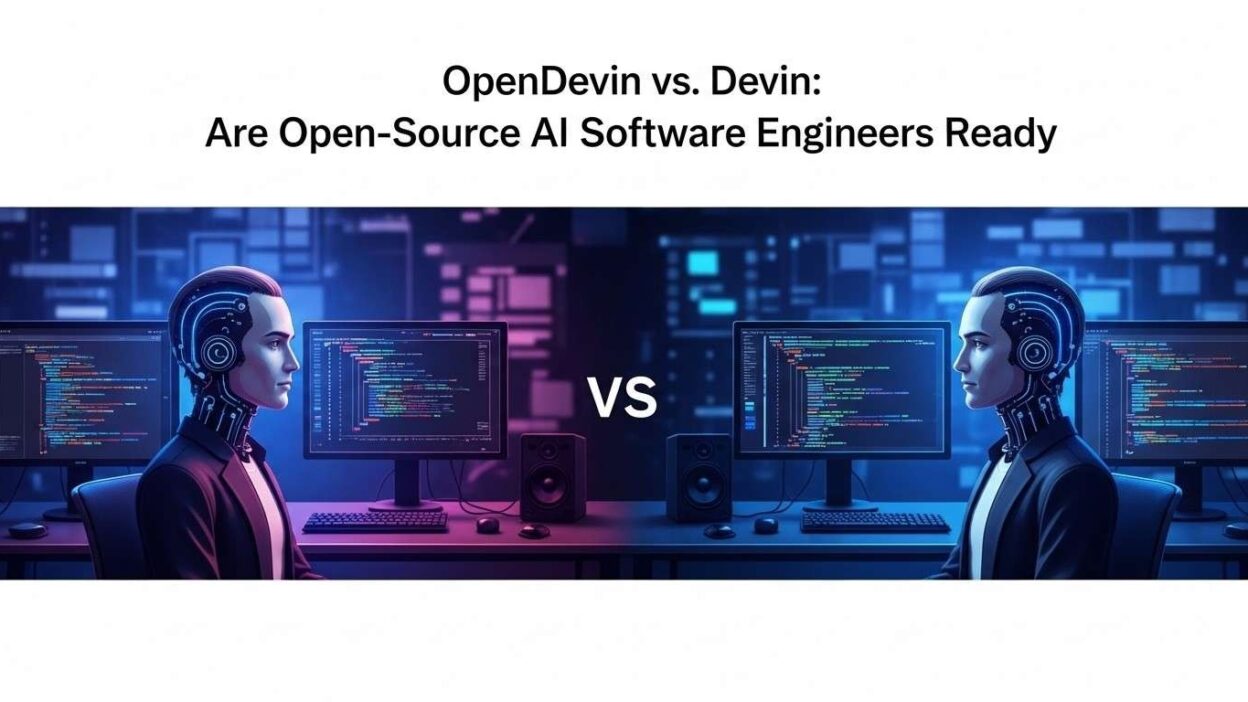
OpenDevin vs Devin encapsulates the open versus proprietary debate. Cognition Labs offers polish and convenience. The All Hands AI community provides transparency and control. Both approaches deliver genuine value differently.
Devin excels through professional development. Corporate resources enable thorough refinement. Enterprise support assists adoption. Managed infrastructure simplifies deployment. Premium pricing reflects comprehensive service.
OpenDevin wins through community innovation. Rapid iteration accelerates improvement. Unlimited customization solves unique problems. Cost control enables broad access. Transparency builds trust fundamentally.
Neither system achieves full autonomy currently. Human oversight remains essential always. Code review catches errors regularly. Testing verifies functionality continuously. AI augments rather than replaces developers.
The choice depends on organizational context. Enterprise needs may justify Devin costs. Startup agility benefits from OpenDevin flexibility. Individual exploration favors free access. Your situation determines optimal selection.
Technical capabilities guide deployment decisions. DevOps expertise enables OpenDevin self-hosting. Less technical teams need managed services. Skills honestly assessment prevents problems. Infrastructure readiness matters significantly.
Security requirements often prove decisive. Compliance mandates affect possibilities. Data sovereignty demands consideration. Risk assessment guides choices. Your industry regulations constrain options.
Both platforms will improve substantially. Competition drives innovation mutually. User feedback shapes development. Capabilities expand continuously. The field matures rapidly.
The open-source movement gains momentum steadily. Community contributions accelerate development. Collaborative innovation multiplies resources. Transparency builds ecosystem trust. OpenDevin vs Devin trajectories favor community models.
Early adoption carries inherent risks. Production deployment needs careful evaluation. Pilot programs validate capabilities. Gradual rollout reduces exposure. Your testing determines readiness.
AI software engineering represents genuine paradigm shift. Productivity gains appear achievable. Development velocity increases measurably. Cost savings emerge through automation. The future arrives incrementally.
Choose based on actual needs rather than hype. Evaluate capabilities against requirements. Test thoroughly before committing. Measure results quantitatively. Your specific context determines success.
The AI coding assistant market will consolidate eventually. Winners emerge through sustained value delivery. Community support ensures longevity. Corporate backing provides resources. Multiple viable options will coexist.
Start exploring these tools today. Experiment with both approaches. Learn strengths and limitations. Build institutional knowledge. Your competitive advantage grows through experience.
Remember that tools augment rather than replace humans. Developer judgment stays essential. Critical thinking guides usage. Creativity drives innovation. Your team remains irreplaceable ultimately.