Introduction
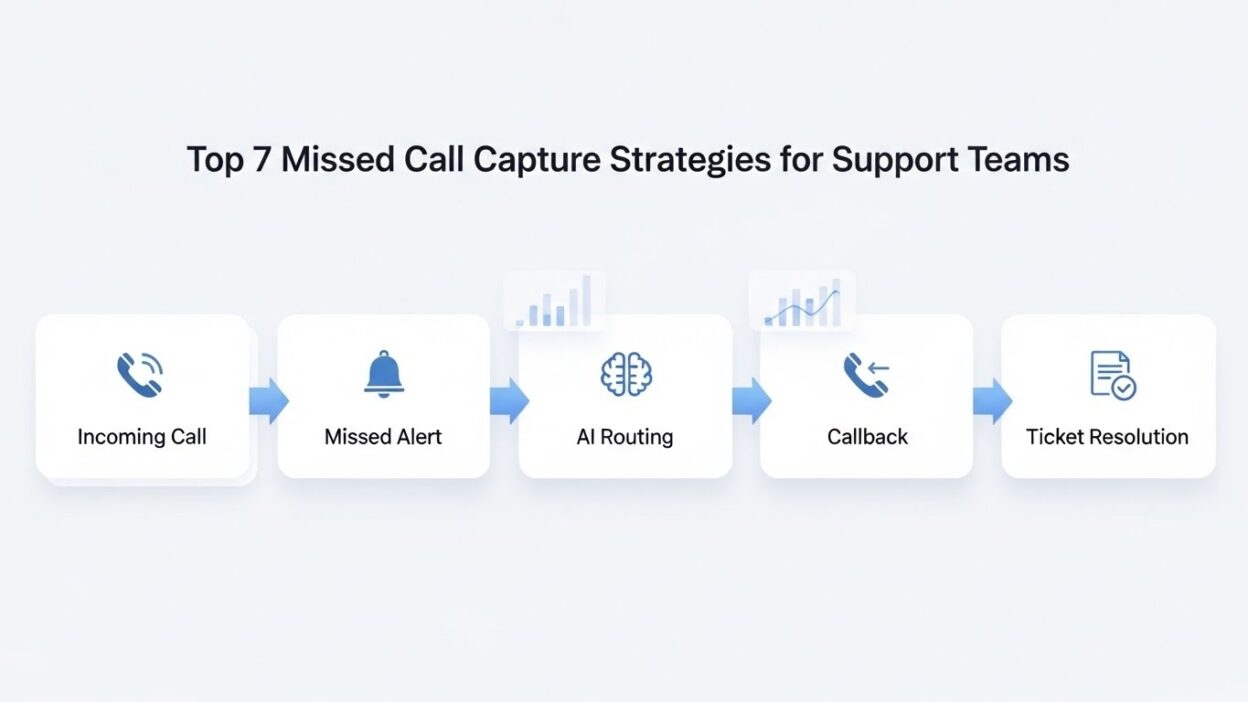
TL;DR Customers hang up after waiting on hold for too long. Your support lines drop calls during peak hours when agents reach capacity. Every missed call represents a frustrated customer who might never reach out again. These lost connections damage your brand reputation and reduce customer lifetime value significantly. Support teams need reliable systems to capture and respond to every missed call promptly. The right strategies transform abandoned calls into opportunities for building stronger relationships. Modern technology makes missed call capture for customer support both affordable and effective for organizations of any size.
Table of Contents
Understanding the Impact of Missed Calls
The True Cost of Lost Connections
Every unanswered call carries hidden costs that extend beyond immediate customer frustration. Customers who can’t reach support often abandon their purchase plans entirely. Your competitors benefit when dissatisfied callers seek alternative solutions elsewhere. Negative reviews frequently mention poor phone accessibility as a primary complaint. Support teams lose visibility into common issues when calls never connect. Revenue projections suffer when you cannot track the full volume of support demand. Implementing missed call capture for customer support helps quantify these hidden costs accurately.
Customer Expectations in Modern Support
Today’s consumers expect instant responses regardless of when they reach out. Waiting more than two minutes on hold triggers abandonment for most callers. Customers assume your business operates 24/7 even with posted business hours. Younger demographics particularly prefer texting over traditional phone conversations. Omnichannel experiences mean customers expect seamless transitions between communication methods. Your support operation must meet these elevated expectations to remain competitive. Advanced missed call capture for customer support aligns with modern customer service standards.
Measuring Missed Call Volume
Many organizations don’t realize how many calls they actually miss daily. Phone system analytics reveal abandoned calls, busy signals, and after-hours attempts. Call tracking software identifies patterns in when and why customers can’t connect. Comparing total incoming calls against answered calls exposes the gap. Customer surveys can uncover how many people tried calling before choosing another channel. Baseline measurements establish the scope of your missed call problem. Accurate metrics justify investment in missed call capture for customer support systems.
Impact on Customer Satisfaction Scores
Unanswered calls directly correlate with declining satisfaction and loyalty metrics. CSAT scores drop significantly when customers experience multiple failed contact attempts. Net Promoter Scores suffer when phone accessibility frustrates your customer base. Churn rates increase among customers who feel ignored or undervalued. First-call resolution becomes impossible when customers never reach agents initially. Support quality perceptions decline even when your actual service excellence remains high. Strategic missed call capture for customer support protects your satisfaction metrics.
Strategy One: Automated SMS Callback Systems
How SMS Callbacks Work
Automated text messaging creates immediate acknowledgment when customers can’t reach agents. The system detects missed calls and triggers instant SMS messages automatically. Text messages confirm that you received their call and will respond soon. Customers receive estimated callback times based on current queue lengths. Links within messages allow customers to schedule callbacks at their preferred times. The technology integrates with your existing phone systems without major infrastructure changes. SMS-based missed call capture for customer support delivers instant customer reassurance.
Personalizing Callback Messages
Generic automated messages feel impersonal and may not inspire customer confidence. Personalization includes using the customer’s name from caller ID or CRM data. Messages reference the specific department or product category they called about. Brand voice and tone should match your other customer communications. Including account-specific information shows you recognize them as an existing customer. Language options ensure non-English speakers receive messages they understand. Personalized approaches make missed call capture for customer support feel more human.
Setting Realistic Callback Timeframes
Overpromising callback times creates additional frustration when you miss commitments. Real-time queue analytics calculate accurate wait time predictions. Buffer time accounts for unexpected call volume spikes or agent unavailability. Different priorities receive different callback windows based on customer value or issue urgency. After-hours calls receive next-business-day commitments rather than unrealistic immediate promises. Systems automatically update customers if delays extend beyond original estimates. Honest communication strengthens your missed call capture for customer support effectiveness.
Tracking Callback Completion Rates
Measuring whether callbacks actually happen reveals system effectiveness. Analytics track what percentage of missed calls result in successful callbacks. Time-to-callback metrics show how quickly your team responds to captured contacts. Customer answer rates indicate whether your timing aligns with their availability. Abandoned callback attempts signal the need for alternative follow-up methods. Regular reporting identifies bottlenecks preventing callback completion. Performance monitoring ensures your missed call capture for customer support delivers results.
Strategy Two: Intelligent Call Queuing and Overflow Routing
Advanced Queue Management
Sophisticated phone systems hold callers in queue rather than forcing disconnections. Position announcements tell customers exactly where they stand in line. Estimated wait times help customers decide whether to stay on hold. Music or informational messages reduce perceived wait time through engagement. Callback offers let customers hang up while preserving their queue position. Priority queuing moves high-value customers ahead based on CRM data. Smart queue management minimizes the need for missed call capture for customer support.
Overflow Routing to Alternative Channels
When phone lines reach capacity, intelligent systems redirect customers automatically. Web chat invitations appear on your website for customers who just attempted calling. Email forms pre-populate with the customer’s phone number and callback request. Social media monitoring catches customers who post complaints after failed calls. Mobile apps display notifications suggesting alternative contact methods. SMS messages offer immediate text-based support when voice channels overflow. Multi-channel overflow reduces reliance on reactive missed call capture for customer support.
Geographic Call Distribution
Routing calls across multiple locations increases answered call capacity significantly. Follow-the-sun support distributes calls to teams in different time zones. Regional offices handle local customers while providing overflow support for other areas. Home-based agents absorb call volume during unexpected spikes. Cloud-based phone systems make geographic distribution technically simple. Load balancing algorithms optimize which location receives each incoming call. Distributed operations complement your missed call capture for customer support strategy.
Skills-Based Routing to Reduce Transfers
Customers who reach the wrong department often hang up rather than accepting transfers. IVR systems intelligently route calls based on customer input and history. CRM integration identifies the customer and their likely needs automatically. Technical support calls route to agents with relevant product expertise. Billing inquiries connect to agents with payment system access. Language matching connects customers with agents who speak their preferred language. Accurate initial routing prevents disconnections that would otherwise require missed call capture for customer support.
Strategy Three: Voicemail Transcription and Prioritization
Automated Voicemail-to-Text Conversion
Modern systems transcribe voicemail messages into text for faster review and response. Speech recognition technology converts audio recordings into readable transcripts. Transcripts appear in agent dashboards alongside customer information and history. Email notifications alert appropriate team members to new voicemail messages. Text format allows quick scanning to identify urgent issues requiring immediate attention. Searchability makes finding specific voicemails much easier than listening to recordings. Voicemail transcription enhances efficiency of missed call capture for customer support.
Sentiment Analysis for Urgent Issues
AI algorithms analyze voicemail content to detect frustration, anger, or urgency. Keyword detection flags messages mentioning cancellations, legal action, or competitive alternatives. Emotional tone analysis identifies customers in distress requiring immediate callbacks. Priority scoring ranks voicemails by urgency rather than just chronological order. Escalation rules automatically alert supervisors to high-priority messages. Sentiment-based routing directs different voicemail types to specialized response teams. Intelligent analysis maximizes the value of missed call capture for customer support.
Category Classification and Auto-Routing
Machine learning categorizes voicemails by topic for efficient distribution to specialized teams. Technical issues route to support engineers while billing questions go to accounting. Product-specific inquiries reach teams with relevant expertise immediately. Returns and complaints route to retention specialists with authority to resolve issues. Routine requests might trigger automated responses before human review. Classification accuracy improves over time as the system learns from agent corrections. Automated routing accelerates response times in your missed call capture for customer support system.
Response Time Commitments
Clear service level agreements define how quickly teams must respond to voicemails. Critical issues require callbacks within one hour regardless of when received. Standard inquiries receive responses within four business hours. After-hours voicemails get acknowledged immediately and addressed next business day. Automated status updates keep customers informed if responses take longer than expected. Managers receive alerts when response commitments approach deadline violations. Defined standards ensure reliability in your missed call capture for customer support processes.
Strategy Four: Self-Service Options During High Volume
Interactive Voice Response Enhancements
Modern IVR systems provide useful self-service capabilities beyond simple menu navigation. Account balance inquiries complete entirely through automated voice responses. Order status updates provide real-time tracking information without agent involvement. Appointment scheduling integrates with your calendar system for automatic booking. Password resets walk customers through security verification and system access. Bill payment processing accepts credit card information through secure voice prompts. Robust self-service reduces call volume requiring missed call capture for customer support.
Visual IVR Through Mobile Apps
Smartphone apps replace frustrating phone menus with intuitive visual interfaces. Customers select options by tapping buttons rather than listening to long menu recordings. Visual displays show wait times for different departments before customers commit to queuing. App-based authentication pulls account details automatically without security question hassles. Screen sharing enables customers to show problems to support agents when connections occur. In-app messaging provides text-based support when voice lines remain busy. Visual alternatives complement traditional missed call capture for customer support.
Knowledge Base Integration
Comprehensive self-help resources reduce the calls that customers feel compelled to make. AI-powered search helps customers find relevant articles quickly. Chatbots answer common questions using your knowledge base content. Video tutorials demonstrate solutions for frequent technical issues. Community forums let customers help each other with common problems. Proactive content recommendations anticipate questions before customers need to ask. Effective self-service reduces the volume requiring missed call capture for customer support.
Callback Scheduling Within Self-Service
Customers who need agent assistance can schedule callbacks without waiting in queue. Calendar integrations show available time slots matching agent schedules. Customers select their preferred callback time from displayed options. Confirmation messages arrive via SMS and email with calendar file attachments. Reminder notifications arrive shortly before scheduled callback times. Rescheduling options accommodate customers whose plans change after booking. Self-service scheduling streamlines your missed call capture for customer support workflow.
Strategy Five: Proactive Outreach Based on Call Patterns
Identifying Common Missed Call Triggers
Analytics reveal patterns in when and why customers attempt unsuccessful calls. Invoice due dates trigger call volume spikes that exceed capacity. Product launches generate support inquiries that overwhelm existing resources. Service outages create call floods that no team could possibly handle. Seasonal peaks correlate with holidays or industry-specific busy periods. Marketing campaigns drive calls from prospects needing pre-sale information. Recognizing patterns enables proactive measures that reduce missed call capture for customer support needs.
Preemptive Communication Campaigns
Reaching out before customers call prevents many missed call situations entirely. Email campaigns address common questions surrounding upcoming billing cycles. SMS notifications acknowledge known issues and share estimated resolution times. Social media posts provide updates during service disruptions or outages. In-app messages guide customers through new features before they generate support calls. Automated notifications remind customers about expiring accounts or approaching deadlines. Proactive communication reduces incoming call volume and the subsequent need for missed call capture for customer support.
Triggered Follow-Up Sequences
Automated outreach responds to specific customer behaviors or account events. Failed login attempts trigger password reset assistance messages. Abandoned shopping carts prompt messages offering purchasing help. Declined payment methods receive alerts with update instructions. Unusual account activity generates security check-in communications. Product usage drops trigger engagement campaigns with helpful resources. Behavioral triggers address potential issues before customers reach for the phone and require missed call capture for customer support.
Customer Education Programs
Teaching customers about self-service options reduces their dependence on phone support. Onboarding sequences familiarize new customers with available support channels. Tutorial series demonstrate how to resolve common issues independently. Newsletter features highlight underutilized self-service capabilities. Webinars teach customers to maximize product value with minimal support needs. User communities build peer support networks reducing official support demands. Education investments pay dividends by decreasing the call volume requiring missed call capture for customer support.
Strategy Six: After-Hours and Holiday Coverage
24/7 Automated Response Systems
Customers don’t stop needing help when your office closes for the day. Always-on voicemail systems capture caller information and issue details. Automated email responses acknowledge after-hours calls immediately. Text message replies confirm receipt and provide expected response timeframes. Chatbot coverage handles simple inquiries even when human agents remain unavailable. Knowledge base access continues around the clock for self-service resolutions. Continuous availability minimizes frustration from failed after-hours contact attempts and strengthens missed call capture for customer support.
Global Support Team Coordination
International operations enable support coverage across all time zones. Follow-the-sun models pass responsibilities between regional teams as business days end. Overnight coverage in primary markets routes to daytime teams in other geographies. Language capabilities expand when you leverage globally distributed team members. Cultural understanding improves when local teams serve regional customers. Technology platforms enable seamless handoffs across international boundaries. Global coordination reduces after-hours gaps in your missed call capture for customer support coverage.
On-Call Rotation Systems
Critical support situations require live agents available outside standard business hours. Rotation schedules distribute on-call responsibilities fairly across team members. Tiered escalation ensures severe issues reach experienced personnel quickly. Mobile apps alert on-call agents to urgent voicemails or missed critical calls. Compensation policies recognize the burden of after-hours availability requirements. Clear criteria define what constitutes an emergency requiring immediate after-hours response. Structured on-call systems handle urgent needs within your missed call capture for customer support framework.
Holiday Schedule Communication
Customers need clear information about modified support availability during holidays. Website banners announce upcoming holiday closures weeks in advance. Outbound campaigns remind customers about altered hours before holiday weekends. IVR messages clearly state holiday schedules and when normal hours resume. Extended voicemail greetings provide extra detail during holiday periods. Emergency contact options remain available even during full office closures. Transparent communication manages expectations around holiday missed call capture for customer support.
Strategy Seven: Integration with CRM and Helpdesk Systems
Unified Customer Communication History
Disconnected systems create gaps where missed call information disappears from customer records. CRM integration logs every incoming call attempt regardless of connection success. Call recordings attach to customer profiles for context in future interactions. Voicemail transcripts appear alongside emails, chats, and other communications. Timeline views show the complete customer journey across all channels. Agents see previous missed calls when customers finally connect successfully. Comprehensive history improves the quality of your missed call capture for customer support.
Automated Ticket Creation
Missed calls should generate support tickets just like any other contact method. Phone system integration creates tickets automatically when calls go unanswered. Caller ID information pre-populates customer details in the ticket. Voicemail transcriptions become the initial ticket description automatically. Intelligent routing assigns tickets to appropriate teams based on call content. SLA clocks start immediately when missed calls generate tickets. Automated ticketing ensures no missed call slips through cracks in your missed call capture for customer support system.
Workflow Automation for Follow-Up
Manual callback processes introduce delays and inconsistencies in customer outreach. Automated workflows assign callback tasks to available agents based on specialization. Reminder notifications ensure callbacks happen within committed timeframes. Escalation rules alert supervisors when callbacks remain incomplete. Status tracking shows which missed calls received follow-up and which remain pending. Reporting dashboards highlight team performance on callback completion rates. Workflow automation drives consistency in your missed call capture for customer support operations.
Performance Analytics and Reporting
Data visibility reveals whether your capture strategies actually improve customer experience. Dashboard metrics track total missed calls, callback completion, and response times. Trend analysis shows whether missed call volumes increase or decrease over time. Agent performance reports identify coaching opportunities for callback quality. Customer satisfaction scores specific to missed call scenarios measure strategy effectiveness. ROI calculations demonstrate the business value of your capture investments. Comprehensive analytics prove the worth of sophisticated missed call capture for customer support.
Implementation Roadmap
Assessing Current State Challenges
Successful implementation begins with understanding your specific missed call problems. Phone system reports reveal current missed call volumes and patterns. Customer feedback identifies pain points related to phone accessibility. Agent interviews uncover operational challenges with existing callback processes. Technology audits assess integration capabilities of current systems. Budget reviews determine available resources for new solutions. Gap analysis compares current performance to desired service levels and establishes priorities for your missed call capture for customer support improvements.
Selecting Technology Solutions
Numerous vendors offer missed call capture capabilities with varying features and costs. Cloud-based phone systems provide built-in missed call handling and analytics. Third-party plugins add capture functionality to existing phone infrastructure. CRM platforms increasingly include native telephony integration features. Standalone callback management tools specialize in this specific need. Evaluation criteria should include integration ease, scalability, and total cost of ownership. Vendor selection determines the technical foundation of your missed call capture for customer support strategy.
Pilot Testing Before Full Rollout
Small-scale testing reveals implementation challenges before company-wide deployment. Single team pilots allow thorough evaluation of new systems and processes. Limited customer segments provide manageable test populations for new approaches. A/B testing compares new missed call strategies against existing methods. Metrics collection during pilots quantifies improvement opportunities. User feedback guides refinements before broader implementation. Careful piloting increases success rates when rolling out missed call capture for customer support enterprise-wide.
Training Teams on New Processes
Technology alone never solves operational problems without proper team preparation. Training programs teach agents how to use new callback management tools. Process documentation clarifies responsibilities and workflows for missed call handling. Role-playing exercises prepare agents for various callback scenarios. Quality monitoring ensures consistent application of new procedures. Ongoing coaching addresses individual performance gaps as they emerge. Change management investments ensure teams embrace new missed call capture for customer support approaches.
Continuous Optimization
Initial implementation represents just the beginning of your missed call strategy evolution. Regular performance reviews identify opportunities for improvement. Customer feedback reveals whether changes actually enhance their experience. A/B testing compares different message templates, timing, and processes. Technology updates unlock new capabilities requiring process adjustments. Market changes and customer expectation shifts demand periodic strategy revisions. Commitment to optimization keeps your missed call capture for customer support strategy effective long-term.
Measuring Success
Key Performance Indicators
Specific metrics demonstrate whether your capture strategies achieve intended objectives. Missed call rate shows the percentage of incoming calls that go unanswered. Callback completion rate tracks how many missed calls receive successful follow-up. Average callback time measures how quickly teams respond to missed calls. Customer satisfaction scores specific to callback experiences reveal quality perceptions. Call deflection rates show how many customers choose alternative channels. First-call resolution improves when fewer customers must call back repeatedly. KPIs validate your investment in missed call capture for customer support.
Customer Satisfaction Impact
Ultimate success means customers feel well-served despite initially missed connections. CSAT surveys specifically ask about callback experiences and responsiveness. Net Promoter Score trends reveal whether phone accessibility improves loyalty. Customer effort scores measure whether your processes feel easy or burdensome. Complaint volumes decline when fewer customers experience sustained accessibility problems. Social media sentiment improves as frustration with phone access decreases. Satisfaction improvements justify continued investment in missed call capture for customer support.
Operational Efficiency Gains
Effective capture strategies improve support team productivity and effectiveness. Agent utilization increases as callbacks replace unproductive idle time. Call handling time decreases because callbacks involve prepared agents and customers. Support costs per interaction decline through more efficient resource allocation. Overtime requirements reduce when call distribution becomes more manageable. Tool consolidation eliminates redundant systems and associated maintenance costs. Efficiency metrics demonstrate operational benefits of sophisticated missed call capture for customer support.
Revenue and Retention Effects
Phone accessibility directly impacts customer lifetime value and revenue outcomes. Churn rates decrease among customers who experience improved callback responsiveness. Upsell and cross-sell opportunities arise during callback conversations. Customer lifetime value increases when support accessibility strengthens relationships. Acquisition costs decline as word-of-mouth improves from better service. Competitive win rates improve when prospects can easily reach your team. Financial metrics provide executive-level justification for missed call capture for customer support investments.
Read More:-Why 2025 is the Year of “Vertical AI”
Conclusion

Missed calls represent lost opportunities for building customer relationships and driving revenue. Every unanswered attempt damages your brand reputation and customer satisfaction scores. Support teams cannot afford to ignore the growing volume of calls their systems drop daily. Modern technology makes comprehensive capture strategies accessible to organizations of all sizes. The seven strategies outlined here address different aspects of the missed call challenge.
Automated SMS callbacks provide instant acknowledgment and scheduled follow-up. Intelligent queuing and overflow routing prevent calls from being missed initially. Voicemail transcription and prioritization accelerate response to captured messages. Self-service options reduce call volume during peak demand periods. Proactive outreach addresses common issues before customers reach for phones. After-hours coverage ensures customers can connect regardless of timing. CRM integration creates unified communication history and automated workflows.
Implementation requires careful planning, technology selection, and team training. Start by measuring your current missed call volume and patterns. Choose solutions that integrate with your existing support infrastructure. Pilot new approaches before full deployment to identify issues early. Train teams thoroughly on new processes and tools. Monitor performance continuously and optimize based on results.
Success shows up in multiple metrics across customer experience and operations. Missed call rates decline as capture systems improve. Callback completion rates demonstrate follow-through on commitments. Customer satisfaction scores rise when accessibility improves. Support efficiency increases through better workload distribution. Revenue and retention benefit from strengthened customer relationships.
Your competitive position depends on meeting modern customer expectations for accessibility. Customers who cannot reach you will find competitors who answer their calls. Negative reviews increasingly mention phone accessibility as a make-or-break factor. Investment in missed call capture for customer support protects your market position. These strategies transform missed calls from lost opportunities into chances to impress customers. Start implementing these approaches today to capture every customer interaction and build lasting loyalty.
The technology required for effective missed call capture for customer support continues advancing rapidly. Artificial intelligence improves voicemail transcription accuracy and sentiment detection. Predictive analytics forecast call volume spikes before they happen. Omnichannel integration creates seamless customer experiences across touchpoints. Mobile-first approaches align with how customers prefer communicating today. Organizations that embrace these capabilities gain significant competitive advantages over those relying on outdated phone systems and manual processes.