Introduction
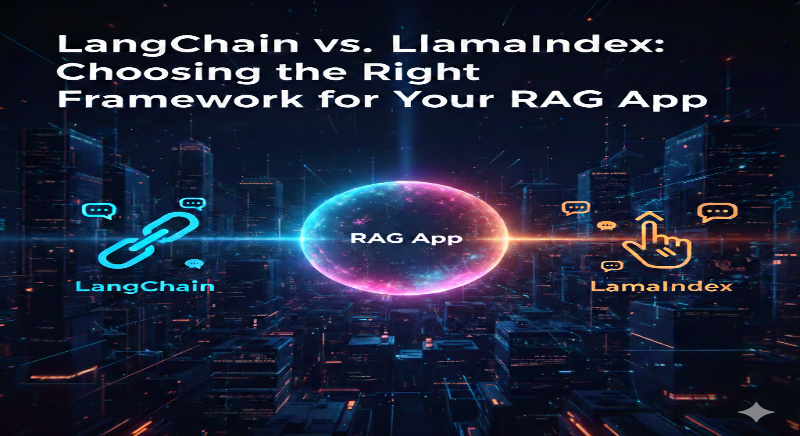
TL;DR Building intelligent applications with large language models requires the right tools. Developers face a critical decision when selecting frameworks for their projects. LangChain vs LlamaIndex represents one of the most important choices in the RAG ecosystem today.
Retrieval-Augmented Generation has transformed how we build AI applications. These frameworks serve as the backbone for connecting language models to external data sources. Your choice impacts development speed, application performance, and long-term maintainability.
This guide explores both frameworks in depth. You’ll discover their strengths, weaknesses, and ideal use cases. We’ll examine architecture differences, performance metrics, and real-world implementations.
Table of Contents
What Are RAG Frameworks and Why Do They Matter?
RAG technology connects language models to custom knowledge bases. The process retrieves relevant information before generating responses. This approach grounds AI outputs in factual, domain-specific data.
Traditional language models work with fixed training data. They cannot access updated information or proprietary databases. RAG frameworks solve this limitation by creating dynamic knowledge pipelines.
The framework you choose determines your application’s capabilities. Some excel at simple query-answer scenarios. Others handle complex multi-step reasoning tasks. Understanding these distinctions prevents costly refactoring later.
The Rise of RAG Applications
Organizations deploy RAG systems across diverse sectors. Customer support teams use them for intelligent help desks. Research departments build specialized knowledge assistants. Legal firms create document analysis tools.
Market demand for RAG solutions grows exponentially. Companies recognize the value of AI that understands their specific data. Generic chatbots cannot compete with domain-optimized systems.
LangChain vs LlamaIndex emerges as the central framework debate. Both enable RAG development but take different philosophical approaches. Your business requirements dictate which framework fits better.
Core Components of RAG Systems
Every RAG application contains three fundamental elements. Document loaders ingest data from various sources. Vector stores enable semantic search capabilities. Retrievers find relevant context for user queries.
Language models generate final responses using retrieved information. The framework orchestrates these components smoothly. Integration complexity varies significantly between different tools.
Embedding models convert text into numerical vectors. These representations capture semantic meaning. Similarity searches identify the most relevant document chunks.
Understanding LangChain: The Comprehensive Orchestration Framework
LangChain emerged as one of the earliest RAG frameworks. The project launched in October 2022 and quickly gained traction. Developers appreciated its modular architecture and extensive integrations.
The framework positions itself as a comprehensive orchestration layer. It provides tools for building complex AI workflows. Chains combine multiple components into sophisticated pipelines.
LangChain Architecture and Design Philosophy
LangChain adopts a building-block approach to AI development. Individual components connect like LEGO pieces. Developers assemble custom solutions from pre-built modules.
The framework supports multiple language models simultaneously. You can switch between OpenAI, Anthropic, or open-source alternatives. This flexibility prevents vendor lock-in.
Memory systems track conversation history across interactions. Agents make autonomous decisions based on available tools. Callbacks provide visibility into execution flows.
Key Features That Define LangChain
LangChain offers extensive integration libraries out of the box. It connects to over 100 different data sources and services. API wrappers simplify complex third-party integrations.
The expression language enables declarative pipeline construction. LCEL chains read almost like natural descriptions. This abstraction speeds up development significantly.
Production deployment tools come bundled with the framework. LangSmith provides debugging and monitoring capabilities. LangServe helps you deploy chains as REST APIs quickly.
When LangChain Excels
Complex agent-based applications benefit from LangChain’s architecture. The framework handles multi-step reasoning workflows elegantly. Tool-calling capabilities enable sophisticated automation.
Projects requiring diverse integrations favor LangChain’s breadth. You might need to connect databases, APIs, and document stores. The framework provides connectors for almost everything.
Teams building conversational AI applications choose LangChain frequently. Memory management and conversation flows receive first-class support. Context preservation across turns works smoothly.
LangChain Limitations to Consider
The learning curve for LangChain vs LlamaIndex differs substantially. LangChain requires more time to master initially. The extensive API surface area can overwhelm newcomers.
Performance optimization demands careful attention with LangChain. Default configurations may not suit production workloads. Developers must tune components manually for efficiency.
Version updates sometimes introduce breaking changes. Rapid development pace creates maintenance challenges. Documentation struggles to keep up with new features.
Exploring LlamaIndex: The Data-Centric Specialist
LlamaIndex launched with a different vision than LangChain. The framework focuses specifically on data ingestion and retrieval. It prioritizes search quality over broad functionality.
Originally called GPT Index, the project rebranded in 2023. The name change reflected expanded capabilities beyond GPT models. Core strengths remain in data connection and querying.
LlamaIndex Architecture and Core Principles
LlamaIndex structures everything around index creation and querying. Data connectors load information from various sources. Indexes organize content for optimal retrieval.
The framework provides specialized index types for different scenarios. List indexes work for simple sequential access. Vector indexes enable semantic similarity search. Tree indexes support hierarchical information retrieval.
Query engines transform user questions into optimized searches. Response synthesizers combine retrieved chunks into coherent answers. The pipeline emphasizes retrieval accuracy above all else.
Distinctive LlamaIndex Capabilities
LlamaIndex excels at handling structured and unstructured data simultaneously. The framework understands relationships between different data types. Metadata filtering enhances search precision dramatically.
Advanced retrieval strategies come built into the framework. Auto-merging retrievers combine small and large chunks intelligently. Sentence window retrieval provides expanded context automatically.
Sub-question decomposition tackles complex queries systematically. The framework breaks down multi-part questions independently. Parallel retrieval speeds up response generation.
Where LlamaIndex Shines Brightest
Search-intensive applications benefit enormously from LlamaIndex. The framework optimizes for retrieval quality specifically. Applications requiring high accuracy favor this specialization.
Projects with massive document collections choose LlamaIndex frequently. Scalability features handle millions of documents efficiently. Index optimization techniques maintain performance at scale.
Structured data integration scenarios suit LlamaIndex perfectly. SQL databases, APIs, and knowledge graphs connect seamlessly. The framework understands tabular and graph relationships natively.
Understanding LlamaIndex Constraints
Agent capabilities lag behind LangChain’s implementation. LlamaIndex added agents later in development. The functionality remains less mature comparatively.
Integration breadth cannot match LangChain’s extensive library. LlamaIndex focuses on core retrieval workflows. External service connections require more custom code.
Conversational memory receives less emphasis in LlamaIndex. The framework prioritizes stateless queries. Multi-turn conversations need additional implementation effort.
LangChain vs LlamaIndex: Direct Feature Comparison
Comparing LangChain vs LlamaIndex requires examining specific capabilities. Both frameworks serve RAG applications but optimize differently. Understanding distinctions guides better decision-making.
Data Loading and Connection Capabilities
LangChain provides document loaders for 80+ file formats and sources. The library covers common needs and niche requirements. Loading implementations prioritize ease of use.
LlamaIndex offers 160+ data connectors with deeper integration options. Connectors handle complex authentication and pagination automatically. The framework understands data source nuances better.
Both frameworks support custom loader development. LangChain uses simpler base classes for extensions. LlamaIndex provides more structured connector interfaces.
Indexing and Storage Approaches
LangChain treats vector stores as interchangeable components. You can swap between Pinecone, Weaviate, or Chroma easily. The abstraction prioritizes flexibility.
LlamaIndex provides native index implementations with optimization features. Indexes understand data characteristics for better performance. The framework offers more sophisticated indexing strategies.
Hybrid search combining keyword and semantic approaches works in both. LlamaIndex implements this natively across index types. LangChain requires more manual configuration.
Retrieval Quality and Strategies
LlamaIndex dedicates significant engineering to retrieval excellence. Advanced strategies like auto-merging and sentence windows come standard. Retrieval accuracy metrics show measurable advantages.
LangChain provides solid retrieval with extensive customization options. The framework allows building any retrieval strategy imaginable. Implementation requires more developer effort.
Evaluation tools for measuring retrieval quality differ between frameworks. LlamaIndex bundles comprehensive evaluation metrics. LangChain relies more on external tools like Ragas.
Agent and Tool-Calling Abilities
LangChain dominates in agent-based workflows currently. The framework provides ReAct agents, plan-and-execute agents, and more. Tool integration feels natural and powerful.
LlamaIndex added agent capabilities but they remain simpler. Basic function calling works reliably. Complex multi-step agent workflows need more development.
Both frameworks support custom tool creation effectively. LangChain’s decorator-based approach feels intuitive. LlamaIndex uses class-based tool definitions.
Production Deployment Considerations
LangChain offers LangServe for rapid API deployment. The tool creates FastAPI endpoints from chains automatically. LangSmith provides observability and debugging.
LlamaIndex focuses on core framework functionality. Deployment requires more infrastructure setup. Observability relies on external tools like Phoenix.
Both frameworks integrate with major deployment platforms. Containerization and serverless deployment work smoothly. Performance tuning requirements vary by use case.
Performance Benchmarks: LangChain vs LlamaIndex
Performance metrics matter tremendously for production applications. Response latency affects user experience directly. Resource consumption impacts operational costs.
Query Response Time Analysis
LlamaIndex generally shows faster retrieval times in benchmarks. Optimized index structures reduce search overhead. Native implementations avoid abstraction penalties.
LangChain response times depend heavily on configuration choices. Properly tuned systems perform competitively. Default settings may underperform initially.
Both frameworks benefit from GPU acceleration for embeddings. Batch processing significantly improves throughput. Caching strategies reduce redundant computation.
Memory and Resource Utilization
LlamaIndex maintains lower memory footprints for large indexes. Efficient data structures minimize RAM requirements. Disk-based indexes support massive collections.
LangChain memory usage varies with component selection. Extensive abstraction layers add overhead. Careful component choices optimize resource usage.
Horizontal scaling capabilities exist in both frameworks. Distributed retrieval spreads load across machines. Implementation complexity differs between approaches.
Accuracy and Relevance Metrics
Retrieval accuracy benchmarks favor LlamaIndex consistently. Advanced chunking and merging strategies improve relevance. Evaluation frameworks measure precision and recall rigorously.
LangChain achieves comparable accuracy with proper configuration. The framework requires more tuning effort. Domain-specific optimizations demand expertise.
Both frameworks support custom re-ranking models. Post-retrieval refinement improves final results. Integration with specialized re-rankers works smoothly.
Development Experience: Learning Curves and Productivity
Developer experience shapes framework adoption significantly. Steep learning curves slow initial development. Good documentation accelerates onboarding.
Ease of Getting Started
LlamaIndex offers simpler quickstart experiences. Five lines of code create basic RAG applications. The opinionated design reduces decision paralysis.
LangChain requires understanding more concepts upfront. Chains, agents, and memory systems take time to grasp. The flexibility adds complexity.
Both frameworks provide excellent tutorial content. LlamaIndex documentation emphasizes practical examples. LangChain tutorials cover broader use cases.
Code Readability and Maintainability
LlamaIndex code tends toward clarity and simplicity. Method names clearly indicate functionality. The data-centric API feels intuitive.
LangChain code can become complex in large projects. LCEL improves readability significantly. Legacy chain syntax looks more cryptic.
Type hints and IDE support vary between frameworks. LlamaIndex provides strong typing throughout. LangChain typing improved substantially in recent versions.
Community and Ecosystem Support
LangChain boasts a larger community currently. More Stack Overflow questions and answers exist. Third-party tutorials cover extensive scenarios.
LlamaIndex community grows rapidly with engaged users. The Discord server provides responsive support. Core team members actively help developers.
Both frameworks receive frequent updates and improvements. LangChain releases occur almost daily. LlamaIndex maintains steadier release cadence.
Real-World Use Cases and Application Patterns
Understanding when to choose LangChain vs LlamaIndex requires examining actual implementations. Different applications have distinct requirements. Framework strengths align with specific patterns.
Customer Support and Knowledge Management
LlamaIndex excels for comprehensive knowledge base applications. The framework handles large documentation sets efficiently. Retrieval accuracy ensures correct answers.
LangChain suits conversational support agents better. Memory systems track customer interactions across sessions. Agent capabilities enable complex troubleshooting workflows.
Both frameworks integrate with ticketing systems successfully. Custom connectors pull historical support data. RAG enhances agent productivity measurably.
Research and Analysis Applications
LlamaIndex handles academic paper repositories exceptionally well. Citation extraction and metadata filtering work seamlessly. Researchers find relevant papers faster.
LangChain enables multi-step research workflows effectively. Agents can query databases, run calculations, and synthesize findings. Complex analysis pipelines benefit from orchestration capabilities.
Both frameworks support structured data analysis. SQL database integration brings analytical power. Combining structured and unstructured data creates comprehensive insights.
Enterprise Document Management
LlamaIndex manages massive document collections at scale. Index optimization maintains performance with millions of files. Incremental updates keep content current.
LangChain provides flexibility for diverse document types. Custom preprocessing pipelines handle proprietary formats. Integration with existing systems proceeds smoothly.
Both frameworks support multi-tenant architectures. Isolated indexes ensure data privacy. Role-based access controls protect sensitive information.
Content Generation and Summarization
LangChain excels at creative content generation tasks. Agents can research topics, outline content, and generate drafts. Multi-step workflows produce polished outputs.
LlamaIndex retrieves relevant source material accurately. Generated content grounds in factual information. Citation tracking maintains content credibility.
Both frameworks support custom summarization strategies. Extractive and abstractive approaches work well. Output quality depends on underlying language model selection.
Integration Ecosystems and Compatibility
Framework integrations determine what you can build. Broad compatibility reduces development friction. Specialized integrations enable unique capabilities.
Vector Database Support
LangChain integrates with 50+ vector databases currently. Popular options like Pinecone, Weaviate, and Chroma work seamlessly. Switching providers requires minimal code changes.
LlamaIndex supports major vector stores with optimized implementations. Native integrations leverage database-specific features. Performance tuning options exceed basic compatibility.
Both frameworks support local vector stores for development. FAISS and ChromaDB enable offline testing. Production deployments favor managed services.
Language Model Compatibility
LangChain supports virtually every commercial and open-source model. Provider-agnostic design enables easy switching. Cost optimization through model selection proceeds simply.
LlamaIndex works with all major language model providers. The framework abstracts model differences effectively. Configuration remains straightforward across providers.
Both frameworks support local model deployment. Llama.cpp integration enables on-premise inference. Privacy-sensitive applications benefit significantly.
Cloud Platform Integration
LangChain deploys easily on AWS, Azure, and Google Cloud. Platform-specific optimizations reduce latency. Managed service integrations simplify operations.
LlamaIndex runs on any cloud platform reliably. The framework avoids platform-specific dependencies. Deployment flexibility suits multi-cloud strategies.
Both frameworks support serverless deployment models. AWS Lambda and Cloud Functions execute queries efficiently. Cold start optimization remains important.
Cost Considerations for LangChain vs LlamaIndex
Total cost of ownership includes multiple factors. API costs dominate for many applications. Infrastructure and development time matter significantly.
API and Compute Expenses
Embedding generation represents the largest variable cost. Both frameworks support cost-effective embedding models. Ada-002 and open-source alternatives reduce expenses.
Language model inference costs vary by provider. Query optimization reduces token consumption. Caching strategies prevent redundant API calls.
Vector database costs scale with data volume. LlamaIndex efficiency reduces storage requirements. LangChain flexibility enables cost-effective provider selection.
Development and Maintenance Costs
LlamaIndex faster initial development reduces time-to-market. Specialized focus minimizes decision overhead. Teams ship MVPs quickly.
LangChain flexibility prevents costly refactoring later. Comprehensive capabilities accommodate evolving requirements. Initial complexity investment pays dividends.
Both frameworks require ongoing maintenance effort. Breaking changes demand periodic updates. Community support reduces troubleshooting time.
Infrastructure and Scaling Costs
LlamaIndex lower resource requirements reduce infrastructure spending. Efficient indexing minimizes compute needs. Horizontal scaling remains cost-effective.
LangChain infrastructure costs depend on architecture choices. Proper optimization achieves competitive efficiency. Monitoring tools identify cost optimization opportunities.
Both frameworks support cost-effective local development. Docker containers standardize environments. Cloud deployment occurs when ready.
Migration Strategies and Framework Coexistence
Choosing between LangChain vs LlamaIndex doesn’t require absolute commitment. Frameworks can coexist within applications. Migration paths exist in both directions.
Using Both Frameworks Together
LlamaIndex handles data ingestion and retrieval excellently. LangChain orchestrates complex agent workflows effectively. Combining strengths creates powerful applications.
The frameworks integrate relatively smoothly. LlamaIndex retrievers work within LangChain chains. Shared components reduce duplication.
Both frameworks support similar data formats. Embeddings and vector stores transfer between systems. Incremental adoption minimizes risk.
Migrating from LangChain to LlamaIndex
Retrieval quality concerns motivate some migrations. LlamaIndex advanced strategies improve accuracy measurably. Performance gains justify migration effort.
Converting LangChain vector stores proceeds straightforwardly. Both frameworks support standard formats. Index rebuilding may improve results.
Agent-heavy applications face migration challenges. LlamaIndex agent capabilities lag currently. Hybrid approaches maintain functionality.
Transitioning from LlamaIndex to LangChain
Expanding requirements beyond retrieval drive migrations. Agent needs or extensive integrations favor LangChain. The framework accommodates growth better.
LlamaIndex indexes convert to LangChain vector stores easily. Embedding compatibility ensures smooth transitions. Query logic requires rewriting.
Both frameworks maintain active development. Feature gaps narrow over time. Future compatibility improves continuously.
Future Roadmaps and Framework Evolution
Framework development velocity impacts long-term viability. Emerging features shape future capabilities. Understanding roadmaps informs strategic decisions.
LangChain Development Direction
LangChain focuses on production readiness increasingly. LangSmith observability features expand continuously. Enterprise deployment tools improve steadily.
Security and compliance capabilities receive attention. Data privacy features enhance enterprise adoption. Audit trails and access controls mature.
The framework standardization through LangChain Expression Language continues. Interoperability with other tools improves. Open standards benefit the ecosystem.
LlamaIndex Innovation Focus
LlamaIndex doubles down on retrieval excellence. Advanced indexing strategies emerge regularly. Research innovations translate to production features quickly.
Structured data integration receives substantial investment. SQL and knowledge graph capabilities expand. Multi-modal retrieval research shows promise.
The framework scalability improvements continue steadily. Distributed indexing features enable massive deployments. Performance optimization remains central.
Convergence and Differentiation Trends
Both frameworks borrow successful features from each other. LangChain improves retrieval quality progressively. LlamaIndex enhances agent capabilities gradually.
Differentiation persists around core philosophies. LangChain emphasizes orchestration and flexibility. LlamaIndex prioritizes retrieval accuracy and simplicity.
Community needs drive feature development significantly. User feedback shapes roadmap priorities. Active participation influences framework evolution.
Making Your Framework Decision
Selecting between LangChain vs LlamaIndex requires careful evaluation. Your specific requirements determine the optimal choice. Both frameworks serve successfully in production.
Decision Framework for Evaluation
Start by identifying your primary application type. Retrieval-heavy applications favor LlamaIndex naturally. Agent-based workflows suit LangChain better.
Assess your team’s technical expertise honestly. LlamaIndex enables faster starts for smaller teams. LangChain rewards investment with flexibility.
Consider long-term scalability requirements carefully. Growing data volumes favor LlamaIndex efficiency. Expanding functionality needs suit LangChain breadth.
When to Choose LangChain
Select LangChain for conversational AI applications primarily. Multi-turn memory and context matter significantly. Agent autonomy creates user value.
Choose LangChain when building complex workflows. Multi-step reasoning and tool orchestration shine. Integration diversity prevents blockers.
Pick LangChain for rapidly evolving requirements. Flexibility accommodates changing specifications. Refactoring costs remain manageable.
When to Select LlamaIndex
Choose LlamaIndex for search-centric applications. Retrieval accuracy determines user satisfaction. Data volume reaches millions of documents.
Select LlamaIndex when optimizing for performance. Resource efficiency reduces operational costs. Response latency requires minimization.
Pick LlamaIndex for faster initial development. Opinionated design accelerates delivery. Simpler mental models reduce cognitive load.
Hybrid Approaches Worth Considering
Combine frameworks when requirements span both strengths. LlamaIndex retrieves and LangChain orchestrates effectively. Integration overhead remains acceptable.
Start with one framework and add the other incrementally. Risk mitigation through gradual adoption. Learning curves spread over time.
Evaluate hybrid complexity against single-framework solutions. Maintenance burden increases with components. Simplicity often wins long-term.
Frequently Asked Questions About LangChain vs LlamaIndex
Can I use LangChain and LlamaIndex together in one application?
Yes, combining LangChain vs LlamaIndex in a single application works well. Many developers use LlamaIndex for retrieval and LangChain for orchestration. The frameworks share compatible data structures. Integration requires minimal glue code. This hybrid approach leverages each framework’s strengths effectively.
Which framework is better for beginners?
LlamaIndex offers easier onboarding for most beginners. The opinionated design reduces initial decisions. Five-line examples get you started quickly. LangChain requires understanding more concepts upfront. However, LangChain provides broader learning opportunities. Your learning goals should guide this choice.
How do costs compare between the two frameworks?
Direct framework costs remain minimal for both. API expenses dominate total spending typically. LlamaIndex efficiency may reduce embedding and storage costs. LangChain flexibility enables provider switching for savings. Development time represents the largest cost difference. LlamaIndex faster initial development reduces time-to-market.
Which framework scales better for production?
Both frameworks scale to production successfully. LlamaIndex demonstrates superior efficiency with massive datasets. The framework handles millions of documents smoothly. LangChain scales through distributed architectures effectively. Proper optimization matters more than framework choice. Real-world deployments exist for both.
Do I need to know Python to use these frameworks?
Yes, both frameworks require Python knowledge currently. LangChain offers JavaScript/TypeScript versions alternatively. LlamaIndex remains Python-focused primarily. Basic Python proficiency suffices for simple applications. Advanced features demand stronger programming skills. Framework-specific knowledge matters more than Python expertise.
Which framework has better documentation?
Both frameworks maintain excellent documentation overall. LlamaIndex documentation emphasizes practical examples. The guides walk through common scenarios step-by-step. LangChain documentation covers broader topics comprehensively. Rapid development sometimes creates documentation gaps. Community tutorials supplement official resources effectively.
Can I switch frameworks after starting development?
Migration between frameworks remains possible but requires effort. Data structures transfer relatively smoothly. Application logic needs rewriting substantially. Starting with the right framework saves significant work. Hybrid approaches offer gradual transition paths. Evaluate requirements carefully before committing.
Which framework receives more active development?
LangChain shows higher commit frequency currently. The project releases updates almost daily. LlamaIndex maintains steadier, more controlled releases. Both teams respond to issues promptly. Active development continues robustly for both. Community engagement remains strong across frameworks.
Read More:-How to Reduce LLM Hallucinations in Financial Data Applications
Conclusion

The LangChain vs LlamaIndex decision shapes your RAG application fundamentally. Both frameworks enable powerful intelligent systems successfully. Your specific requirements determine the optimal choice.
LlamaIndex excels for retrieval-focused applications. The framework optimizes data connection and search quality relentlessly. Developers building search-intensive systems benefit enormously. Simpler architecture accelerates initial development significantly.
LangChain dominates for complex orchestration needs. Agent capabilities and extensive integrations create flexibility. Teams building conversational AI or multi-step workflows choose LangChain frequently. The learning investment pays dividends long-term.
Evaluate your primary use case honestly. Prioritize retrieval quality or orchestration flexibility accordingly. Consider team expertise and timeline constraints carefully. Both frameworks serve production applications successfully worldwide.
The debate around LangChain vs LlamaIndex continues evolving. Features converge as frameworks mature progressively. Differentiation persists around core philosophies. Understanding these distinctions guides better decisions.
Start small and iterate based on experience. Both frameworks support prototyping excellently. Real-world usage reveals specific strengths and limitations. Migration paths exist if requirements shift unexpectedly.
The RAG ecosystem benefits from healthy competition. LangChain and LlamaIndex push each other forward. Developers win through improved tools and capabilities. Your applications deliver more value to users ultimately.
Choose the framework that matches your strengths and goals. Invest time learning your selected tool deeply. Master retrieval strategies or orchestration patterns thoroughly. Build applications that showcase AI’s transformative potential.
The future of RAG development looks incredibly promising. Both frameworks contribute to this exciting evolution. Your choice between LangChain vs LlamaIndex positions you for success. Start building and bring your intelligent applications to life today.