Introduction
TL;DR Your support team drowns in incoming requests daily. Cases arrive through email, phone, chat, and social media. Nobody knows which issues need immediate attention versus routine handling.
Critical customer problems sit in queues for hours. Simple questions consume senior specialist time unnecessarily. Your team works harder while customer satisfaction keeps dropping.
Intelligent intake systems for support cases solve this chaos completely. The technology automatically categorizes, prioritizes, and routes every request. Your team handles the right cases at the right times.
This comprehensive guide reveals how intelligent intake transforms support operations. You’ll discover implementation strategies and practical benefits. Real efficiency gains become achievable through smart automation.
Table of Contents
What Are Intelligent Intake Systems for Support Cases?
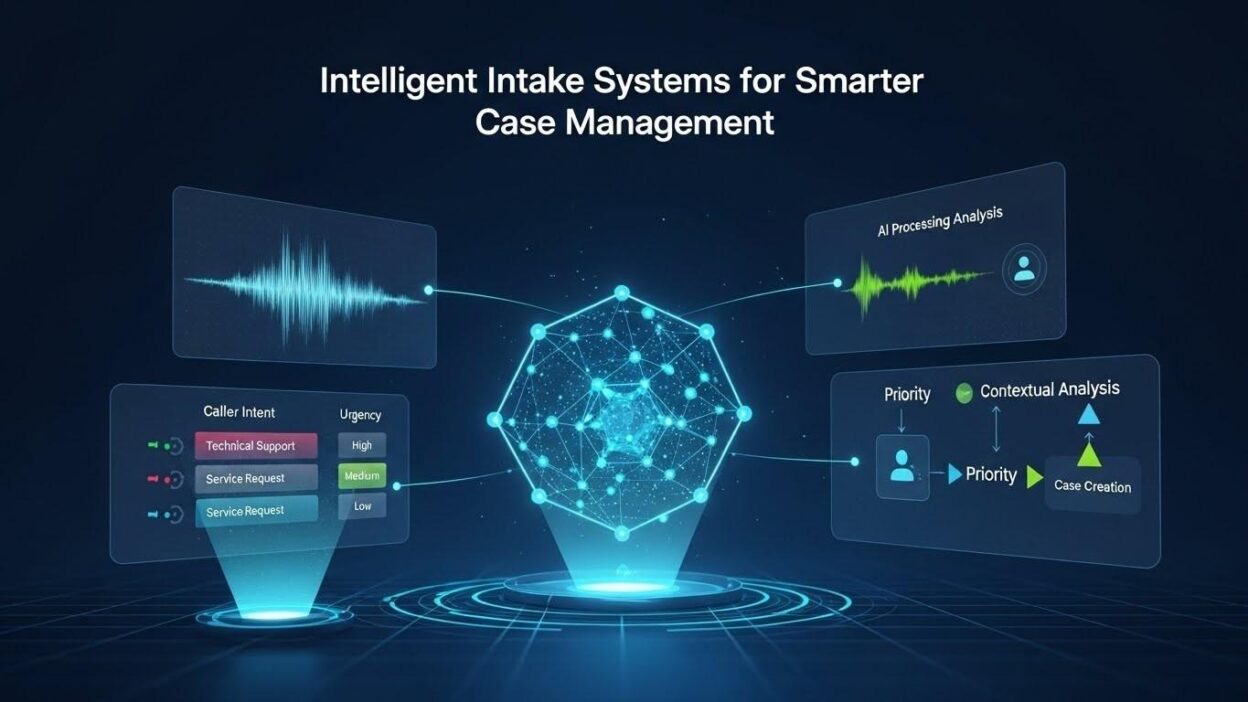
Intelligent intake systems use artificial intelligence to process incoming support requests. The technology reads every case submission automatically. Classification, prioritization, and routing happen within seconds.
Natural language processing analyzes case descriptions thoroughly. The system understands what customers actually need. Technical terminology and casual language both get interpreted correctly.
Machine learning algorithms improve accuracy over time continuously. Every processed case trains the system further. Prediction quality increases with operational experience.
Integration with existing helpdesk platforms happens seamlessly. Zendesk, Salesforce Service Cloud, and similar tools connect easily. Your current workflows enhance without complete replacement.
Automated triage separates urgent issues from routine requests. Service level agreements get enforced automatically. Your team meets commitments without manual oversight.
Multi-channel intake consolidation brings all requests together. Email, chat, phone transcripts, and web forms feed one system. Nothing falls through cracks between different channels.
The Problem With Manual Case Intake
Human agents spend hours reading and categorizing cases. This administrative work steals time from actual problem-solving. Your team’s expertise gets wasted on busywork.
Inconsistent categorization creates reporting nightmares. Different agents classify similar cases differently. Your analytics become unreliable and misleading.
Response time delays frustrate customers immediately. Manual review takes minutes or hours per case. Urgent issues wait while agents work through queues sequentially.
Misrouting sends cases to wrong departments frequently. Agents guess which team should handle each request. Multiple transfers damage customer experience severely.
After-hours cases sit completely unprocessed until morning. Global customers experience massive delays regularly. Your 24/7 support promise becomes meaningless.
Workload imbalances exhaust some agents while others stay idle. Manual assignment lacks visibility into actual capacity. Burnout and inefficiency coexist simultaneously.
Core Capabilities of Intelligent Intake Systems
Automatic Case Classification
The system reads case descriptions and applies appropriate categories. Product issues, billing questions, and technical problems get tagged correctly. Your taxonomy gets enforced consistently across all cases.
Multi-level categorization provides granular organization. High-level categories contain specific subcategories automatically. Reporting becomes detailed and actionable.
Custom classification schemes match your business needs. The system learns your unique categories and products. Generic defaults give way to tailored organization.
Confidence scores indicate classification certainty. Low-confidence cases get flagged for human review. Your team catches potential misclassifications proactively.
Intelligent Priority Assignment
Urgency detection identifies critical cases immediately. Keywords and context reveal when customers face emergencies. Your team responds to true emergencies instantly.
Customer value influences priority automatically. Enterprise accounts get priority over free users. Your support reflects business priorities naturally.
SLA deadline calculation happens instantly per case. The system knows which cases need handling when. Deadline violations become preventable through visibility.
Dynamic reprioritization adjusts as situations change. New information updates priority automatically. Your queue stays optimized continuously.
Smart Agent Routing
Skills-based matching connects cases with appropriate specialists. Technical issues route to technical agents automatically. Billing questions reach finance-trained staff naturally.
Workload balancing distributes cases evenly. No agent gets overwhelmed while others sit idle. Capacity utilization stays optimal across your team.
Language matching connects customers with fluent agents. Spanish speakers reach Spanish-speaking support automatically. Communication quality improves through linguistic matching.
Availability checking prevents routing to unavailable agents. The system knows who’s on break or out of office. Only available agents receive new assignments.
Automated Information Gathering
Intelligent forms collect necessary details upfront. The system asks relevant questions based on case type. Your agents receive complete information from the start.
Dynamic questioning adapts to previous answers. Follow-up questions appear based on initial responses. Customers provide exactly what agents need.
Account information populates automatically from your database. Customer history and subscription details attach to cases. Agents see full context without searching separately.
Attachment analysis extracts information from uploaded files. Screenshots and logs get processed automatically. Error messages and system information become immediately accessible.
Sentiment Analysis
Emotional tone detection identifies frustrated customers. Angry language triggers escalation protocols automatically. Your team addresses dissatisfaction before it escalates further.
Satisfaction prediction forecasts likely case outcomes. The system identifies cases likely to generate complaints. Preventive attention reduces negative feedback.
Churn risk identification flags at-risk customers. Cases from customers showing cancellation signals get priority. Retention efforts target where they matter most.
Key Benefits of Intelligent Intake Systems for Support Cases
Dramatic Time Savings
Agents skip manual case review and categorization entirely. They jump straight into solving problems. Productivity per agent increases thirty to fifty percent.
Administrative overhead disappears from daily workflows. Your team focuses on customer-facing activities only. Job satisfaction improves alongside efficiency.
Onboarding time for new agents decreases significantly. They don’t need to learn complex categorization rules. The system handles classification while they learn troubleshooting.
Faster Response Times
Cases reach appropriate agents within seconds. No manual review delays slow down assignments. Your first response times drop dramatically.
Urgent issues bypass queues automatically. Critical cases get immediate attention regardless of volume. Your SLA compliance improves measurably.
After-hours automation ensures continuous processing. Cases arriving overnight get triaged before morning. Your team starts each day with organized priorities.
Improved First Contact Resolution
Proper routing matches problems with expertise immediately. Customers don’t get transferred between departments repeatedly. Resolution happens faster with fewer handoffs.
Complete information gathering reduces back-and-forth. Agents have everything needed from the first message. Follow-up questions become unnecessary frequently.
Knowledge base integration suggests solutions automatically. Agents see relevant articles based on case details. Resolution happens through assisted guidance.
Better Customer Experience
Customers feel heard when systems understand them accurately. Proper categorization validates their concerns immediately. Trust builds through demonstrated comprehension.
Appropriate priority assignment respects customer urgency. True emergencies get emergency treatment. Customers appreciate responsive handling.
Reduced transfers eliminate repetitive explanations. Customers explain problems once to the right person. Frustration from multiple transfers disappears.
Proactive communication happens based on intelligent analysis. Customers receive updates at appropriate intervals automatically. Anxiety about case status reduces significantly.
Enhanced Team Performance
Balanced workloads prevent burnout and idle time. Every agent operates at optimal capacity. Team morale improves through fair distribution.
Skill development happens through appropriate assignments. Junior agents handle cases matching their abilities. Senior specialists tackle truly complex issues only.
Performance metrics become more meaningful. You measure how agents handle appropriate cases. Comparisons become fair and actionable.
Career paths emerge through specialization opportunities. Agents develop expertise in specific areas. Skills-based routing rewards knowledge development.
Valuable Business Intelligence
Case volume trends reveal product and service issues. Sudden increases in specific categories signal problems. Your organization responds proactively to patterns.
Customer sentiment tracking shows satisfaction trajectories. Improving or declining trends become visible early. Strategic decisions benefit from emotional intelligence.
Agent performance analytics identify training needs. Skill gaps surface through resolution data. Professional development becomes targeted and effective.
Channel preference insights optimize communication strategies. You learn which customers prefer which channels. Engagement improves through preference matching.
Implementing Intelligent Intake Systems for Support Cases
Assess Your Current Intake Process
Document how cases flow through your system today. Map every step from submission to assignment. Identify bottlenecks causing delays and frustration.
Measure current performance metrics comprehensively. Response times, resolution times, and satisfaction scores establish baselines. You need clear starting points for comparison.
Survey your support team about pain points. They know exactly what frustrates them daily. Their insights guide prioritization and configuration.
Analyze case data for patterns and opportunities. Common categories reveal where automation helps most. Your historical data informs implementation strategy.
Define Your Case Categories and Priorities
Establish clear category hierarchies for your business. Products, issues, and departments create organizational structure. Comprehensive taxonomies enable accurate classification.
Document priority definitions explicitly. Define what makes cases urgent versus routine. Clear criteria ensure consistent priority assignment.
Map SLA requirements to different case types. Response and resolution timeframes vary by category. Your system enforces these commitments automatically.
Identify routing rules based on skills and availability. Which agents handle which case types matters. Explicit rules create predictable assignments.
Select the Right Technology Platform
Evaluate vendors on AI sophistication and accuracy. Request proof of classification precision. Generic claims need statistical validation.
Check integration capabilities with your current helpdesk. Native integrations work better than custom development. Your existing investment should remain valuable.
Assess customization options for your needs. Your business differs from generic use cases. Flexible platforms adapt to unique requirements.
Review scalability for future growth. Today’s volume might triple next year. Choose platforms that grow with you.
Consider total cost including implementation services. Licensing, setup, and training all add up. Calculate comprehensive investment requirements.
Prepare Your Historical Data
Clean your case database before training the AI. Duplicate records and errors corrupt learning. Data quality determines system accuracy directly.
Review and standardize existing categorizations. Inconsistent historical labels confuse machine learning. Cleanup work pays dividends in accuracy.
Identify cases representing different scenarios. The AI needs diverse examples for training. Edge cases improve robustness significantly.
Document special rules and exceptions explicitly. Some cases follow unique logic. The system needs to learn these patterns.
Configure and Train Your System
Set up your category taxonomy in the platform. Mirror your documented structure exactly. Consistency between planning and configuration matters.
Define priority rules and escalation triggers. Urgent keywords and customer attributes drive decisions. Explicit logic creates predictable behavior.
Train the AI on historical cases extensively. Feed thousands of examples into the system. More training data produces better accuracy.
Test classification accuracy with validation datasets. Hold back cases for testing purposes. Measure how well the system performs on unseen data.
Integrate With Existing Tools
Connect your helpdesk platform bidirectionally. Cases and updates flow seamlessly both directions. Your team works in familiar interfaces.
Link customer databases for context enrichment. Account information populates cases automatically. Agents see complete customer histories instantly.
Integrate knowledge bases for solution suggestions. Relevant articles surface based on case details. Self-service opportunities emerge through integration.
Connect communication channels comprehensively. Email, chat, phone, and social media all feed the system. Unified intake captures everything.
Deploy Gradually and Monitor
Start with a pilot program on limited case volume. Test the system with real cases carefully. Catch problems before full deployment.
Monitor classification accuracy obsessively initially. Review assignments and categories frequently. Course-correct misclassifications immediately.
Gather agent feedback systematically. They experience system strengths and weaknesses firsthand. Their input drives configuration improvements.
Adjust rules and priorities based on results. Real-world performance reveals needed tweaks. Optimization continues throughout deployment.
Train Your Team Thoroughly
Explain how intelligent intake systems for support cases work. Agents need conceptual understanding. Buy-in comes from comprehension.
Demonstrate specific workflow changes clearly. Show exactly how their daily work evolves. Concrete examples reduce anxiety.
Provide hands-on practice before go-live. Let agents experiment in safe environments. Confidence builds through experience.
Establish feedback mechanisms for ongoing improvement. Agents should report when the system misclassifies. Continuous refinement requires frontline input.
Advanced Features and Strategies
Predictive Case Deflection
The system identifies cases solvable through self-service. Customers receive knowledge base articles before submitting. Case volume decreases through intelligent deflection.
Chatbot escalation happens intelligently. Simple issues stay with bots while complex ones escalate. Human time focuses where it matters.
Proactive outreach prevents some cases entirely. Customers receive help before problems frustrate them. Prevention beats resolution economically.
Multi-Language Support
Automatic language detection identifies customer language. Cases get routed to appropriate language specialists. Global support becomes operationally simple.
Translation integration helps mixed-language teams. Agents see cases in their language automatically. Communication barriers decrease significantly.
Cultural context analysis improves international support. The system understands regional differences in expression. Misunderstandings from cultural gaps reduce.
Compliance and Audit Trails
Automated documentation captures every system decision. Why cases got categorized and routed becomes transparent. Audit requirements get satisfied automatically.
Regulatory compliance enforcement happens systematically. GDPR, HIPAA, and similar rules get encoded. Your organization stays compliant through automation.
Quality assurance sampling happens automatically. The system flags cases for manual review. Continuous improvement benefits from systematic checking.
Intelligent Escalation Management
The system detects when cases need management involvement. Sensitive situations trigger automatic escalations. Leadership stays informed without micromanaging.
VIP customer identification happens instantly. High-value accounts get appropriate attention automatically. Your relationship management becomes systematic.
Crisis detection prevents PR nightmares. Multiple similar cases signal broader problems. Early warning enables rapid organizational response.
Measuring Success With Intelligent Intake
Track average time from submission to assignment. This metric should drop seventy to eighty percent. Faster assignment proves system effectiveness.
Monitor classification accuracy rates continuously. Systems should achieve ninety percent accuracy minimum. Higher accuracy drives better outcomes.
Measure first contact resolution improvements. Proper routing increases resolution rates significantly. This metric reflects customer experience directly.
Calculate agent productivity changes. Cases handled per agent should increase substantially. Efficiency gains justify technology investment.
Analyze customer satisfaction score trends. CSAT and NPS should improve with better intake. Happy customers validate your approach.
Review SLA compliance improvements. Meeting commitments becomes easier with automation. Your reliability increases measurably.
Track case reassignment frequency. Misrouting should decrease dramatically. Lower reassignment proves better initial routing.
Monitor agent satisfaction through surveys. Better tools make agents happier. Retention improves with job satisfaction.
Common Implementation Challenges
Resistance to Change
Agents fear automation threatens their jobs. Communicate that technology augments rather than replaces. Focus messaging on how systems help them.
Managers worry about losing control. Maintain human override capabilities always. Technology advises while people decide ultimately.
Data Quality Issues
Incomplete historical data limits training effectiveness. Invest in data cleanup before implementation. Quality inputs produce quality outputs.
Inconsistent categorization confuses machine learning. Standardize before training the AI. Consistency enables accurate learning.
Integration Complexity
Legacy systems resist modern integrations sometimes. APIs and middleware bridge technology gaps. Expert help prevents integration failures.
Multiple disconnected tools create data silos. Unified platforms work better than point solutions. Consider consolidation alongside intake improvements.
Over-Reliance on Automation
Complete automation removes human judgment. Some cases need human nuance. Balance efficiency with thoughtful handling.
Edge cases confuse automated systems. Maintain escalation paths for unusual situations. Human expertise handles complexity.
Choosing the Right Vendor
Evaluate AI sophistication through detailed demonstrations. Vendors should prove accuracy on your data. Generic demos hide weaknesses.
Check customer references from similar organizations. Peer experiences reveal practical realities. Success stories should match your situation.
Assess implementation support offerings. Technology alone doesn’t guarantee success. Partner quality matters tremendously.
Review pricing models for transparency. Hidden costs create budget surprises. Understand total ownership costs upfront.
Investigate data security and privacy practices. Customer information security is critical. Certifications prove vendor commitment.
Consider vendor stability and longevity. Technology investments require sustained partnerships. Choose vendors likely to exist long-term.
Future Trends in Intelligent Intake
Emotion AI will detect customer feelings more accurately. Voice tone and word choice reveal emotions. Response strategies adapt to detected feelings.
Predictive case creation will happen proactively. Systems will open cases before customers contact you. Problems get addressed preemptively.
Cross-platform intelligence will unify all customer interactions. Cases, sales, and marketing data combine. Holistic customer understanding drives better service.
Autonomous resolution will handle more cases end-to-end. AI will solve problems without human involvement. Agent work focuses on truly complex issues only.
Quantum computing might revolutionize pattern recognition. Complex relationship analysis happens instantaneously. Today’s impossible becomes tomorrow’s standard.
Frequently Asked Questions
How accurate are intelligent intake systems for support cases?
Modern systems achieve ninety to ninety-five percent classification accuracy. Accuracy depends on training data quality and quantity. More historical cases produce better predictions. Continuous learning improves accuracy over time naturally. Your specific results vary based on implementation quality. Most organizations see dramatic improvements over manual processes. The technology has matured substantially in recent years.
What size support team benefits from intelligent intake?
Organizations handling twenty cases daily can benefit significantly. Smaller teams gain immediate efficiency improvements. Larger operations see proportionally greater impact. The technology scales from small teams to massive centers. Cost-effectiveness improves with higher case volumes. Even tiny teams appreciate better organization. Evaluate solutions regardless of current team size.
How long does implementation take?
Simple deployments complete in three to six weeks. Complex integrations with legacy systems take longer. Data preparation often consumes significant time. Your internal resources and priorities affect timeline. Phased rollouts extend implementation but reduce risk. Full optimization continues for months after launch. Plan for two to four months for complete implementation.
Will intelligent intake replace human agents?
Automation augments rather than replaces human expertise. Complex cases still require human judgment and empathy. Technology handles administrative work while humans solve problems. Your team size might stabilize while handling more volume. Job roles evolve toward higher-value activities. Agent satisfaction often improves with better tools. Reframe automation as team empowerment.
How much does intelligent intake technology cost?
Pricing varies significantly across vendors and features. Basic systems start around one hundred dollars monthly per agent. Enterprise solutions cost considerably more. Some vendors charge per case instead. Implementation services add one-time costs. Calculate ROI based on efficiency gains and satisfaction improvements. Most organizations recover investments within six to twelve months.
Can we customize the system for our unique needs?
Modern platforms offer extensive customization options. Category taxonomies, priority rules, and routing logic all adapt. Your specific business requirements drive configuration. Some customization requires technical expertise. Balance customization against complexity carefully. Most needs fit within standard configuration capabilities. Custom development remains possible for unique requirements.
Read More:-What Are Call Scoring Accuracy Benchmarks?
Conclusion

Intelligent intake systems for support cases transform customer service operations fundamentally. Manual triage gives way to automated intelligence. Your team handles cases faster and more accurately.
Customer satisfaction improves through appropriate prioritization. Urgent issues get urgent attention automatically. Response times drop while resolution quality increases.
Agent productivity multiplies through administrative automation. Your team focuses on solving problems instead of categorizing them. Job satisfaction improves alongside efficiency gains.
Implementation requires thoughtful planning and execution. Data quality determines system accuracy directly. Change management ensures team adoption and success.
The technology delivers measurable business results quickly. Response times decrease while satisfaction scores climb. First contact resolution improves dramatically.
Competitive advantages emerge through superior service. Customers notice faster responses and better outcomes. Your reputation strengthens through consistent excellence.
Investment costs recover through operational savings. Fewer agents handle more cases effectively. Your economics improve while quality increases.
Start evaluating intelligent intake systems for support cases today. The technology has proven itself across industries. Your support operation deserves this advancement.
Choose vendors carefully based on your requirements. Test thoroughly before full deployment. Monitor results and optimize continuously.
The future of customer support runs on intelligent automation. Organizations that delay adoption fall behind rapidly. Leaders implement these systems right now.
Take action immediately to transform your intake process. Request vendor demonstrations and calculate potential ROI. Your path to service excellence starts today.