Introduction
TL;DR Legacy ERP systems run core business flows. Many firms depend on them each day. These systems hold critical data. They manage finance. They manage supply chains. They support daily work.
Teams want smarter tools. AI adds insight. AI adds automation. AI improves speed. Many leaders want to integrate AI into legacy ERP systems without breaking them. This goal feels hard. Risk stays high. One wrong step can disrupt operations.
You need a safe path. You need a clear plan. You must protect existing logic. You must avoid downtime. You must keep data safe.
The idea to integrate AI into legacy ERP systems without breaking them needs strategy. It needs care. It needs modern design. It needs strong testing.
This guide explains each step. This guide shows real methods. You will learn how to integrate AI into legacy ERP systems without breaking them. You will build confidence. You will reduce risk.
Table of Contents
Understanding Legacy ERP Systems
Legacy ERP systems use old architecture. Many use monolith design. Many depend on fixed workflows. Many lack modern APIs.
These systems run stable code. They handle large data sets. They support key business tasks.
Change feels risky. Any update can break flows. Teams fear downtime. Teams fear data loss.
You must respect system limits. You must avoid direct changes. You must keep core logic safe.
To integrate AI into legacy ERP systems without breaking them you must study system structure. You must map workflows. You must identify integration points.
You must understand data flow. You must track dependencies. You must know where AI can add value.
This step builds strong foundation. It reduces risk. It ensures smooth integration.
Why Businesses Want AI in ERP
AI improves decision speed. AI improves forecasting. AI reduces manual work.
ERP systems hold rich data. AI can unlock insights. AI can predict trends. AI can automate tasks.
Firms want to integrate AI into legacy ERP systems without breaking them to stay competitive. They want smarter operations. They want better customer service.
AI can improve inventory planning. AI can improve demand forecasts. AI can enhance reporting.
AI also supports automation. It reduces repetitive work. It frees human effort.
To integrate AI into legacy ERP systems without breaking them you must focus on value areas. You must target high impact use cases.
Key Challenges in AI Integration
Legacy systems lack flexibility. They resist change. They use outdated tech.
Data formats may vary. Data may stay siloed. AI needs clean data.
Integration complexity stays high. Direct changes can break flows. Teams must avoid that.
Security also matters. ERP holds sensitive data. AI must respect data rules.
To integrate AI into legacy ERP systems without breaking them you must handle these challenges with care. You must use safe methods. You must avoid direct system edits.
Latency may rise. Performance may drop. You must monitor each step.
Testing becomes critical. You must validate each change. You must ensure system stability.
Safe Architecture for AI Integration
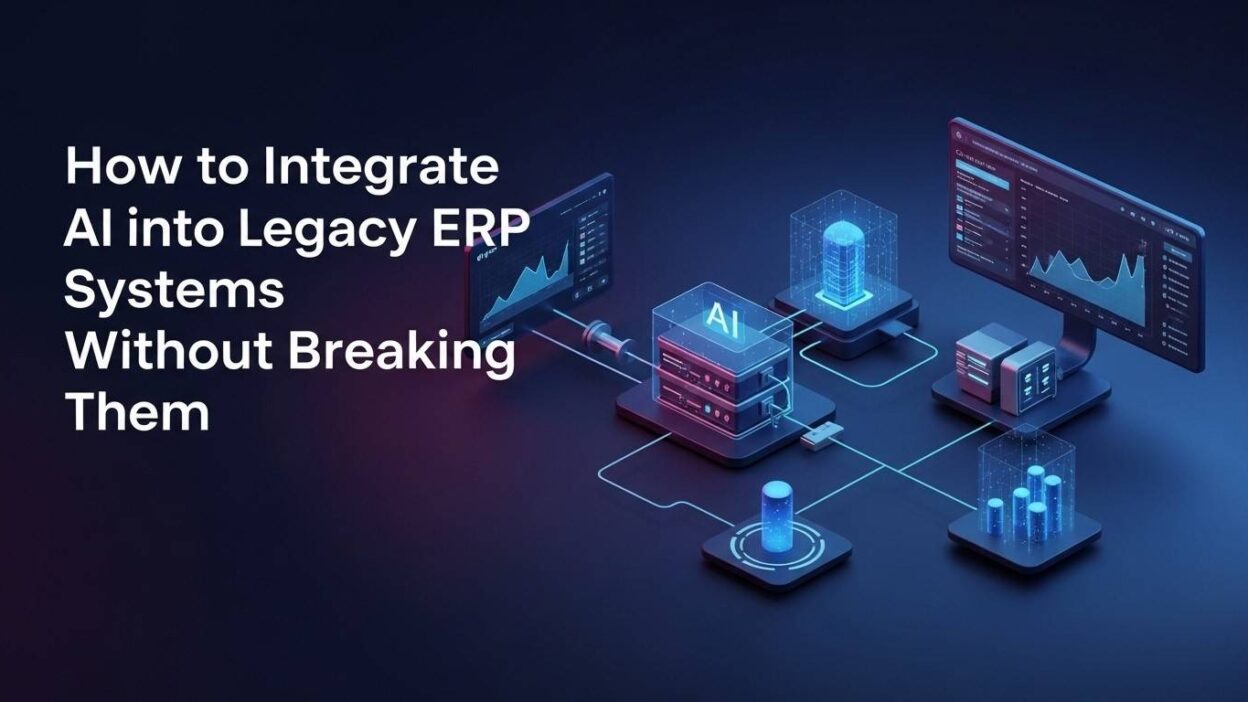
A layered approach works best. You keep ERP untouched. You build around it.
You create middleware. Middleware handles AI logic. It connects ERP with AI services.
APIs play key role. You expose ERP data through APIs. AI consumes this data.
You avoid direct system changes. You reduce risk.
To integrate AI into legacy ERP systems without breaking them you must use decoupled design. This design separates AI from ERP.
Event driven systems help. ERP events trigger AI tasks. AI processes data. AI sends results back.
You can use message queues. You can use microservices. Each service handles one task.
This design ensures flexibility. This design ensures safety.
Step-by-Step Integration Strategy
Identify Use Cases
Start with clear goals. Choose simple use cases. Focus on quick wins.
Pick tasks like reporting. Pick tasks like forecasting.
To integrate AI into legacy ERP systems without breaking them you must avoid complex changes at start.
Build Data Pipelines
Extract ERP data. Clean data. Format data.
AI needs structured input. Data quality matters.
Use ETL tools. Use secure pipelines.
To integrate AI into legacy ERP systems without breaking them you must ensure data consistency.
Develop AI Models
Choose model type. Use prebuilt models. Use custom models if needed.
Train model with clean data. Validate results.
Keep model simple. Avoid over complexity.
Deploy Middleware Layer
Create API layer. Connect ERP with AI.
Middleware handles logic. Middleware ensures safety.
To integrate AI into legacy ERP systems without breaking them middleware acts as buffer.
Test and Validate
Run tests. Check outputs. Monitor system behavior.
Use staging environment. Avoid direct production testing.
Fix errors early. Ensure stable results.
Monitor and Optimize
Track performance. Track cost. Track accuracy.
Improve model over time. Update logic when needed.
To integrate AI into legacy ERP systems without breaking them you must monitor continuously.
Best Practices for Success
Keep ERP untouched. Build around it. This reduces risk.
Use APIs for access. Avoid direct database edits.
Start small. Scale later. This builds confidence.
Ensure data quality. Poor data leads to poor results.
To integrate AI into legacy ERP systems without breaking them follow structured approach. Avoid shortcuts.
Use logging tools. Track system health.
Train teams. Ensure proper knowledge.
Security and Compliance
Protect ERP data. Use encryption. Use secure APIs.
Control access. Use role based permissions.
Monitor usage. Detect anomalies.
To integrate AI into legacy ERP systems without breaking them you must ensure compliance. Follow data rules.
Avoid data leaks. Secure AI outputs.
Audit systems regularly. Maintain trust.
Real-World Examples
Retail firms use AI for demand prediction. They improve stock planning.
Manufacturing firms use AI for maintenance prediction. They reduce downtime.
Finance teams use AI for fraud detection. They improve security.
These firms integrate AI into legacy ERP systems without breaking them using safe methods. They use middleware. They use APIs.
They start small. They scale later. They ensure stability.
These examples show success path. They show practical value.
Common Mistakes to Avoid
Teams rush integration. This creates risk.
Teams modify core ERP. This breaks system.
Teams ignore data quality. This reduces accuracy.
To integrate AI into legacy ERP systems without breaking them you must avoid these mistakes.
Teams skip testing. This leads to failure.
Teams ignore monitoring. This hides issues.
FAQs
Can AI work with old ERP systems
Yes it can work. Use APIs. Use middleware.
Is integration risky
Risk exists. Proper planning reduces risk.
Do I need to replace ERP
No need to replace. You can extend system.
How long does integration take
Time depends on scope. Small use cases take less time.
What tools help integration
APIs help. Middleware helps. AI platforms help.
Read More:-Building an AI Center of Excellence (CoE): A Roadmap for CEOs
Conclusion
Legacy ERP systems remain critical. They support daily operations. They hold valuable data.
AI adds new power. AI improves insight. AI improves efficiency.
To integrate AI into legacy ERP systems without breaking them you must follow safe approach. You must protect core system. You must use modern architecture.
You build around ERP. You use APIs. You use middleware.
You start small. You test well. You scale slowly.
This method ensures success. This method ensures stability.
You achieve modern capability. You keep legacy strength.
You successfully integrate AI into legacy ERP systems without breaking them and unlock new business value.