Introduction
TL;DR High growth companies face unique operational challenges daily. Revenue doubles or triples within short timeframes. Headcount expands rapidly across departments. Systems that worked last quarter buckle under current demands.
Manual processes simply cannot scale at the pace growth requires. Employees drown in repetitive tasks that consume their days. Bottlenecks emerge in every department simultaneously. Customer experience suffers as volume overwhelms existing capabilities.
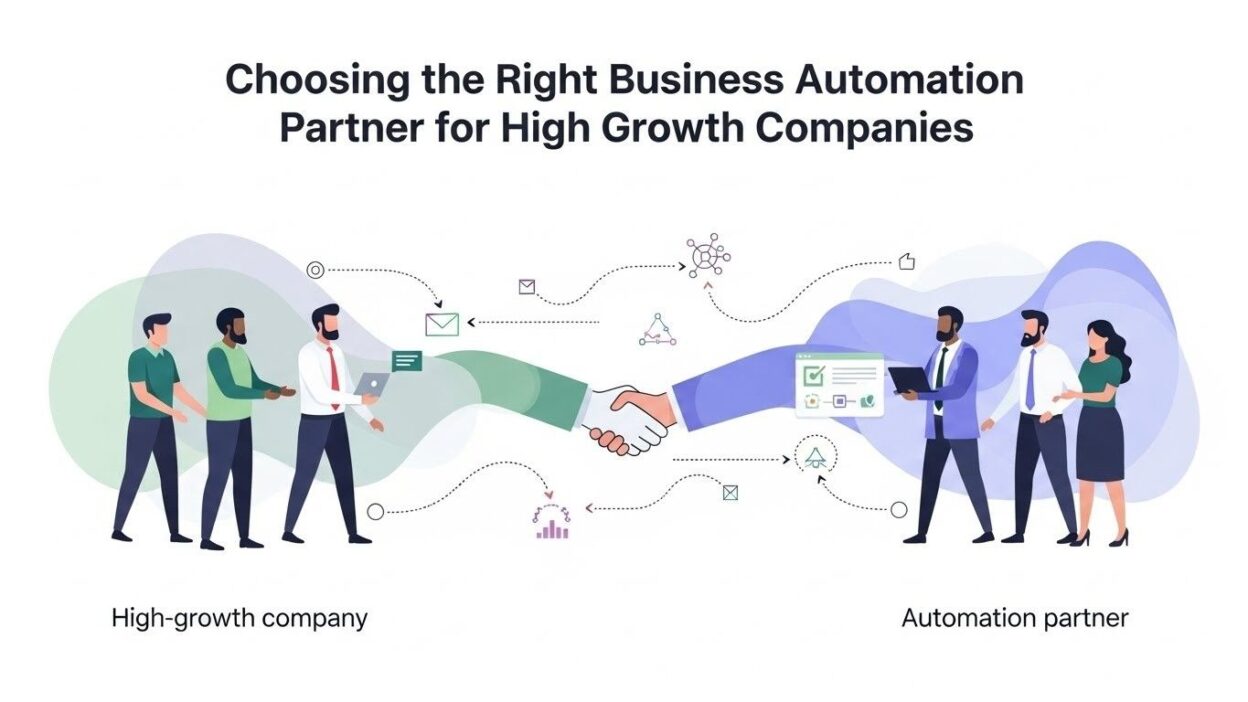
A business automation partner for high growth companies provides the expertise and resources you need. These specialized firms understand the unique pressures of rapid expansion. They’ve helped dozens of companies navigate similar scaling challenges. They bring proven methodologies and battle-tested solutions.
The right partner accelerates your growth trajectory significantly. They automate critical processes before they break completely. They build scalable systems that handle 10X volume increases. They free your team to focus on strategic work instead of operational firefighting.
Choosing poorly creates enormous problems during critical growth phases. Bad partners deliver solutions that don’t scale properly. They miss deadlines when you need capabilities most urgently. They consume resources without delivering promised results. The stakes couldn’t be higher for fast-growing organizations.
Table of Contents
Understanding What High Growth Companies Need From Automation Partners
High growth companies differ fundamentally from stable mature organizations. Their needs change quarterly as circumstances evolve rapidly. What works today may fail completely in three months. Flexibility and adaptability become essential rather than optional.
Revenue growth creates operational complexity that multiplies exponentially. Transaction volumes increase far faster than headcount can match. Customer demands intensify as your market presence expands. Regulatory requirements pile up as you enter new markets. Every dimension of operations strains under accelerating demands.
Traditional automation approaches fail in high growth environments consistently. Long implementation timelines mean solutions arrive too late. Rigid systems cannot adapt to constantly changing requirements. Enterprise platforms overwhelm organizations lacking mature processes. Cookie-cutter solutions don’t address your specific bottlenecks.
A business automation partner for high growth companies understands these unique dynamics intimately. They’ve lived through hypergrowth with previous clients repeatedly. They know which processes break first during rapid scaling. They anticipate problems before they emerge and derail operations.
Scalability as a Core Requirement
Systems must handle dramatic volume increases without performance degradation. What processes 1,000 transactions daily needs to handle 10,000 soon. Architecture decisions made today determine scalability for years ahead. Poor architectural choices create technical debt that compounds rapidly.
Automation partners should design for elastic scalability from day one. Cloud-native architectures enable horizontal scaling automatically. Load balancing distributes work across multiple servers efficiently. Database designs prevent bottlenecks at high transaction volumes. Every component anticipates growth rather than assuming static loads.
Cost efficiency during scaling matters enormously to growing companies. Linear scaling where costs rise proportionally with volume kills profitability. Smart automation delivers exponential improvements where output grows faster than costs. Resource optimization ensures you’re not overpaying for unused capacity. Efficient scaling protects margins as revenue expands.
Testing at scale validates that systems actually handle projected loads. Load testing simulates peak transaction volumes before they arrive. Performance monitoring identifies bottlenecks under stress conditions. Capacity planning ensures infrastructure keeps pace with business growth. Proactive testing prevents catastrophic failures during critical periods.
Your business automation partner for high growth companies should obsess over scalability. They must demonstrate experience handling similar growth trajectories. They should provide references from companies that scaled successfully. They need concrete examples of architectures that handled 10X growth. Scalability expertise separates qualified partners from pretenders.
Speed and Agility in Implementation
High growth companies cannot wait six months for automation capabilities. Market windows close quickly and competitors move fast. Delayed implementations mean missed revenue opportunities. Speed to value determines whether automation actually helps your growth.
Agile methodologies enable rapid iterative delivery of automation capabilities. Partners deliver working features in two-week sprints consistently. You see progress and provide feedback continuously. The approach reduces risk compared to waterfall implementations. Value accrues incrementally rather than waiting for complete delivery.
Minimum viable product thinking focuses effort on highest-impact features first. Perfect comprehensive solutions take too long for fast-growing companies. Good-enough automation that works now beats perfect solutions arriving too late. You can iterate and improve after capturing initial value. Speed trumps perfection in high growth environments.
Pre-built components and templates accelerate development dramatically. Partners shouldn’t build everything from scratch each time. Reusable modules for common patterns save weeks of effort. Industry-specific templates provide solid starting points. Customization focuses on your unique differentiators rather than commodity functionality.
Parallel workstreams maximize development velocity without creating chaos. Multiple teams work on different components simultaneously. Clear interfaces between components prevent integration nightmares. Regular synchronization keeps parallel efforts aligned. Parallelization compresses timelines that would otherwise stretch indefinitely.
Flexibility to Evolve With Your Business
Business models evolve constantly during high growth phases. You enter new markets with different requirements regularly. Product lines expand and diversify rapidly. Organizational structures reorganize quarterly. Your automation must adapt to these changes seamlessly.
Modular architectures enable changes without complete rebuilds. Well-designed systems isolate components that change frequently. Modifications to one module don’t break others unexpectedly. Loose coupling between systems allows independent evolution. Modularity makes change manageable rather than catastrophic.
Configuration over customization reduces the cost of change substantially. Systems that adapt through configuration rather than code changes save enormous time. Business users can adjust behaviors without developer involvement. Changes deploy in hours instead of weeks. Configuration flexibility enables rapid experimentation and learning.
API-first designs facilitate integration with emerging tools and platforms. New capabilities connect easily through well-documented interfaces. You’re not locked into partner-specific ecosystems permanently. Standard protocols enable best-of-breed approaches. Flexibility in integration protects future optionality.
A business automation partner for high growth companies embraces change rather than resisting it. They design systems anticipating evolution from the beginning. They welcome changing requirements as learning rather than scope creep. They adapt quickly when business realities shift. Flexibility in their approach matches flexibility in your business.
Critical Evaluation Criteria for Automation Partners
Selecting the right automation partner requires systematic evaluation. Sales presentations showcase capabilities but hide weaknesses. Reference calls provide filtered perspectives. Careful due diligence separates marketing from reality. Objective criteria guide better decisions.
Industry Experience and Domain Expertise
Partners who’ve worked in your industry understand your specific challenges. They know regulatory requirements and compliance needs. They grasp competitive dynamics and market pressures. They speak your language and understand domain concepts. Industry experience accelerates delivery and improves solution quality.
Verify claimed industry experience through detailed discussions. Ask about specific challenges they’ve solved for similar companies. Request examples of industry-specific automation they’ve built. Check how deeply they understand your particular vertical. Surface-level awareness differs dramatically from deep expertise.
Domain expertise extends beyond general industry knowledge. Partners should understand your specific business model intricacies. They need familiarity with your technology stack and existing systems. They should grasp your growth trajectory and scaling challenges. Specific relevant experience matters more than broad shallow experience.
Client references from similar companies provide validation. Speak with companies at comparable growth stages in your industry. Ask about challenges that arose during implementation. Understand how the partner handled unexpected problems. References reveal far more than marketing materials ever could.
Choosing a business automation partner for high growth companies means finding industry-specific expertise. Generalists may understand automation but miss domain nuances. Specialists deliver solutions that work correctly the first time. They avoid rookie mistakes that consume time and money. Domain expertise accelerates time to value significantly.
Technical Capabilities and Technology Stack
Modern automation requires sophisticated technical capabilities across multiple domains. Partners need expertise in cloud platforms and architecture. They must understand APIs and integration patterns. They should know machine learning and AI applications. They need proficiency in modern development tools and frameworks.
Evaluate technical capabilities through detailed architecture discussions. Ask how they’d solve your specific technical challenges. Request architecture diagrams for similar implementations. Probe their understanding of your existing technology stack. Technical depth becomes obvious quickly during substantive conversations.
Technology stack choices impact long-term maintenance and evolution. Modern cloud-native stacks scale better than legacy architectures. Popular mainstream technologies have better tool support and talent availability. Proprietary platforms create vendor lock-in risks. Technology choices made now constrain options for years.
Development practices indicate solution quality and sustainability. Partners should follow modern software engineering best practices. Version control, testing, and CI/CD should be standard. Code reviews and documentation should happen consistently. Good practices produce maintainable systems that age well.
Security expertise has become absolutely essential for automation partners. They must understand authentication and authorization patterns. They need knowledge of encryption and data protection. They should grasp compliance requirements like GDPR and CCPA. Security breaches during growth phases can destroy companies.
Track Record With High Growth Companies
Past performance provides the best predictor of future results. Partners who’ve helped companies scale successfully understand the challenges. They’ve developed methodologies that work in high-pressure environments. They know how to deliver under tight timelines. Experience with growth creates invaluable pattern recognition.
Request case studies from high growth company engagements specifically. Generic enterprise case studies don’t demonstrate relevant capabilities. Look for companies that grew 2-3X during the engagement. Understand the specific automation challenges they addressed. Verify that outcomes matched objectives measurably.
Growth rate matters as much as absolute company size. A business automation partner for high growth companies needs experience with rapid scaling. Helping a stable Fortune 500 differs completely from supporting hypergrowth. The pace and chaos of fast growth require different approaches. Partners must thrive in dynamic uncertain environments.
Ask about challenges and failures during previous engagements. Every project encounters obstacles and setbacks. How partners handled difficulties reveals their capabilities. Look for honest discussion of what went wrong and how they adapted. Evasiveness about challenges suggests inexperience or dishonesty.
Retention rates with growth company clients signal satisfaction. Partners who deliver value build long-term relationships. Clients expand engagements and return for additional projects. High churn suggests poor performance or mismatched expectations. Long-term relationships validate partner capabilities better than testimonials.
Cultural Fit and Communication Style
Technical capabilities alone don’t guarantee successful partnerships. Cultural alignment determines day-to-day working relationship quality. Mismatched work styles create friction and slow progress. Communication problems compound into major obstacles. Cultural fit matters as much as technical competence.
Assess work style compatibility during the evaluation process. Do they move fast or deliberate slowly? Are they comfortable with ambiguity and change? Do they take ownership or deflect responsibility? Do they communicate proactively or require constant status requests? Observe behaviors during sales interactions.
Communication styles must align across both organizations. Some companies prefer detailed written documentation. Others work through rapid verbal discussions. Some want daily updates while others prefer weekly summaries. Mismatched communication creates frustration. Alignment prevents unnecessary conflict.
Values and ethics shape how partners approach challenges. Do they prioritize speed or perfection? Do they favor innovation or proven approaches? Are they transparent about limitations and risks? Do they stand behind their work or make excuses? Values become apparent through careful observation.
Team dynamics during discovery reveal partnership potential. Watch how partner teams interact with your employees. Do they listen carefully or talk over people? Do they ask insightful questions or make assumptions? Do they respect your domain knowledge? Early interactions predict long-term relationships.
A business automation partner for high growth companies must match your pace and culture. Slow methodical partners frustrate fast-moving organizations. Risk-averse partners constrain innovative companies. Cultural fit enables smooth collaboration under pressure. Misalignment creates conflict when you need focus.
Key Questions to Ask Potential Partners
Evaluation conversations should probe deeply beyond surface-level capabilities. Prepared questions reveal expertise and expose weaknesses. Partner responses demonstrate their understanding and approach. Strategic questioning guides better selection decisions.
About Their Experience and Approach
Ask how many high growth companies they’ve worked with specifically. Request names and growth rates during their engagements. Understand the industries and business models they’ve supported. Verify their experience matches your specific circumstances. Quantity and relevance of experience both matter.
Inquire about their typical project timeline from kickoff to production. Understand what drives timeline variations across engagements. Ask how they accelerate delivery when urgency demands it. Learn about their fastest successful implementation. Timelines reveal their actual agility and capabilities.
Request their standard implementation methodology in detail. Understand whether they follow agile, waterfall, or hybrid approaches. Ask how they handle changing requirements during projects. Learn how they prioritize features when scope exceeds capacity. Methodology determines flexibility and speed.
Question how they staff projects and manage team continuity. Understand whether you get dedicated teams or shared resources. Ask about experience levels of team members assigned. Learn about their bench depth for scaling team size. Staffing practices impact project success significantly.
Probe how they handle knowledge transfer and training. Understand what documentation they provide about implemented systems. Ask about training programs for your team members. Learn about ongoing support after initial implementation. Knowledge transfer determines long-term sustainability.
About Scalability and Technical Architecture
Ask how they design for scalability from initial architecture. Request specific examples of systems that scaled 10X successfully. Understand their load testing and performance validation approaches. Learn about their capacity planning methodologies. Scalability claims need concrete evidence.
Inquire about their cloud platform expertise and preferences. Understand whether they’re AWS, Azure, or Google Cloud certified. Ask about multi-cloud capabilities if vendor independence matters. Learn about their infrastructure-as-code practices. Cloud expertise determines scalability and cost efficiency.
Question their approach to integration with existing systems. Understand how they connect with legacy platforms and modern tools. Ask about API design principles and integration patterns. Learn about their experience with your specific tech stack. Integration complexity often determines project success.
Probe their security and compliance capabilities thoroughly. Ask about security certifications and audit experience. Understand their data protection and privacy practices. Learn about compliance with relevant regulations. Security mistakes during growth create existential risks.
Request information about system monitoring and alerting. Understand how they ensure automated systems stay operational. Ask about their incident response and resolution processes. Learn about uptime guarantees and support SLAs. Operational excellence matters as much as initial delivery.
About Project Management and Communication
Ask how they manage project timelines and deliverables. Understand their approach to milestone setting and tracking. Learn about their change management processes. Inquire about typical communication rhythms and formats. Project management determines whether timelines hold.
Question how they handle scope changes and unexpected challenges. Understand their flexibility when requirements evolve. Ask about processes for prioritizing work and making tradeoffs. Learn how they communicate risks and issues. Problem handling reveals partnership quality.
Inquire about their escalation paths for critical issues. Understand who you contact when emergencies occur. Ask about response time commitments for different severity levels. Learn about their after-hours and weekend support. Escalation processes determine crisis management effectiveness.
Request details about reporting and transparency practices. Understand what visibility you’ll have into project progress. Ask about dashboard and status reporting tools. Learn about their approach to budget tracking and forecasting. Transparency builds trust and enables informed decisions.
Probe their experience managing relationships with executive stakeholders. Understand how they communicate with C-level leadership. Ask about executive sponsorship requirements for success. Learn about their escalation to executives when needed. Executive relationship skills matter for strategic initiatives.
A business automation partner for high growth companies should answer these questions confidently. Vague or evasive responses suggest limited experience. Detailed concrete answers demonstrate real expertise. Question quality reveals as much about you as answers reveal about partners.
Warning Signs and Red Flags
Some warning signs indicate partners likely to cause problems. Recognizing red flags early prevents costly mistakes. Trust your instincts when something feels wrong. Walking away beats committing to bad partnerships.
Overpromising and Unrealistic Commitments
Partners who promise everything you want without caveats lack honesty. Complex automation projects always encounter challenges. No one delivers perfectly on time and under budget consistently. Overselling suggests desperation or inexperience. Honest partners discuss realistic tradeoffs and risks.
Extremely aggressive timelines that seem too good indicate problems. Proper automation takes time for requirements, development, and testing. Shortcuts lead to technical debt and operational issues. Question how they’ll achieve timelines that seem unrealistic. Vague answers about methodology reveal wishful thinking.
Fixed-price contracts with comprehensive scope deserve scrutiny. High growth companies face constantly evolving requirements. Rigid fixed-price deals incentivize scope battles and corners cut. Partners who insist on fixed pricing may prioritize their margins over your success. Flexible commercial models better suit dynamic environments.
Claims that they can automate anything without understanding specifics signal arrogance. Every business has unique aspects requiring custom approaches. Partners should ask extensive questions before proposing solutions. One-size-fits-all promises ignore your specific challenges. Thoughtful partners acknowledge complexity rather than minimizing it.
Lack of Relevant Experience
Partners without high growth company experience will learn on your dime. The unique pressures of rapid scaling require specific expertise. Generalists may understand automation but miss growth-specific challenges. You need specialists who’ve navigated similar situations before.
Inability to provide relevant references raises serious concerns. Partners should eagerly connect you with satisfied clients. Hesitation suggests unhappy customers or limited experience. References from different industries or company stages don’t validate capabilities. Insist on speaking with similar companies they’ve helped.
Team members without automation expertise in your technology stack create risks. Learning your platforms during implementation wastes time and money. Misunderstanding technical constraints leads to poor architectural choices. Partners should already know your tech stack intimately. Gaps in technical knowledge compound during implementation.
A business automation partner for high growth companies must demonstrate specific relevant experience. Generic automation expertise doesn’t address your unique needs. Startups have different needs than mature enterprises. Fast growth creates pressures stable companies never face. Relevant experience is absolutely essential.
Poor Communication and Transparency
Communication problems during sales predict worse issues during delivery. Partners who don’t respond promptly to inquiries will disappoint later. Evasive answers to direct questions suggest hidden problems. Poor listening during discovery indicates they’ll miss requirements. Communication quality matters enormously to partnership success.
Reluctance to discuss past failures or challenges suggests dishonesty. Every complex project encounters obstacles and setbacks. Honest partners discuss what went wrong and how they adapted. Pretending everything always goes perfectly indicates inexperience or deception. Transparency about difficulties builds trust.
Pressure tactics to sign quickly without adequate evaluation deserve suspicion. Good partners want you to make informed comfortable decisions. Artificial urgency suggests desperation for revenue. Discounts that expire in days manipulate rather than serve. Respectful partners accommodate your decision timeline.
Unwillingness to provide detailed proposals and documentation before signing raises red flags. You need comprehensive understanding of scope, timeline, and costs. Partners should invest time in detailed proposals that demonstrate understanding. Vague statements of work create inevitable disputes later. Thorough documentation protects both parties.
Structuring Successful Partnership Agreements
Contract terms determine the foundation for your working relationship. Well-structured agreements align incentives and clarify expectations. Poor contracts create conflict and disappointment. Invest time in getting partnership terms right.
Scope Definition and Change Management
Define initial scope as clearly as possible given growth uncertainties. Document specific processes being automated and expected outcomes. Identify systems being integrated and data flows required. Establish what’s included versus explicitly out of scope. Clarity prevents misunderstandings and scope creep.
Acknowledge that requirements will evolve during high growth phases. Build change management processes into contracts explicitly. Define how scope changes get evaluated and priced. Establish approval authorities for different change magnitudes. Flexibility in scope management matches business reality.
Create mechanisms for prioritizing work as requirements expand. Not everything can happen simultaneously within budget and timeline. Partners should help evaluate business value and implementation effort. Prioritization processes enable intelligent tradeoffs. Collaborative priority setting aligns efforts with evolving needs.
A business automation partner for high growth companies needs flexible scope management. Rigid contracts break under growth pressures. Change processes should enable adaptation not create barriers. Reasonable change management protects both parties fairly. Flexibility in agreements matches flexibility in business.
Timeline Commitments and Milestone Payments
Establish realistic timelines based on thorough discovery. Rushed schedules lead to cutting corners and technical debt. Buffer for inevitable challenges and requirements changes. Aggressive but achievable timelines balance speed with quality. Honest timeline discussions prevent disappointment later.
Structure payments around meaningful milestones and deliverables. Milestone completion should represent genuine progress and value. Avoid large upfront payments before work begins. Backend-loaded payments ensure partner incentives align with your success. Payment structures should motivate excellent delivery.
Define milestone acceptance criteria explicitly and measurably. Vague criteria create disputes about whether milestones complete. Specific acceptance criteria enable objective evaluation. Testing and validation requirements should be clear. Explicit criteria prevent payment disputes.
Include timeline flexibility for circumstances beyond partner control. Your delayed decisions or resource availability can impact schedules. Force majeure provisions address truly unexpected events. Reasonable flexibility prevents unfair blame for delays. Balance accountability with recognition that projects involve two parties.
Performance Metrics and Success Criteria
Define specific measurable outcomes automation should achieve. Vague goals like “improve efficiency” don’t enable objective evaluation. Quantify expected time savings, error reductions, or capacity increases. Baseline current metrics before implementation begins. Concrete targets align efforts and enable success measurement.
Establish both implementation metrics and operational outcomes. Implementation metrics track delivery progress and quality. Operational metrics measure business impact after deployment. Both matter but serve different purposes. Comprehensive metrics provide complete performance picture.
Include system performance requirements in success criteria explicitly. Response time, uptime, and error rate requirements should be clear. Performance SLAs establish minimum acceptable standards. Monitoring and reporting of metrics should happen automatically. Performance standards ensure automation actually works reliably.
Consider outcome-based compensation that rewards results achieved. Base fees cover development work and partner costs. Bonus payments reward exceeding performance targets. Outcome-based structures align partner incentives with your success. Shared risk and reward create true partnership alignment.
Intellectual Property and Data Rights
Clarify ownership of custom code and automation workflows developed. You should own work products created specifically for your business. Partners may retain ownership of reusable components and frameworks. Clear IP provisions prevent future disputes. Ownership matters if you ever switch partners.
Establish data rights and confidentiality protections rigorously. Partners access sensitive business and customer information. Confidentiality agreements protect your proprietary data. Data usage restrictions prevent misuse. Security requirements should be explicit and auditable.
Address what happens to systems and data if partnership ends. You need continued access to automation systems and underlying data. Transition assistance should be contractually required. Source code and documentation transfer should be specified. Exit provisions protect you from vendor lock-in.
A business automation partner for high growth companies should agree to reasonable IP and data terms. Protective provisions benefit both parties by clarifying expectations. Fair agreements enable trusting collaborative relationships. Unreasonable demands from either side signal potential problems.
Frequently Asked Questions
What defines a high growth company for automation purposes?
High growth companies typically grow revenue 40% or more annually. They expand headcount rapidly across multiple departments. They enter new markets and launch products frequently. Their operations strain under accelerating demands. Growth rates distinguish them from stable mature companies. Automation needs differ significantly from steady-state organizations. Partners must understand unique high growth challenges.
How much should we budget for business automation?
Budgets vary enormously based on scope and complexity. Simple process automation starts around $25,000-$50,000. Department-level automation typically costs $100,000-$300,000. Enterprise-wide programs often exceed $500,000 or more. ROI typically materializes within 12-24 months. Investment scales with automation scope and organizational size. Partners should help establish realistic budgets during discovery.
Should we choose a large consulting firm or boutique specialist?
Large firms offer resources and breadth but may not prioritize your project. Boutique specialists provide focused attention and deeper expertise. High growth companies often benefit from specialist attention. Cultural fit matters more than firm size. Evaluate specific teams who’ll do the work. Track records with similar companies matter most.
How long does typical automation implementation take?
Simple process automations deploy in 6-12 weeks typically. Complex multi-system integrations require 4-6 months. Enterprise-wide programs span 9-12 months or more. Phased delivery provides value incrementally throughout timelines. High growth companies need faster delivery than traditional enterprises. A business automation partner for high growth companies should move quickly.
What if our requirements change during implementation?
Requirements will definitely change during high growth phases. Good partners expect and accommodate evolution. Change management processes handle requirements shifts. Some changes require timeline or budget adjustments. Flexibility should be built into partnership agreements. Agile methodologies handle change better than waterfall.
How do we measure automation ROI?
Track time saved on automated processes carefully. Calculate labor cost reductions from efficiency gains. Monitor error rate improvements and associated savings. Measure customer satisfaction and experience changes. Quantify revenue impact from faster processing. Compare costs against baseline before automation. Most companies achieve 200-400% ROI.
What ongoing support will we need after implementation?
Automation requires monitoring, maintenance, and enhancement. Systems need updates as business requirements evolve. Technical issues require troubleshooting and resolution. User training needs continue as teams change. Budget 15-20% of implementation costs annually. Partners should offer ongoing support contracts. Internal capabilities should grow over time.
How do we avoid vendor lock-in?
Insist on owning custom code and system documentation. Use standard technologies rather than proprietary platforms. Design for portability with modular architectures. Maintain internal knowledge through training and documentation. Build API-first systems that enable tool swapping. Exit provisions in contracts provide transition rights.
Can we implement automation in phases?
Phased implementation reduces risk substantially. Start with highest-impact processes first. Deliver value before tackling comprehensive automation. Learn from early phases to improve later ones. Phases enable budget spreading over time. Most successful programs use phased approaches. A business automation partner for high growth companies should support phasing.
What makes a partnership successful long-term?
Clear communication and aligned expectations prevent conflicts. Regular transparency about progress and challenges builds trust. Flexibility to adapt as business evolves maintains relevance. Demonstrated ROI justifies continued investment. Cultural fit enables smooth collaboration. Mutual respect and partnership mindset sustain relationships. Success metrics should be defined and tracked.
Read more:-How API Integration for Business Automation Improves Efficiency for Fast-Growing Companies
Conclusion
High growth companies face automation challenges unlike any other organizations. Rapid scaling creates operational pressures that demand immediate solutions. Manual processes break under exponential volume increases. Systems buckle as requirements multiply faster than resources.
The right business automation partner for high growth companies accelerates transformation dramatically. Specialized partners understand unique high growth dynamics intimately. They’ve navigated similar scaling challenges with previous clients. They bring proven methodologies and battle-tested solutions.
Selection requires thorough evaluation across multiple critical dimensions. Industry experience ensures partners understand your specific context. Technical capabilities determine solution quality and scalability. Track records with growth companies validate claimed expertise. Cultural fit enables smooth collaboration under pressure.
Strategic questioning reveals partner capabilities beyond sales presentations. Ask about specific experience with companies like yours. Probe their approach to scalability and technical architecture. Understand their project management and communication practices. Thoughtful questions expose strengths and weaknesses clearly.
Warning signs during evaluation predict partnership problems ahead. Overpromising suggests desperation or inexperience. Lack of relevant references raises serious concerns. Poor communication during sales worsens during delivery. Trust your instincts when something feels wrong.
Contract structures determine the foundation for successful collaboration. Clear scope definition with flexible change management matches growth reality. Milestone-based payments align incentives appropriately. Performance metrics enable objective success evaluation. Fair IP and data provisions protect both parties.
Investment in automation delivers substantial returns quickly. Efficiency gains reduce costs while enabling revenue growth. Quality improvements enhance customer satisfaction measurably. Speed advantages create competitive differentiation. ROI typically materializes within 12-24 months.
The partnership extends beyond initial implementation significantly. Ongoing support maintains and enhances automation over time. Continuous improvement adapts systems as business evolves. Long-term relationships deliver compounding value over years. Choose partners you can grow with indefinitely.
Competition for automation partners has intensified dramatically. Growth companies across industries pursue similar transformation goals. Top partners have full pipelines and selective client criteria. Act decisively when you find truly qualified partners. Delays mean watching automation opportunities slip away.
Your automation success depends fundamentally on partner selection. Technical capabilities matter but aren’t sufficient alone. Experience with high growth dynamics is absolutely essential. Cultural alignment determines day-to-day collaboration quality. The stakes couldn’t be higher during critical growth phases.
Start your partner evaluation process immediately. Define your specific automation needs and priorities clearly. Research potential partners with relevant experience thoroughly. Conduct comprehensive evaluation following the criteria outlined here. Make informed confident decisions about this critical relationship.
Choosing a business automation partner for high growth companies represents strategic investment in your future. The partner you select will shape your operational capabilities for years. Their work will determine whether you scale efficiently or stumble badly. Smart selection decisions compound returns over time substantially.
Your high growth journey demands the right automation partner. Begin your search with clear criteria and thorough evaluation. Trust the process and your informed judgment. The perfect partner exists for your specific needs. Find them and accelerate your transformation journey today.