Introduction
TL;DR Sales representatives spend hours each week logging call notes manually into CRM systems. Critical customer details slip through the cracks during rushed data entry sessions. Your best reps focus on selling rather than administrative tasks that drain their productivity. Manual documentation creates inconsistent records that undermine team collaboration and forecasting accuracy. The solution exists in technology that captures and organizes voice conversations automatically. Automated voice-to-CRM sync eliminates tedious data entry while creating comprehensive interaction records. Modern sales teams leverage this technology to close more deals in less time.
Table of Contents
Understanding Voice-to-CRM Synchronization
What Automated Voice-to-CRM Sync Actually Does
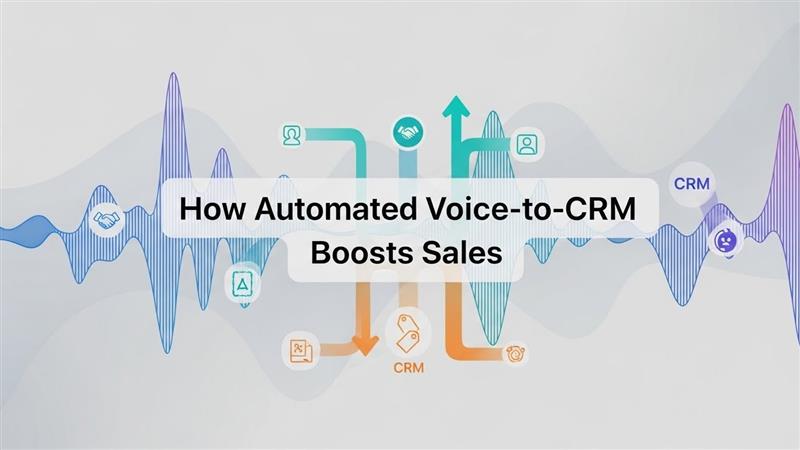
Voice synchronization technology records sales calls and extracts meaningful information automatically. Speech recognition converts spoken words into searchable text transcripts. Natural language processing identifies key discussion points like pricing, objections, and next steps. The system populates relevant CRM fields with extracted information without manual intervention. Call recordings attach directly to opportunity records for future reference. Sentiment analysis detects customer emotions and engagement levels during conversations. Automated voice-to-CRM sync creates detailed interaction histories that manual logging could never match.
Core Technology Components
Several integrated technologies work together to enable seamless voice synchronization. Cloud telephony systems capture and store call audio in accessible formats. Automatic speech recognition engines transcribe conversations with high accuracy. Natural language understanding algorithms interpret meaning from transcribed text. CRM integration APIs push extracted data into appropriate database fields. Machine learning models improve accuracy by learning from user corrections over time. The technical stack behind automated voice-to-CRM sync continues advancing rapidly.
Traditional Call Logging Problems
Manual documentation creates numerous problems that plague sales organizations. Representatives forget important details mentioned during lengthy customer conversations. Data entry happens hours or days after calls when memories fade. Inconsistent formatting makes searching historical records difficult and time-consuming. Reps skip logging altogether when they feel overwhelmed by administrative burden. Managers lack visibility into actual conversation content beyond brief notes. Sales forecasts suffer from incomplete or inaccurate pipeline information. Automated voice-to-CRM sync solves these persistent challenges systematically.
Benefits for Sales Teams
Voice synchronization delivers transformative improvements across multiple sales performance dimensions. Representatives reclaim 5-10 hours weekly previously spent on manual data entry. Deal cycles accelerate when teams access complete conversation history instantly. Coaching effectiveness improves when managers review actual call recordings and transcripts. Forecast accuracy increases through comprehensive documentation of customer commitments. Onboarding speeds up as new reps learn from top performer call examples. Revenue grows when reps spend more time selling and less on administration. Implementing automated voice-to-CRM sync generates measurable ROI quickly.
Reclaiming Sales Rep Time
Quantifying Time Lost to Manual Entry
Most organizations underestimate how much productive selling time manual logging consumes. Average representatives spend 45-60 minutes daily documenting calls and updating records. Complex enterprise sales require even more extensive note-taking and field updates. Time spent on data entry reduces actual selling activities by 15-20% weekly. Top performers particularly resent administrative tasks that prevent them from prospecting. Multiply these hours across your entire sales team to see the staggering total. Automated voice-to-CRM sync recovers this lost time immediately.
Eliminating Administrative Burden
Sales representatives entered their profession to build relationships and close deals. Administrative tasks create frustration and reduce job satisfaction significantly. Data entry errors occur more frequently when reps rush through required documentation. Important details about customer needs and concerns get oversimplified or omitted. Representatives develop workarounds that undermine CRM data quality and utility. Removing manual logging burden improves morale and reduces turnover. Automated voice-to-CRM sync lets reps focus on revenue-generating activities exclusively.
Increasing Daily Prospecting Capacity
More selling time directly translates into more opportunities and closed deals. Representatives can make additional discovery calls when administrative tasks disappear. Follow-up conversations happen sooner when scheduling no longer competes with logging. Prospecting activities increase when reps feel energized rather than drained by paperwork. Email personalization improves when reps have time to craft thoughtful messages. Relationship building deepens through more frequent and meaningful customer interactions. The productivity gains from automated voice-to-CRM sync compound over time.
Improving Work-Life Balance
Sales remains a demanding profession with significant pressure to meet quotas. Evening and weekend hours often go toward catching up on administrative tasks. Family time suffers when reps bring CRM updates home regularly. Burnout increases when administrative burden feels never-ending and thankless. Job satisfaction improves when technology handles repetitive documentation automatically. Representatives appreciate organizations that invest in tools making their jobs easier. Automated voice-to-CRM sync demonstrates commitment to sales team wellbeing.
Enhancing Data Quality and Completeness
Capturing Every Customer Commitment
Sales conversations contain numerous commitments that teams must track and fulfill. Customers mention budget approval processes, decision timelines, and evaluation criteria. Representatives promise follow-up materials, demos, and proposal delivery dates. Manual notes often miss these critical details during fast-moving conversations. Memory gaps create situations where commitments go unfulfilled and trust erodes. Complete transcripts ensure nothing said during calls gets lost or forgotten. Automated voice-to-CRM sync creates comprehensive records capturing all customer and rep commitments.
Standardizing Information Format
Different representatives document conversations using widely varying formats and detail levels. Some write lengthy paragraphs while others jot cryptic abbreviations. Custom fields go unpopulated because reps forget or don’t understand their importance. Inconsistent data makes reporting, searching, and analysis nearly impossible. New team members can’t decipher previous rep notes when taking over accounts. Managers waste time translating individual note-taking styles into actionable insights. Automated voice-to-CRM sync applies consistent structure to all conversation documentation.
Reducing Human Error
Even diligent representatives make mistakes when manually entering information. Names, companies, and product details get misspelled regularly. Numbers like prices, quantities, and dates suffer frequent transcription errors. Opportunities get associated with wrong contacts or accounts accidentally. Important calls get logged under incorrect opportunity stages. Multi-tasking during calls increases the likelihood of documentation mistakes. Automated voice-to-CRM sync eliminates errors inherent in manual data entry.
Creating Searchable Conversation Archives
Sales teams need to find specific information from past conversations quickly. Manual notes rarely capture enough detail for effective searching later. Representatives waste time listening to entire recordings searching for specific moments. Managers cannot efficiently identify patterns across multiple customer conversations. Coaching opportunities hide within recordings that never get reviewed. Legal and compliance teams struggle to locate relevant calls during audits. Automated voice-to-CRM sync creates fully searchable text transcripts indexed by topic and keyword.
Accelerating Deal Velocity
Faster Handoffs Between Team Members
Complex B2B sales often involve multiple team members engaging with customers. Account executives bring in sales engineers for technical discussions. Inside sales representatives qualify leads before passing to field reps. Account managers coordinate with customer success teams during implementation. Handoffs fail when receiving team members lack context about previous conversations. Reading through incomplete notes delays meaningful engagement with transferred accounts. Automated voice-to-CRM sync provides complete conversation context enabling seamless transitions.
Immediate Access to Customer Context
Representatives need comprehensive customer understanding before every interaction. Reviewing previous call notes takes 10-15 minutes before each conversation. Manual notes often omit important context about customer concerns and priorities. Reps waste meeting time asking customers to repeat information already shared. Customers feel frustrated when they must explain their situation repeatedly. Preparation quality directly impacts meeting productivity and customer perception. Automated voice-to-CRM sync delivers instant access to complete interaction history.
Reducing Follow-Up Delays
Timely follow-through on commitments keeps deals moving forward steadily. Representatives sometimes delay follow-up while organizing notes from previous calls. Searching for customer-mentioned resources or information consumes valuable time. Creating proposal content requires referencing specific requirements discussed during calls. Delays communicate lack of urgency and professionalism to prospects. Competitors gain advantages when your team responds slower than alternatives. Automated voice-to-CRM sync enables immediate action on all customer requests.
Shortening Sales Cycles
Every day shaved from sales cycles improves revenue and capacity utilization. Better preparation reduces the number of meetings required to close deals. Comprehensive documentation prevents repetitive discovery calls gathering the same information. Quick access to past conversations enables faster proposal creation. Following through promptly on commitments builds trust and momentum. Eliminating administrative delays keeps deals progressing steadily forward. Automated voice-to-CRM sync measurably reduces time-to-close across your pipeline.
Improving Sales Forecasting Accuracy
Capturing Real Customer Sentiment
Sales representatives sometimes paint overly optimistic pictures of deal likelihood. Natural optimism and quota pressure create incentives to overstate opportunity quality. Manual notes filter customer feedback through individual rep interpretation and bias. Managers need unfiltered access to actual customer words and tone. Sentiment during conversations reveals true interest levels more accurately than rep assessments. Objections and concerns often get downplayed in manual documentation. Automated voice-to-CRM sync provides objective evidence of customer engagement and intent.
Documenting Verbal Commitments
Forecast accuracy depends on understanding what customers actually committed to purchasing. Customers sometimes express interest without making concrete buying commitments. Representatives occasionally interpret enthusiasm as stronger commitment than customers intended. Budget availability, timeline specificity, and authority confirmation all impact deal probability. Written records of verbal commitments enable more accurate stage assignments. Reviewing actual conversations helps managers identify true qualified opportunities. Automated voice-to-CRM sync creates undisputable records of customer commitments.
Identifying Risk Factors
Deal risks often emerge during conversations but get omitted from manual notes. Customers mention competing vendors, budget concerns, or internal resistance. Implementation complexity and integration requirements affect close probability significantly. Champion strength and decision-making authority determine whether deals actually close. Change management challenges within customer organizations create unexpected delays. Risk identification enables proactive mitigation before deals stall or die. Automated voice-to-CRM sync surfaces risk factors that manual notes might miss.
Enabling Better Pipeline Inspection
Sales managers need visibility into actual deal quality beyond rep-reported stages. Traditional pipeline reviews rely heavily on subjective rep assessments. Managers lack time to listen to recordings from every important opportunity. Call transcripts enable quick scanning for qualification evidence and buying signals. AI analysis can flag opportunities requiring management attention or intervention. Data-driven pipeline inspection replaces gut-feel decision making. Automated voice-to-CRM sync transforms pipeline reviews from speculation to evidence-based analysis.
Enhancing Sales Coaching and Training
Identifying Coaching Opportunities
Effective coaching requires understanding exactly what representatives say during customer conversations. Managers traditionally depend on call shadowing or selective recording review. Shadowing interrupts rep productivity and creates unnatural customer interactions. Selective review introduces bias toward obviously good or bad calls. Many coaching opportunities hide in average calls that never get reviewed. Patterns across multiple calls reveal systematic strengths and improvement areas. Automated voice-to-CRM sync makes every conversation available for coaching analysis.
Analyzing Top Performer Behaviors
Sales leaders want to replicate what top performers do differently from average reps. Successful representatives often cannot articulate why their approaches work effectively. Conversation analysis reveals specific language patterns and techniques that drive results. Talk ratios, question types, and objection handling approaches become quantifiable. Top performer call libraries provide concrete examples for training purposes. New representatives learn faster by studying proven successful conversation patterns. Automated voice-to-CRM sync enables systematic analysis of what winning looks like.
Onboarding New Representatives
New sales hires face steep learning curves understanding products, customers, and selling approaches. Traditional training relies on classroom instruction disconnected from real customer interactions. Role-playing exercises cannot replicate the complexity of actual sales conversations. New reps need exposure to real customer objections, questions, and decision processes. Call libraries organized by topic provide on-demand learning resources. Mentors can reference specific call examples when coaching new team members. Automated voice-to-CRM sync accelerates new rep productivity dramatically.
Tracking Skill Development
Sales skill improvement requires measuring progress against specific competencies over time. Manual coaching notes provide incomplete and inconsistent skill assessments. Managers struggle to track whether coaching interventions actually improve performance. Quantifiable conversation metrics enable objective skill evaluation. Discovery question quantity, objection handling frequency, and talk ratios all reveal competency. Tracking these metrics over time shows whether representatives improve or plateau. Automated voice-to-CRM sync provides data foundation for systematic skill development.
Ensuring Compliance and Risk Management
Recording Conversations for Legal Protection
Sales conversations sometimes result in disputes about what representatives promised customers. Customers occasionally claim they received different information than actually provided. Representatives need protection from false accusations about misleading or deceptive practices. Contracts and proposals should align with what sales conversations actually covered. Disputes about pricing, terms, or deliverables require factual conversation records. Legal teams cannot defend your organization without evidence of actual discussions. Automated voice-to-CRM sync creates comprehensive records protecting both parties.
Monitoring Regulatory Compliance
Regulated industries face strict requirements about sales conversation content and disclosures. Financial services must ensure representatives provide required risk disclosures. Healthcare sales must comply with anti-kickback and privacy regulations. Insurance sales face specific requirements about policy explanation and documentation. Compliance teams cannot manually review every sales conversation for violations. Automated analysis flags conversations requiring review based on keyword and topic detection. Automated voice-to-CRM sync enables systematic compliance monitoring at scale.
Identifying Unauthorized Commitments
Individual representatives sometimes make promises exceeding their authority or company capabilities. Pricing concessions beyond approved discount levels create margin erosion. Custom features or implementation services not in standard offerings create fulfillment problems. Timeline commitments that operations cannot meet damage customer relationships. Warranty extensions or special terms create unacceptable risk exposure. Sales leadership needs visibility into these unauthorized commitments before they become binding. Automated voice-to-CRM sync helps identify problematic commitments early.
Quality Assurance Programs
Systematic conversation review ensures representatives follow established sales methodologies. Quality programs verify that reps conduct proper discovery and needs analysis. Scoring rubrics evaluate calls against competency frameworks and best practices. Organizations can sample conversations randomly to assess team-wide performance. Trends in quality scores reveal whether training programs improve actual behaviors. Feedback loops help representatives understand specifically what to improve. Automated voice-to-CRM sync makes comprehensive quality assurance practically feasible.
Integrating with Sales Technology Stack
CRM Platform Compatibility
Voice synchronization must work seamlessly with your existing CRM system. Native integrations with Salesforce, HubSpot, and Microsoft Dynamics work most reliably. API-based connections enable integration with custom or less common CRM platforms. Bidirectional sync ensures call data flows into CRM while pulling context from existing records. Field mapping defines which transcription elements populate which CRM fields. Real-time synchronization provides immediate availability of call information. Automated voice-to-CRM sync value depends heavily on integration quality.
Conversation Intelligence Platforms
Advanced conversation intelligence tools extract insights beyond basic transcription. AI analysis identifies questions, talk time ratios, and conversational patterns. Competitor mentions, pricing discussions, and objection types get categorized automatically. Deal risk indicators surface when customer language suggests hesitation or concerns. Coaching recommendations appear based on conversation analysis against best practices. Integration between voice sync and intelligence platforms amplifies value. Automated voice-to-CRM sync forms the data foundation for sophisticated analytics.
Sales Engagement Tool Connections
Representatives use sales engagement platforms for outreach sequencing and activity management. Voice sync should trigger engagement platform updates based on call outcomes. Successful conversations might pause email sequences to prevent inbox overload. Call dispositions can trigger specific follow-up sequences automatically. Activity completion tracking reflects calls logged through voice synchronization. Unified activity histories across engagement and CRM platforms prevent data silos. Automated voice-to-CRM sync integrates throughout your sales technology ecosystem.
Business Intelligence and Analytics
Sales operations teams analyze call data to identify trends and opportunities. Call volume, duration, and outcome metrics reveal team performance patterns. Conversion rates at different pipeline stages benefit from conversation content analysis. Win/loss analysis gains depth when examining actual customer conversation content. Forecasting models improve when incorporating conversation-derived leading indicators. Custom dashboards visualize conversation insights alongside traditional CRM metrics. Automated voice-to-CRM sync feeds critical data into business intelligence systems.
Implementation Best Practices
Assessing Organizational Readiness
Successful implementation requires honest evaluation of your current state. CRM adoption and data quality establish the foundation for voice synchronization. Sales process maturity determines how much value you’ll extract from conversation data. Technology infrastructure capabilities affect which solutions will integrate effectively. Change management capabilities predict how well teams will adopt new tools. Budget availability determines whether enterprise or entry-level solutions fit. Readiness assessment ensures you choose appropriate automated voice-to-CRM sync approaches.
Selecting the Right Solution
Numerous vendors offer voice synchronization with varying capabilities and price points. Cloud-based solutions typically deploy faster than on-premise alternatives. Industry-specific features matter for regulated sectors like finance or healthcare. Transcription accuracy varies significantly across different speech recognition engines. Privacy and security features determine compliance with data protection regulations. Vendor stability and support quality affect long-term solution viability. Thorough evaluation ensures you select optimal automated voice-to-CRM sync technology.
Managing Change and Adoption
Technology alone never solves organizational challenges without user adoption. Sales representatives may resist feeling surveilled or micromanaged through call recording. Privacy concerns require transparent policies about recording, storage, and usage. Training programs must demonstrate clear personal benefits beyond organizational advantages. Early adopters and champions help build enthusiasm across broader teams. Feedback loops during rollout enable rapid issue resolution. Change management determines whether automated voice-to-CRM sync delivers promised value.
Measuring Success and ROI
Implementation success requires defining and tracking specific performance metrics. Time savings measurements quantify productivity improvements from eliminated manual entry. Data quality scores assess improvement in CRM record completeness and accuracy. Sales cycle length changes reveal whether deals progress faster with better documentation. Forecast accuracy improvements demonstrate better pipeline visibility and management. Revenue per representative shows bottom-line impact of productivity gains. ROI calculations justify continued investment in automated voice-to-CRM sync.
Privacy and Security Considerations
Call Recording Consent Requirements
Different jurisdictions impose varying requirements about recording customer conversations. Some locations require two-party consent before recording any conversation. Other areas permit recording with single-party consent or just notification. Federal and state regulations may conflict requiring adherence to stricter standards. International sales introduce additional complexity across multiple regulatory regimes. Notification methods range from IVR announcements to email disclosures. Legal compliance forms the foundation of any automated voice-to-CRM sync implementation.
Data Storage and Retention
Recorded conversations contain sensitive business and personal information requiring protection. Encryption in transit and at rest prevents unauthorized access to recordings. Access controls limit who can listen to or read specific conversation records. Retention policies define how long you store recordings before deletion. Geographic data storage locations matter for compliance with data residency laws. Backup and disaster recovery ensure conversation data remains available when needed. Security measures protect your automated voice-to-CRM sync infrastructure comprehensively.
Managing Sensitive Information
Sales conversations inevitably include confidential business and personal details. Credit card numbers, social security numbers, and health information require special handling. Redaction capabilities remove sensitive information from transcripts automatically. Role-based access prevents unnecessary personnel from accessing sensitive conversations. Regular security audits identify potential vulnerabilities in data handling processes. Employee training ensures team members understand their data protection responsibilities. Careful information management protects both customers and your organization in automated voice-to-CRM sync.
International Privacy Regulations
Global sales operations must comply with privacy laws across multiple countries. GDPR imposes strict requirements on European customer data handling. CCPA grants California consumers specific rights about their recorded information. Many countries restrict transferring citizen data to foreign jurisdictions. Privacy regulations generally require disclosing what data you collect and why. Customers often have rights to access, correct, or delete their conversation data. International compliance complexity requires expert legal guidance for automated voice-to-CRM sync.
Read More:-From Prototype to Production: How to Deploy Your First LLM Application
Conclusion

Sales representatives waste significant productive time on manual call documentation. Critical customer information disappears through incomplete note-taking and failing memory. Deal velocity suffers when teams lack immediate access to complete conversation history. Forecast accuracy deteriorates when managers cannot verify actual customer commitments. Coaching effectiveness remains limited without visibility into real sales conversations. These persistent problems undermine sales performance and revenue growth.
Automated voice-to-CRM sync solves these challenges through technology that captures and organizes conversations automatically. Speech recognition transcribes calls into searchable text records. Natural language processing extracts key information and populates CRM fields. Integration ensures conversation data appears alongside all other customer information. Representatives reclaim hours previously spent on tedious administrative work.
The benefits extend far beyond simple time savings. Data quality improves dramatically with complete, consistent conversation documentation. Deal cycles accelerate when teams access comprehensive customer context instantly. Forecasting accuracy increases through objective evidence of customer intent and commitment. Coaching becomes data-driven rather than based on limited observation samples. Compliance monitoring scales to cover every conversation systematically.
Implementation requires careful planning and change management. Assess your organizational readiness before selecting technology solutions. Evaluate vendors based on integration capabilities, accuracy, and security features. Manage the change process to build user adoption and enthusiasm. Measure success through concrete metrics demonstrating productivity and revenue impact.
Privacy and security considerations demand serious attention throughout deployment. Understand consent requirements in all jurisdictions where you operate. Implement robust data protection measures including encryption and access controls. Establish clear policies about recording, storage, and usage. Train teams on compliance obligations and best practices.
The competitive advantage goes to sales organizations leveraging conversation intelligence effectively. Representatives who spend more time selling and less time documenting close more deals. Teams with complete customer context build stronger relationships and solve problems faster. Managers with conversation visibility coach more effectively and forecast more accurately. Organizations protecting themselves through comprehensive records reduce legal and compliance risks.
Your sales team deserves technology that helps them succeed rather than burden them with administration. Automated voice-to-CRM sync represents one of the highest-ROI investments sales leaders can make. The productivity gains alone justify the investment within months. The strategic advantages of better data and insights compound over time.
Start by evaluating your current call documentation challenges and calculating time waste. Research available solutions that integrate with your existing technology stack. Pilot the technology with a small team to prove value before broad deployment. Build adoption through training that emphasizes personal benefits to representatives. Measure results rigorously to demonstrate ROI and guide ongoing optimization.
Modern sales organizations cannot afford to ignore automated voice-to-CRM sync capabilities. Your competitors likely already leverage these technologies to operate more efficiently. Customer expectations continue rising for responsive, personalized engagement. Technology that eliminates administrative burden while improving data quality delivers clear competitive advantages. Implement automated voice-to-CRM sync today to accelerate your sales performance and revenue growth.