Introduction
TL;DR Your customers hang up after waiting three minutes on hold. They call back later only to face the same frustrating experience. Your abandon rates climb while customer satisfaction plummets.
Contact centers face this problem daily. Long wait times destroy customer relationships. They damage your brand reputation. They cost you revenue.
Two solutions promise to fix this issue: auto call callback workflow and virtual queues. Both technologies aim to eliminate hold time frustration. They take fundamentally different approaches to the same problem.
Understanding the distinction between these systems matters enormously. Your choice impacts customer experience, operational efficiency, and bottom-line results. The wrong decision wastes money and frustrates callers.
This guide breaks down both technologies in detail. You’ll learn how each system works, what benefits they deliver, and which scenarios favor each approach.
Table of Contents
Understanding Auto Call Callback Workflow
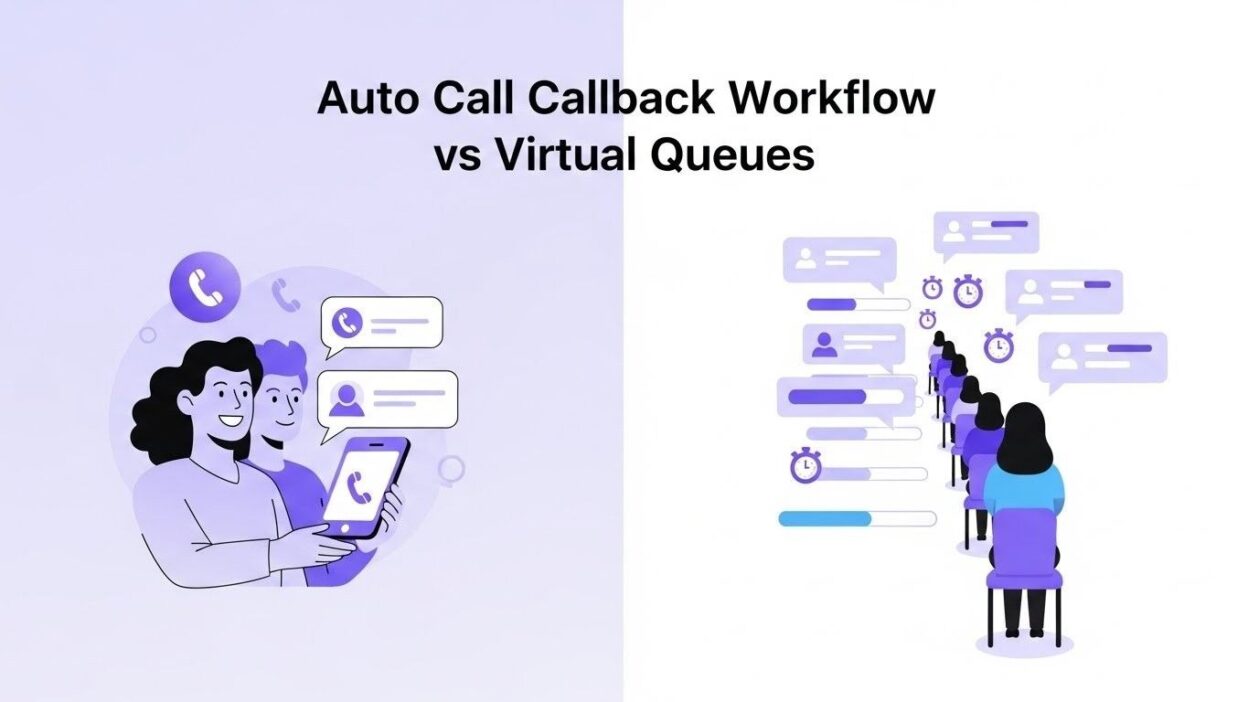
An auto call callback workflow gives customers an escape from hold time purgatory. The system offers callers a simple choice: wait on hold or request a callback. Customers who choose the callback option hang up immediately. The system automatically calls them back when an agent becomes available.
The technology preserves queue position even after disconnection. A customer fifth in line stays fifth in line after requesting a callback. They don’t lose their place by hanging up. They simply wait somewhere more comfortable than holding a phone to their ear.
Auto call callback workflow integrates directly with your existing phone system. The software monitors queue depth and agent availability in real time. It calculates estimated wait times based on current conditions. These estimates help customers make informed decisions about callbacks.
Customer data remains attached to the callback request. When the system connects the customer to an agent, all relevant information displays immediately. The agent sees account details, previous interactions, and the reason for the call. This context enables faster, more personalized service.
The callback process operates automatically without manual intervention. No one schedules these calls manually. No agent dials numbers from a list. The system handles everything based on queue dynamics. Agents simply answer incoming calls as they normally would.
Some auto call callback workflow systems offer scheduled callbacks. Customers can request a call at a specific time rather than whenever an agent becomes free. This flexibility adds convenience for customers with busy schedules. The system queues these scheduled requests appropriately.
SMS and email notifications keep customers informed. They receive confirmation when they request a callback. They get updates if wait times change significantly. They receive a warning shortly before the system calls them back. These touchpoints reduce anxiety and missed callbacks.
How Virtual Queues Work
Virtual queues eliminate the traditional hold experience entirely. Customers never wait on hold listening to music. They enter a digital queue that exists in software rather than on a phone line.
The system collects caller information immediately upon connection. An IVR or chatbot gathers account details and the reason for calling. This information flows into a centralized queue management system. The customer then disconnects from the call.
Queue position updates reach customers through digital channels. Text messages show their current place in line. Mobile apps display real-time position changes. Emails provide status updates at key milestones. Customers track progress without tying up a phone line.
Virtual queues support multiple contact channels simultaneously. A customer might start in the phone queue but receive updates via SMS. They could join through a web form and get status through a mobile app. The queue exists independently of any single channel.
Intelligent routing decisions happen at the queue management layer. The system considers agent skills, customer priority, issue complexity, and current workload. These factors determine which customer connects to which agent. Routing becomes more sophisticated than simple first-in-first-out.
Customers maintain mobility while waiting in virtual queues. They can leave home, run errands, or continue working. The queue follows them through their device. They don’t need to stay near a phone or maintain an active connection.
Digital interactions provide value while customers wait. The virtual queue might serve relevant help articles. It could offer self-service options that resolve issues without agent assistance. Customers make productive use of wait time. Some issues get solved before any agent involvement.
Auto call callback workflow functions within virtual queue architecture in many modern systems. The callback feature becomes one option among several. Customers choose between immediate callback, scheduled callback, or purely digital queue tracking. This flexibility serves diverse customer preferences.
Key Differences Between the Two Systems
Channel dependency separates these approaches fundamentally. Auto call callback workflow lives entirely in the phone channel. Customers call in, request callbacks, and receive calls back. Virtual queues operate across multiple channels including phone, web, mobile app, and messaging platforms.
Customer experience during the wait differs dramatically. Auto call callback workflow customers simply hang up and wait for a call. They don’t interact with the queue system after requesting a callback. Virtual queue customers receive ongoing updates and potentially engage with self-service content.
Queue visibility varies between approaches. Auto call callback workflow operates mostly as a black box. Customers know their approximate wait time when requesting a callback. They don’t see real-time position updates. Virtual queues provide continuous visibility into queue status and position.
Implementation complexity scales differently. Auto call callback workflow integrates directly with phone systems. Setup involves connecting to your ACD or contact center platform. Virtual queues require broader integration across communication channels. They need SMS gateways, app development, and omnichannel orchestration.
Data collection happens at different stages. Auto call callback workflow gathers minimal information during the callback request. Detailed data collection occurs once the agent connects. Virtual queues collect substantial information upfront during the digital enrollment process.
Operational flexibility leans toward virtual queues. These systems enable dynamic resource allocation across channels. Agents can handle phone callbacks, chat messages, and email responses based on real-time demand. Auto call callback workflow focuses exclusively on phone interactions.
Customer control and choice expand with virtual queues. People select their preferred communication channel. They decide when and how to receive updates. They access self-service options while waiting. Auto call callback workflow offers a simpler binary choice: wait or get called back.
Benefits of Auto Call Callback Workflow
Customer satisfaction scores jump when you eliminate hold time. People appreciate having their time respected. They feel valued when companies offer callbacks instead of forcing endless waiting. CSAT scores typically increase by 15-30% after implementing auto call callback workflow.
Call abandon rates drop dramatically. Customers who would normally hang up in frustration request callbacks instead. Your abandon rate might fall from 20% to 5% or lower. Each prevented abandonment represents a preserved customer relationship.
Agent efficiency improves through better workload distribution. Callbacks spread call volume more evenly throughout the day. Morning rush hour peaks flatten out. Agents maintain steadier productivity without overwhelming surge periods.
Infrastructure costs decrease with reduced trunk line usage. Customers waiting in traditional queues tie up phone lines. Each waiting caller consumes network resources. Auto call callback workflow frees these resources immediately. Your telecom costs shrink.
Agent stress levels decline in calmer work environments. Fewer frustrated customers reach agents. The urgency around handling surging queues diminishes. Agents work at sustainable pace without constant pressure.
Service level agreements become easier to meet. You maintain control over when callbacks occur. The system schedules them during periods with agent availability. SLA compliance rates improve without adding headcount.
Customer loyalty strengthens through positive experiences. People remember companies that respect their time. They tell friends about convenient callback options. Word-of-mouth marketing improves.
Revenue protection happens by preventing customer loss. Frustrated customers often abandon both their calls and their business relationships. Auto call callback workflow prevents this double abandonment. You retain customers who might otherwise defect.
Advantages of Virtual Queues
Omnichannel flexibility meets diverse customer preferences. Some people prefer text updates over voice calls. Others want app notifications. Virtual queues serve all these preferences simultaneously. Customer choice drives satisfaction.
Self-service integration reduces agent workload. Many customers solve their own issues using knowledge base articles. The virtual queue surfaces these resources proactively. Resolution happens without any agent involvement. Your cost per contact drops.
Real-time transparency builds customer trust. People see exactly where they stand in the queue. They know how much longer they’ll wait. This visibility reduces anxiety and frustration. Customers feel informed and in control.
Queue abandonment still preserves the customer relationship. Someone who leaves a virtual queue doesn’t disappear entirely. The system retains their information and queue position. You can send follow-up messages offering alternative resolution paths.
Advanced routing capabilities match customers with ideal agents. The system considers technical expertise, language skills, customer value, and interaction history. These intelligent matches improve first-call resolution rates.
Analytics and insights run deeper with virtual queues. You track customer behavior across channels. You measure engagement with self-service content. You identify patterns in queue abandonment. These insights drive continuous improvement.
Scalability extends beyond phone channel limitations. Your phone system has physical trunk line constraints. Virtual queues scale infinitely with cloud infrastructure. Demand spikes don’t require emergency infrastructure expansion.
Integration with broader customer experience platforms comes naturally. Virtual queues connect easily with CRM systems, journey orchestration tools, and analytics platforms. Data flows seamlessly across your tech stack.
When to Choose Auto Call Callback Workflow
Phone-centric contact centers benefit most from auto call callback workflow. Your customers primarily call rather than using digital channels. Your agents handle voice interactions exclusively. Your infrastructure already supports phone well.
Simple implementation timelines favor callback workflows. You need quick wins without complex integration projects. Your IT resources are limited. You want to deploy improvements in weeks rather than months.
Cost-conscious organizations appreciate the lower investment. Auto call callback workflow requires less infrastructure than full virtual queues. Licensing costs run lower. Maintenance demands less technical expertise.
Traditional customer demographics sometimes prefer callbacks. Older customers might feel more comfortable with phone interactions. They may lack smartphones or prefer avoiding apps. Auto call callback workflow serves these preferences perfectly.
Regulated industries with strict recording requirements find callbacks simpler. Every interaction stays within recorded phone channels. Compliance becomes straightforward. Audit trails remain clean and complete.
High-value transactions that require voice discussion suit callback workflows. Complex financial services, healthcare consultations, and technical support often need real-time conversation. Auto call callback workflow preserves this synchronous communication while eliminating hold time.
Staffing constraints make callbacks attractive. You can’t afford to hire more agents. You need to maximize efficiency with your current team. Auto call callback workflow distributes work more evenly without adding headcount.
Seasonal volume spikes demand flexible solutions. Retail contact centers face holiday surges. Tax preparation services see spring peaks. Auto call callback workflow absorbs these spikes without infrastructure expansion.
When Virtual Queues Make More Sense
Digital-first customer bases expect omnichannel experiences. Your customers use mobile apps daily. They prefer text messages over phone calls. They expect modern, flexible communication options. Virtual queues align with these expectations.
Complex customer journeys spanning multiple interactions need virtual queues. A customer might start on the website, move to chat, then request a phone call. Virtual queues orchestrate these transitions seamlessly. The journey feels coherent rather than fragmented.
Heavy self-service emphasis drives virtual queue selection. You maintain extensive knowledge bases and FAQ resources. Many issues resolve without agent assistance. Virtual queues surface these self-service options proactively.
Technical support organizations benefit from pre-call information gathering. Virtual queues collect detailed troubleshooting data before agent connection. Screenshots, error messages, and system information flow in digitally. Agents arrive at calls fully prepared.
Appointment-based service models integrate naturally with virtual queues. Healthcare providers, financial advisors, and consultants often schedule consultations. Virtual queues manage these schedules while handling urgent requests appropriately.
Multichannel contact centers need unified queue management. Your agents handle phone, chat, email, and social media. Virtual queues distribute work across these channels intelligently. Agent utilization improves dramatically.
Advanced analytics requirements justify virtual queue investment. You need detailed insights into customer behavior and queue dynamics. You want to optimize routing algorithms continuously. Virtual queues provide the data infrastructure for sophisticated analysis.
Global operations serving multiple time zones leverage virtual queues effectively. Customers in different regions can join queues and receive callbacks at appropriate local times. The system manages these complexities automatically.
Implementation Considerations for Auto Call Callback Workflow
Phone system compatibility determines technical feasibility. Your ACD platform must support callback functionality. Legacy systems might require middleware or upgrades. Check vendor compatibility before committing to auto call callback workflow.
Callback triggering rules need careful configuration. Define when the system offers callbacks versus requiring holds. Set minimum queue depth thresholds. Establish maximum wait time criteria. These rules balance customer convenience with operational efficiency.
Agent notification systems require clear design. Agents need immediate visibility when answering callbacks. Screen pops should display customer information and callback context. This preparation enables smooth conversation starts.
Callback attempt logic handles missed connections. Customers sometimes don’t answer when the system calls back. Define retry attempts, spacing between tries, and eventual queue re-entry. These rules prevent callbacks from disappearing into voicemail repeatedly.
Customer communication templates need development. Create clear messages explaining how callbacks work. Set accurate expectations about timing. Provide opt-out mechanisms. Test messaging with real customers before full deployment.
Metrics and reporting establish success measurement. Track callback acceptance rates, completion rates, and customer satisfaction. Monitor agent productivity changes. Measure queue abandonment improvements. These metrics prove ROI and identify optimization opportunities.
Training programs prepare agents for callback interactions. Agents need to understand callback context immediately upon answering. They should know how to handle customers who don’t remember requesting callbacks. Role-playing exercises build comfort with the new workflow.
Testing protocols validate system reliability before launch. Simulate various queue scenarios. Test callback timing accuracy. Verify data persistence across disconnection and reconnection. Pilot with a small customer segment before full rollout.
Building Effective Virtual Queue Experiences
Channel strategy determines which touchpoints participate. Decide whether customers can join through web, mobile app, SMS, voice, or all channels. Each channel requires specific integration work. Start with highest-volume channels then expand.
Information collection during enrollment sets agents up for success. Design intake forms that gather essential context without creating friction. Balance data needs against customer patience. Test forms with real users to optimize conversion.
Queue position update frequency requires thoughtful calibration. Too many notifications annoy customers. Too few leave them anxious. Find the right balance through testing. Significant position changes always merit updates.
Self-service content curation during wait time adds value. Surface articles most relevant to the customer’s stated issue. Provide quick troubleshooting steps. Enable issue resolution without ever reaching an agent. Track which content actually helps.
Estimated wait time accuracy matters enormously for trust. Under-promise and over-deliver on timing. Build buffers into estimates. Update predictions as conditions change. Nothing damages credibility like wildly inaccurate estimates.
Callback scheduling interfaces need intuitive design. Customers should easily select preferred time windows. Show agent availability transparently. Confirm appointments immediately. Send reminder notifications as callback times approach.
Queue abandonment recovery workflows salvage relationships. When customers leave the virtual queue, follow up proactively. Offer alternative resolution methods. Provide self-service links. Demonstrate that you care about solving their problem.
Cross-channel handoff processes enable seamless transitions. A customer might join via web but prefer phone callback. The system should preserve all collected information across channel switches. Agents receive complete context regardless of journey path.
Integration with Existing Contact Center Technology
CRM system connections enrich both auto call callback workflow and virtual queue experiences. Customer history, preferences, and account details should flow automatically. Agents see complete context immediately. Post-interaction notes update CRM records in real time.
Workforce management software needs callback data for accurate forecasting. Auto call callback workflow changes arrival patterns compared to traditional queues. Feed callback scheduling information into WFM systems. This integration enables proper staffing decisions.
Quality management platforms should monitor callback interactions. Record and evaluate callbacks just like traditional calls. Apply the same quality standards. Include callback-specific criteria in evaluation forms.
Business intelligence tools need access to queue analytics. Callback acceptance rates, completion rates, and timing accuracy all merit tracking. Build dashboards that compare traditional queue performance against callback or virtual queue metrics.
IVR systems provide the front door for many callback and virtual queue experiences. Design IVR flows that explain options clearly. Offer callback or virtual queue enrollment early in the call flow. Minimize menu depth before presenting these options.
Telephony infrastructure must support callback automation. SIP trunks, ACD systems, and dialers all play roles. Ensure sufficient outbound capacity for callbacks. Configure proper caller ID display so customers recognize callback attempts.
Chat and messaging platforms integrate into virtual queue orchestration. Customers might prefer chat over phone callbacks. The queue system should route to available chat agents appropriately. Preserve conversation context across synchronous and asynchronous interactions.
Customer feedback systems should capture callback and virtual queue satisfaction. Survey customers specifically about their callback or virtual queue experience. Identify friction points. Measure satisfaction separately from overall service satisfaction.
Cost Comparison and ROI Analysis
Licensing fees for auto call callback workflow typically run lower than virtual queues. Callback solutions are narrower in scope. They require fewer integrations. Monthly costs might range from a few thousand to tens of thousands based on call volume.
Virtual queue platforms carry higher price tags. The broader functionality and omnichannel capabilities cost more. Expect licensing fees in the tens of thousands monthly for mid-sized operations. Enterprise deployments can reach six figures annually.
Implementation costs scale with complexity. Auto call callback workflow might deploy in 4-8 weeks with moderate consulting expenses. Virtual queues often require 3-6 months and significant systems integration investment.
Infrastructure savings offset technology costs. Auto call callback workflow reduces trunk line requirements immediately. Virtual queues decrease phone infrastructure needs even more by shifting interactions to digital channels. Calculate these monthly savings carefully.
Agent productivity gains deliver substantial ROI. Smoother workload distribution means each agent handles more interactions daily. Reduced stress improves quality and reduces turnover. Calculate the value of these efficiency improvements.
Customer retention improvements provide long-term value. Each prevented abandonment might represent hundreds or thousands in customer lifetime value. Multiply retention improvements by customer value to quantify this benefit.
Reduced training costs emerge from simplified agent experiences. Agents spending less time managing queue stress need less ongoing coaching. Quality scores improve naturally. Training investments focus on skill development rather than stress management.
Brand reputation enhancements are harder to quantify but quite real. Companies known for respecting customer time earn positive word-of-mouth. Net Promoter Scores improve. These reputation benefits compound over years.
Common Challenges and Solutions
Customer confusion about callback processes requires clear communication. Many people don’t understand how auto call callback workflow functions. They worry about losing their place in line. They fear missing the callback. Address these concerns proactively through clear messaging.
Missed callbacks create frustration and wasted effort. Customers sometimes don’t answer when the system calls back. Implement multiple retry attempts with appropriate spacing. Send SMS notifications before calling. Provide easy re-enrollment options.
Agent resistance to new workflows emerges during transitions. Experienced agents feel comfortable with familiar processes. They worry that callbacks complicate their work. Involve agents in implementation planning. Demonstrate how callbacks improve their daily experience.
Technical integration difficulties delay deployments. Legacy phone systems might not support modern callback features. APIs between systems may have limitations. Budget extra time and resources for integration challenges. Consider middleware solutions.
Queue management complexity grows with sophisticated routing. Virtual queues offer powerful routing options. These options require careful configuration. Poorly designed rules create worse experiences than simple queues. Start simple then add complexity gradually.
Data synchronization across channels causes virtual queue headaches. Customer information must stay current across web, mobile, SMS, and voice. Real-time sync becomes critical. Invest in robust integration architecture.
Privacy concerns arise with callback phone numbers. Customers sometimes provide numbers they don’t want called. Implement confirmation steps. Provide clear privacy policies. Allow easy opt-out mechanisms.
Performance degradation under extreme load tests system limits. Holiday peaks or crisis situations create unprecedented demand. Load test your auto call callback workflow or virtual queue system before peak seasons. Understand breaking points and have contingency plans.
Future Trends in Callback and Queue Technology
Artificial intelligence personalizes callback timing predictions. Machine learning models analyze individual customer patterns. They predict optimal callback windows for each person. Acceptance rates improve through intelligent scheduling.
Proactive outreach capabilities prevent issues before customers call. Systems detect potential problems and initiate callbacks before customers even experience frustration. This shift from reactive to proactive dramatically improves satisfaction.
Video callback options expand beyond voice alone. Customers might request video consultations for complex issues. Virtual queues manage video appointments alongside voice and digital interactions. Bandwidth and platform capabilities make this increasingly viable.
Predictive analytics optimize queue resource allocation. Systems forecast call volume with increasing accuracy. They recommend staffing adjustments in real time. Auto call callback workflow and virtual queue systems become self-optimizing.
Voice biometrics enhance security during callbacks. The system verifies customer identity through voice patterns. Authentication happens seamlessly during natural conversation. Security improves without adding friction.
Emotion detection during queue interactions identifies at-risk customers. Sentiment analysis flags frustrated customers for priority handling. Agents receive emotional context before calls begin. Interventions happen before situations escalate.
Blockchain verification might secure virtual queue positions. Customers receive cryptographic proof of their queue placement. Queue jumping becomes provably impossible. Trust in queue fairness improves.
Integration with smart home devices enables new callback experiences. Alexa or Google Home could manage callback scheduling. Voice assistants provide queue status updates. The line between phone and smart speaker blurs.
Making Your Decision
Assess your current customer communication preferences honestly. Survey customers about their channel usage and preferences. Review interaction data across channels. Let actual behavior guide your decision more than assumptions.
Evaluate your technical infrastructure capabilities realistically. Catalog existing systems and their integration capabilities. Identify gaps between current state and requirements for auto call callback workflow or virtual queues. Budget both money and time for necessary upgrades.
Consider your organizational change capacity. Major technology shifts require change management. Do you have executive sponsorship for transformation? Can your team absorb the learning curve? Sometimes a simpler solution succeeds where a sophisticated one fails.
Calculate total cost of ownership over three years. Include licensing, implementation, integration, training, and maintenance. Factor in opportunity costs of deployment time. Compare these investments against projected benefits.
Pilot before full deployment regardless of which path you choose. Test auto call callback workflow or virtual queues with a subset of customers. Measure results carefully. Gather agent and customer feedback. Use pilot learnings to refine your approach.
Plan for evolution rather than static deployment. Start with auto call callback workflow then potentially expand to virtual queues later. Begin virtual queues on one channel then add others progressively. Your choice today doesn’t lock you in forever.
Consult with customers during the decision process. Focus groups reveal preferences and concerns. Beta testing with volunteers provides real-world validation. Customer input prevents expensive mistakes.
Read More:-Intelligent Intake Systems for Smarter Case Management
Conclusion

Auto call callback workflow and virtual queues both eliminate the misery of traditional hold times. They respect customer time while improving operational efficiency. The choice between them hinges on your specific circumstances.
Auto call callback workflow delivers quick wins for phone-centric operations. Implementation happens faster with lower costs. The technology integrates cleanly with existing phone infrastructure. Customers get immediate relief from hold time frustration.
Virtual queues provide broader capabilities for omnichannel organizations. They serve diverse customer preferences across multiple touchpoints. They enable sophisticated routing and self-service integration. They position your contact center for future evolution.
Neither solution is universally superior. Each shines in particular contexts. Some organizations benefit from deploying both technologies for different customer segments or interaction types.
The worst decision is maintaining the status quo. Traditional queues damage customer relationships and waste resources. Both auto call callback workflow and virtual queues dramatically improve these outcomes.
Technology capabilities continue advancing rapidly. Systems become more intelligent, more integrated, and more customer-centric. Early adopters gain competitive advantages that compound over time.
Your customers will reward you for respecting their time. Satisfaction scores improve. Loyalty strengthens. Word-of-mouth marketing increases. These benefits justify investment many times over.
Start your journey today by clearly defining your goals and constraints. Engage stakeholders across customer service, IT, and finance. Build consensus around the path forward. Execute with focus and commitment.
The contact center landscape is transforming. Auto call callback workflow and virtual queues represent the present and future of queue management. Choose wisely and implement well. Your customers and your bottom line will thank you.