Introduction
TL;DR Engineering teams carry an invisible weight every single day.
They hold context across dozens of systems. They remember why a specific architectural decision got made two years ago. They know which service breaks when you touch a particular config file. They recall the workaround that saved production at 2 AM last quarter.
That knowledge lives in people’s heads. It survives team changes badly. It scales poorly. It disappears entirely when a senior engineer resigns.
This is the core problem an AI second brain for engineering team solves.
A second brain is a living, searchable knowledge system that captures what your team knows and makes it instantly accessible to everyone. Not a static wiki that goes stale in three months. Not a documentation site that nobody updates. A dynamic, intelligent layer that learns from your team’s actual work.
The concept of a second brain comes from productivity researcher Tiago Forte. His framework centers on capturing knowledge externally so your biological brain stays free for deep thinking. Applied to an engineering team, this means building a system that handles institutional memory, surfaces relevant context at the right moment, and stops your team from solving the same problem twice.
Table of Contents
The Hidden Cost of Knowledge Living Only in People’s Heads
Every engineering team has this problem. It just looks different depending on team size.
A five-person startup loses critical context when the founding engineer takes a two-week vacation. A two-hundred-person engineering org loses months of productivity onboarding new hires who cannot find answers to basic questions. A distributed team across three time zones spends hours each week asking questions that someone already answered in a Slack thread six months ago.
The numbers behind this are uncomfortable. Research from McKinsey estimates that knowledge workers spend nearly 20 percent of their working week searching for information. For engineering teams specifically, this translates directly into slower shipping, more bugs, and higher onboarding costs.
The deeper cost is harder to measure. Senior engineers spend mental energy re-explaining the same architecture. Junior engineers hesitate to make decisions because they lack context. Team velocity drops not from technical limitations but from information gaps.
Building an AI second brain for engineering team contexts addresses this directly. It captures knowledge at the moment of creation. It organizes that knowledge intelligently. It retrieves the right piece of context when someone needs it, without requiring a colleague’s time.
This is not a nice-to-have. For teams that want to scale without scaling their communication overhead at the same rate, it is a structural necessity.
What an AI Second Brain Actually Is (and Is Not)
What It Is
An AI second brain for engineering team use is a connected, searchable, continuously updated knowledge repository. It combines multiple sources of information — documentation, code comments, architecture decision records, incident postmortems, Slack conversations, meeting notes, and pull request discussions — into a single intelligent system.
The AI layer sits on top of this repository. It makes the knowledge queryable in natural language. An engineer types a question. The system retrieves the most relevant documents, code references, and previous discussions. It synthesizes an answer with citations so the engineer can verify the source.
The key word is connected. An AI second brain for engineering team work does not replace existing tools. It integrates with them. It reads from your GitHub repositories, your Notion workspace, your Confluence pages, your Slack channels, and your incident management tools. It surfaces knowledge from all of these sources through a single interface.
What It Is Not
It is not a magic knowledge generator. It does not create knowledge your team never captured. It surfaces and organizes what already exists. If your team never documented a decision, the second brain cannot retrieve it.
It is not a chatbot that hallucinates answers. A well-built system retrieves answers grounded in your actual documentation. Every response cites its source. Engineers can verify and trust the output.
It is not a replacement for good engineering practices. Teams still write documentation. They still conduct postmortems. They still record architectural decisions. The second brain makes all of those practices more valuable by making the output instantly accessible and searchable.
It amplifies good practices. It cannot compensate for their absence.
The Core Components of an Engineering Team Second Brain
Knowledge Capture Layer
This layer determines what information enters the system. It must be broad enough to capture real working knowledge and lightweight enough that engineers actually use it.
The best knowledge capture happens close to where work already happens. A pull request description captures design rationale. A postmortem captures failure analysis. A Slack thread captures a debugging decision. An architecture decision record captures a technology choice with its full context and trade-offs.
None of these require extra steps if you build capture into existing workflows. Engineers do not need a separate documentation task. The documentation happens as a byproduct of the work itself.
Knowledge Storage and Structure
Raw captured knowledge needs structure. Unstructured text piles are searchable but not intelligently retrievable. Structure adds metadata: topic, date, author, system affected, related decisions, related incidents.
Vector databases handle AI-powered retrieval. They store documents as mathematical representations called embeddings. When a user queries the system, the query converts to an embedding. The database finds the most semantically similar documents. The AI layer synthesizes an answer from those documents.
Popular choices for this layer include Pinecone, Weaviate, and Chroma. Each has different trade-offs around scale, cost, and infrastructure complexity.
AI Retrieval and Synthesis Layer
This is the intelligence layer. It takes a natural language query, searches the vector database, retrieves relevant documents, and constructs a coherent answer with citations.
Retrieval-Augmented Generation (RAG) is the standard architecture for this layer. The AI does not rely on its training data alone. It retrieves context from your specific knowledge base before generating a response. This grounds answers in your team’s actual documentation.
The retrieval layer must be fast. Engineers ask questions in the flow of work. A system that takes thirty seconds to respond breaks that flow. Target sub-three-second response times for most queries.
Knowledge Presentation Layer
The best knowledge in the world fails if the interface is poor. Engineers need to access the second brain without context-switching. IDE plugins, Slack bots, web interfaces, and CLI tools all serve different use cases. A mature AI second brain for engineering team adoption supports multiple access points.
Building Your Engineering Second Brain
Audit Your Existing Knowledge Assets
Before building anything, map what you already have. List every location where engineering knowledge currently lives. GitHub repositories. Confluence spaces. Notion databases. Slack channels. Google Drive folders. Jira tickets. Email threads.
Categorize each source by type, freshness, and quality. Some sources contain dense, accurate knowledge. Others contain outdated information that would mislead rather than help. Your second brain should ingest the former and flag the latter for cleanup.
This audit also reveals your biggest knowledge gaps. Topics with no documentation. Decisions with no records. Systems with no written explanation. Those gaps become your first documentation priorities after the system launches.
Choose Your Technology Stack
The technology stack for an AI second brain for engineering team deployment depends on your existing infrastructure, your team’s technical preferences, and your budget.
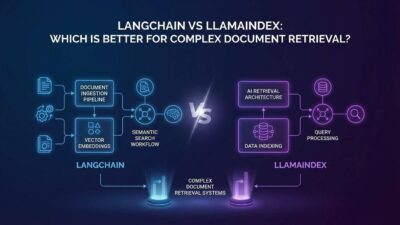
The ingestion layer needs connectors for your existing tools. Several open-source frameworks simplify this. LlamaIndex and LangChain both provide pre-built connectors for GitHub, Confluence, Notion, Slack, and dozens of other sources. These frameworks handle data ingestion, chunking, embedding, and storage.
The embedding model converts your documents into vector representations. OpenAI’s text-embedding-ada-002 model is a reliable default. Open-source alternatives like Sentence Transformers work well for teams with data privacy requirements that prevent sending content to external APIs.
The language model handles response generation. GPT-4, Claude, and Llama 3 all perform well for engineering knowledge retrieval tasks. The choice depends on your latency requirements, cost constraints, and data privacy policies.
The vector database stores embeddings and handles similarity search. Pinecone offers a fully managed option. Weaviate and Chroma work well for self-hosted deployments.
Build Your Ingestion Pipeline
The ingestion pipeline connects your knowledge sources to your vector database. It crawls each source, chunks documents into appropriately sized pieces, generates embeddings, and stores them with metadata.
Chunk size matters significantly. Chunks that are too small lose context. Chunks that are too large dilute relevance. For most engineering documentation, chunks of 400–800 tokens with 50–100 token overlaps between adjacent chunks perform well.
Metadata enrichment improves retrieval quality. Tag each chunk with source type, document date, author, and relevant system names. This metadata lets the retrieval layer filter by recency, source, or system when the query benefits from that filtering.
Set up incremental ingestion from day one. Your knowledge base grows continuously. The pipeline should detect new and updated documents and re-process them automatically. A knowledge base that stops updating becomes a liability rather than an asset.
Build and Test the Retrieval Interface
Start with a simple interface. A basic web form that accepts a natural language question and returns a cited answer is enough to validate the system. Add integrations progressively as the team proves the system’s value.
Test the retrieval quality rigorously before rollout. Compile a set of fifty questions whose correct answers you know. Run each through the system. Measure how often the system retrieves the right source and generates an accurate answer.
Common failure modes include retrieving outdated documents over current ones, missing relevant content because of chunking decisions, and generating plausible-sounding but incorrect answers. Each failure mode has a specific fix. Outdated retrieval improves with date-weighted ranking. Missing content improves with chunk size tuning. Hallucination risk reduces with citation requirements and temperature lowering.
Launch, Measure, and Iterate
Launch to a small internal group first. Choose engineers who are willing to give detailed feedback. Ask them to use the system daily for two weeks. Collect every question they ask. Review every answer the system generates.
Measure usage, not just satisfaction. How many queries per day? Which topics get queried most? Which queries return poor results? Usage data tells you where to focus improvement effort.
Iterate based on what you learn. Add missing knowledge to the ingestion sources. Tune retrieval parameters. Improve the interface based on usage patterns. A well-maintained AI second brain for engineering team use improves measurably over the first ninety days of operation.
Tools and Platforms That Power Engineering Second Brains
LlamaIndex
LlamaIndex is an open-source framework built specifically for connecting language models to external data sources. It handles document ingestion, chunking, embedding, indexing, and retrieval in a unified framework. It has pre-built connectors for most tools engineering teams already use.
For teams building an AI second brain for engineering team work, LlamaIndex provides a strong foundation. It supports multiple vector databases, multiple embedding models, and multiple language model backends. This flexibility prevents vendor lock-in.
LangChain
LangChain is another popular open-source framework for building LLM-powered applications. It offers chain-based composition of AI capabilities. You can build complex retrieval workflows that combine multiple knowledge sources, apply filters, and format responses in customized ways.
LangChain’s agent capabilities are particularly powerful for engineering use cases. Agents can query your knowledge base, check your monitoring dashboards, and search your issue tracker — all in response to a single natural language question.
Notion AI and Confluence AI
Both Notion and Confluence now offer native AI capabilities. For teams already using these platforms as their primary documentation tools, these built-in AI features provide a lower-friction path to basic second-brain functionality.
The limitation is scope. These tools only search within their own platform. They cannot surface knowledge from GitHub, Slack, or your incident management system. For teams with knowledge spread across many tools, a custom-built solution provides more complete coverage.
Guru, Tettra, and Slab
These platforms offer team knowledge management with AI-powered search. They sit between a raw custom build and a documentation-only tool. They integrate with Slack and other tools. They support AI-powered search across connected sources.
For teams without dedicated engineering resources to build a custom system, these platforms offer a practical starting point. A full custom build remains the most powerful option for teams with complex, multi-source knowledge environments.
How to Build a Knowledge Capture Culture on Your Team
Why Culture Matters More Than Tools
The best tool in the world fails without the right team habits. An AI second brain for engineering team success depends on consistent knowledge capture. Engineers must actually document decisions, write postmortems, and record architectural context. The system surfaces knowledge. The team creates it.
Culture change is harder than technology change. Engineers resist documentation when it feels like extra work disconnected from their real job. The solution is making documentation a natural byproduct of work, not a separate obligation.
Embedding Capture Into Existing Workflows
Pull request templates drive architectural documentation. A template that asks “What problem does this solve?” and “What alternatives did you consider?” captures decision rationale at the moment of implementation. Engineers answer these questions anyway during code review. The template just makes those answers permanent and searchable.
Postmortem templates capture incident knowledge. A standard format for describing what broke, why it broke, what fixed it, and what changes prevent recurrence creates a searchable library of hard-won operational knowledge. That library becomes one of the most valuable inputs to your AI second brain for engineering team operations.
Meeting notes with action items capture strategic decisions. A lightweight habit of recording the outcome of architecture discussions, not just the discussion itself, gives the second brain context that no code repository can provide.
Making Contribution Easy
Friction kills contribution. If adding knowledge requires navigating a complex documentation platform, engineers skip it. The capture interface must be faster than sending a Slack message.
Slack bots that prompt capture work well. After an engineer shares a useful answer in a public channel, the bot asks: “Should I save this to the team knowledge base?” One click captures the knowledge. Zero extra steps beyond what the engineer already did.
IDE integrations work well for code-level knowledge. An engineer adds a comment explaining a non-obvious implementation choice. The integration captures that comment and links it to the relevant code section in the knowledge base.
Measuring the Impact of Your Engineering Second Brain
Building an AI second brain for engineering team use requires investment. Leadership will ask about return. Engineers will ask if it actually helps. You need metrics to answer both questions honestly.
Time-to-answer is the most direct metric. Measure how long engineers spend finding answers to questions before and after the system launches. Even a 50 percent reduction in search time across a ten-person team represents significant recovered engineering capacity.
Onboarding time measures long-term value. New engineers who can query a comprehensive knowledge base reach productivity faster. Track how long it takes new hires to make their first meaningful contribution. Compare cohorts before and after the second brain launch.
Repeat questions measure knowledge gap closure. Many teams can identify their top twenty most-asked questions. If the second brain answers those questions well, you should see them appear less frequently in Slack and email. Fewer repeated questions signal that the system works.
Documentation coverage measures knowledge breadth. What percentage of your systems, services, and architectural decisions have documented context in the knowledge base? Track this quarterly. Growth in coverage reflects team adoption of documentation practices that feed the system.
What Is a Knowledge Management System for Engineers
A knowledge management system for engineers is a structured approach to capturing, storing, and retrieving team knowledge. It covers technical documentation, architectural decisions, operational runbooks, incident postmortems, and onboarding guides.
Traditional knowledge management systems rely on manual organization. Engineers file documents in folders. They tag content with categories. They maintain wikis that reflect their personal organizational preferences.
AI-powered knowledge management adds an intelligence layer. Natural language search replaces folder navigation. Semantic similarity retrieval surfaces documents the engineer did not know existed. Automatic linking connects related pieces of knowledge without manual curation.
An AI second brain for engineering team use is an advanced form of knowledge management. It goes beyond storage and retrieval to active synthesis. It does not just find relevant documents. It combines them into a coherent answer tailored to the specific question asked.
How RAG Architecture Powers Engineering Knowledge Systems
Retrieval-Augmented Generation is the technical backbone of most AI knowledge systems. Understanding it helps engineering teams build and maintain their systems more effectively.
RAG works in two phases. The retrieval phase searches the knowledge base for documents relevant to the user’s query. The generation phase uses a language model to synthesize an answer from those retrieved documents.
The key advantage of RAG over pure language model use is grounding. The language model cannot invent information that contradicts your actual documentation. It works from what you gave it. This dramatically reduces hallucination risk for domain-specific queries.
For teams building an AI second brain for engineering team knowledge management, RAG is the default architecture choice. It combines the retrieval power of semantic search with the synthesis capability of large language models. The result is a system that sounds like a knowledgeable colleague rather than a search engine result page.
FAQ Section for SEO
What is an AI second brain for engineering teams?
An AI second brain for engineering team work is a connected knowledge system that captures, organizes, and retrieves institutional knowledge using AI-powered search and synthesis. It integrates with existing tools like GitHub, Confluence, and Slack to make team knowledge accessible through natural language queries.
How long does it take to build an engineering second brain?
A basic proof of concept takes one to two weeks for a team with relevant technical skills. A production-ready system with multiple integrations and a polished interface takes two to three months. The knowledge base itself grows continuously over months and years of team use.
What tools do you need to build an engineering second brain?
Core tools include an ingestion framework like LlamaIndex or LangChain, a vector database like Pinecone or Weaviate, an embedding model, and a language model for response generation. Connectors for your existing knowledge sources complete the stack.
How do you keep an engineering second brain up to date?
Automated incremental ingestion keeps the knowledge base current. The ingestion pipeline detects new and updated documents and re-processes them automatically. Teams also run quarterly knowledge audits to identify and remove outdated content.
Can small engineering teams benefit from a second brain?
Absolutely. Small teams often benefit most. Knowledge loss from a single departure is proportionally more damaging in a five-person team than in a fifty-person team. An AI second brain for engineering team knowledge preservation protects small teams from this risk.
Read More:-Automating Insurance Claims Processing Using OCR and LLMs
Conclusion
Engineering teams are knowledge organizations. The code they write reflects their collective understanding of problems, constraints, and trade-offs. When that understanding lives only in people’s heads, it is fragile. When it lives in a well-built system, it compounds.
An AI second brain for engineering team use is not a futuristic concept. The tools exist today. The architecture is proven. The teams using these systems ship faster, onboard engineers more effectively, and make better decisions because they have access to their own institutional history.
The barriers to building one are lower than most teams expect. You do not need a dedicated AI team. You do not need a massive budget. You need a clear understanding of where your knowledge lives, a thoughtful technology stack, and a genuine commitment to building documentation habits that feed the system.
Start small. Pick your highest-value knowledge source. Build a minimal retrieval system around it. Put it in front of your team. Collect feedback. Improve. Add more sources. The system grows in value with every document it ingests and every query it answers well.
The teams that build AI second brain for engineering team knowledge systems today are accumulating a compounding advantage. Their institutional knowledge becomes more accessible over time. Their new engineers reach full productivity faster. Their senior engineers spend less time answering repeated questions and more time solving new problems.
Knowledge that stays locked in heads leaves when those heads leave. Knowledge that lives in a well-maintained system grows every day your team shows up and does their work.
Build the system. Capture what your team knows. Make it available to everyone.
That is the real engineering multiplier.