Introduction
TL;DR Marketing teams face unprecedented content demands across multiple platforms. Social media, email campaigns, blog posts, and video scripts all need fresh material daily. Traditional content creation struggles to keep pace with modern marketing requirements.
An AI-powered content engine transforms how brands produce and distribute content. These intelligent systems generate relevant material at scale while maintaining brand consistency. Your marketing efforts can reach new heights through automation and strategic AI implementation.
Building an effective content engine requires careful planning and execution. You need the right tools, workflows, and quality controls. This comprehensive guide walks you through creating a robust system that delivers results across all marketing channels.
Table of Contents
Understanding AI-Powered Content Engines
Content engines represent a fundamental shift in marketing operations. These systems combine artificial intelligence with strategic workflows to produce content continuously. The technology handles repetitive tasks while humans focus on strategy and creativity.
Traditional marketing teams spend countless hours on content creation. Writers, designers, and strategists work separately on individual pieces. Bottlenecks form quickly as demand outpaces human capacity.
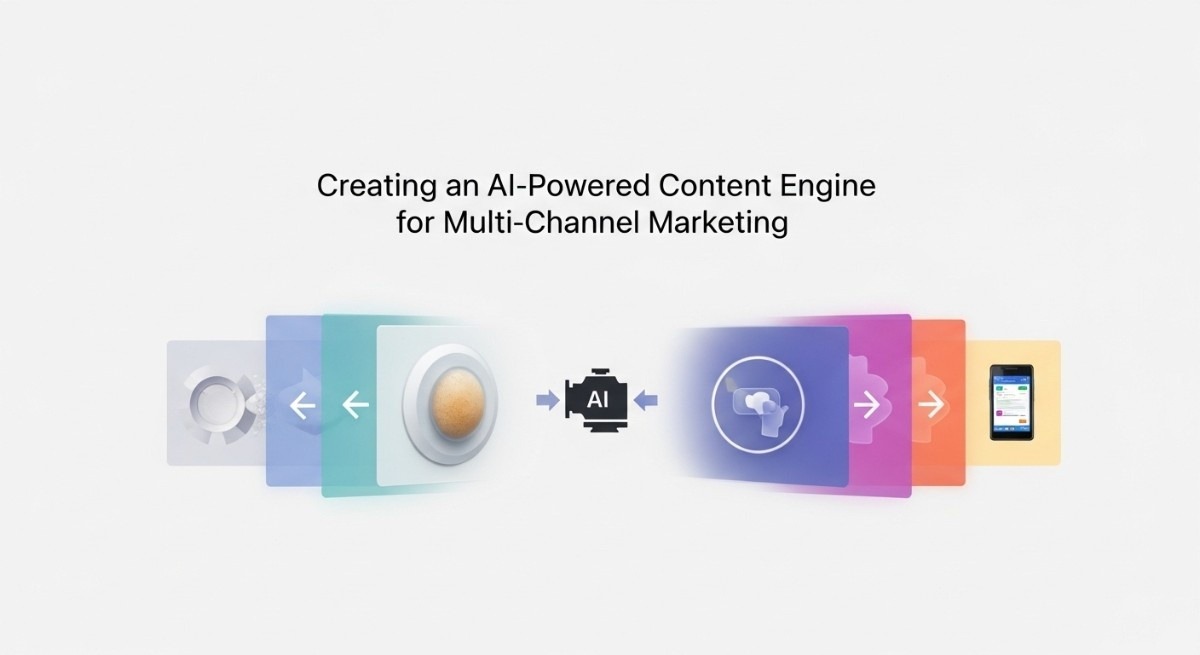
An AI-powered content engine streamlines the entire production pipeline. Artificial intelligence generates drafts, suggests improvements, and adapts content for different channels. The system learns from performance data to improve over time.
Modern engines integrate multiple AI capabilities. Natural language processing creates written content. Computer vision generates and edits images. Machine learning algorithms optimize timing and distribution.
The goal isn’t replacing human creativity. AI handles volume and variation efficiently. Your team focuses on strategy, brand voice, and high-value creative decisions.
Why Multi-Channel Marketing Needs AI Automation
Your audience consumes content across numerous platforms daily. Instagram, LinkedIn, email, blogs, and TikTok all demand unique content formats. Maintaining consistent messaging becomes incredibly challenging.
Each platform has distinct requirements and best practices. Twitter favors brevity and wit. LinkedIn demands professional insights and thought leadership. Instagram needs visual appeal and engaging captions.
Manual content adaptation drains resources quickly. A single blog post might need transformation into social posts, email content, and video scripts. Human teams struggle with this multiplication of effort.
An AI-powered content engine handles cross-platform adaptation automatically. The system reformats, resizes, and rewrites content for each channel. Brand consistency remains intact across all touchpoints.
Speed matters tremendously in modern marketing. Trending topics have brief windows of relevance. Your team needs to produce timely content within hours.
AI enables rapid response to market opportunities. Content generation happens in minutes rather than days. Your brand stays relevant and responsive to audience interests.
Core Components of an AI-Powered Content Engine
Building an effective content engine requires several integrated systems. Each component serves a specific purpose in the content creation lifecycle.
Content Strategy and Planning Module
Strategic planning forms the foundation of any content engine. AI analyzes market trends, competitor activity, and audience behavior. The system identifies content opportunities automatically.
Topic research becomes data-driven and comprehensive. Your engine scans industry news, social discussions, and search trends. Content calendars populate with relevant ideas aligned to business goals.
Keyword research integrates directly into planning workflows. AI identifies high-value search terms and content gaps. Your content targets the right queries from conception.
Audience segmentation improves through machine learning analysis. The system identifies distinct audience groups and their content preferences. Personalization starts at the planning stage.
Content Generation System
The generation layer transforms plans into actual content. Large language models create written material across formats. Blog posts, social captions, email copy, and scripts all flow from AI systems.
Template-based generation ensures consistency and efficiency. Your engine uses proven structures for different content types. Brand voice parameters guide the AI’s writing style.
Visual content creation extends beyond text. AI image generators produce graphics, illustrations, and photo variations. Design tools adapt visuals for different platform specifications.
Video content benefits from AI assistance too. Script generation, voice synthesis, and automated editing all integrate. Short-form video creation becomes scalable and efficient.
Quality Control and Editing Layer
Raw AI output requires refinement before publication. Quality control systems check facts, tone, and brand alignment. Automated editing catches grammatical errors and style inconsistencies.
Human review remains essential for final approval. Your team evaluates AI-generated content against quality standards. Edits and improvements feed back into the system.
A/B testing capabilities allow performance comparison. The engine generates content variations for testing. Data reveals which approaches resonate with audiences.
Plagiarism detection protects your brand reputation. AI systems check content against existing published material. Originality remains a priority throughout production.
Distribution and Optimization Engine
Creating content means nothing without effective distribution. Your AI-powered content engine schedules posts across platforms automatically. Optimal timing maximizes reach and engagement.
Cross-platform adaptation happens seamlessly. The system reformats content for each channel’s requirements. Image sizes, caption lengths, and hashtags all adjust appropriately.
Performance tracking informs continuous improvement. Analytics integration shows which content drives results. The AI learns from success patterns over time.
Audience engagement data feeds back into strategy. Popular topics get expanded coverage. Underperforming content types receive less emphasis.
Building Your AI-Powered Content Engine: Step-by-Step
Creating a functional content engine involves methodical planning and implementation. Each phase builds upon previous work.
Phase 1: Define Your Content Requirements
Start by mapping your current content landscape. Document every channel, content type, and publication frequency. Understanding existing demands clarifies what your engine must deliver.
Identify content gaps and opportunities. Where does your team struggle most? Which channels receive insufficient attention? Priority areas guide engine development.
Establish clear quality standards and brand guidelines. Define your voice, tone, and messaging pillars. These parameters will govern AI content generation.
Set realistic performance metrics for success. Track production volume, quality scores, and engagement rates. Measurable goals enable continuous improvement.
Phase 2: Select Your Technology Stack
Choose AI platforms that match your needs and budget. OpenAI, Anthropic, and Google offer powerful language models. Evaluate based on output quality and cost efficiency.
Content management systems need AI integration capabilities. WordPress, HubSpot, and Contentful offer varying plugin ecosystems. Seamless workflow integration matters tremendously.
Design and visual tools expand creative capabilities. Canva, Adobe Firefly, and Midjourney each serve different purposes. Select tools matching your visual content needs.
Analytics platforms provide essential performance data. Google Analytics, social media insights, and custom dashboards all contribute. Data accessibility drives optimization.
Phase 3: Design Your Workflows
Map the journey from idea to published content. Define each step and decision point clearly. Automation opportunities become apparent through mapping.
Assign roles between AI and human team members. AI handles drafting, formatting, and routine optimization. Humans manage strategy, final approval, and creative direction.
Create templates for common content types. Blog structures, social post formats, and email layouts all benefit from standardization. Templates accelerate production dramatically.
Build feedback loops into every workflow stage. Performance data should inform content planning. Quality issues need rapid identification and resolution.
Phase 4: Implement and Test
Start with pilot projects in controlled environments. Generate content for a single channel initially. Learn and refine before expanding scope.
Train your team on new tools and processes. Change management determines adoption success. Clear documentation and hands-on practice build confidence.
Test content quality rigorously before full deployment. Compare AI-generated material against human benchmarks. Adjust parameters until output meets standards.
Gather feedback from all stakeholders regularly. Content creators, marketers, and executives all have valuable perspectives. Iterative improvement relies on diverse input.
Phase 5: Scale and Optimize
Expand successful workflows to additional channels gradually. Each platform may require unique adjustments. Monitor quality as volume increases.
Automate repetitive tasks increasingly over time. Content scheduling, image resizing, and SEO optimization all suit automation. Free human capacity for strategic work.
Refine AI prompts and parameters based on results. Better instructions yield better output consistently. Prompt engineering becomes an ongoing practice.
Monitor costs carefully as usage scales. API calls and tool subscriptions add up quickly. Optimize for efficiency without sacrificing quality.
Essential Features of an Effective Content Engine
Certain capabilities separate functional engines from exceptional ones. Prioritize these features during development.
Brand Voice Consistency
Your AI-powered content engine must maintain recognizable brand voice. Inconsistent messaging confuses audiences and weakens brand identity. Voice parameters need careful configuration.
Create comprehensive brand voice documentation. Define tone, vocabulary, and style preferences explicitly. Feed these guidelines into AI systems as constraints.
Test voice consistency across content samples regularly. Human reviewers should identify brand-appropriate material reliably. Adjust AI parameters when drift occurs.
Multi-Format Content Creation
Modern marketing demands diverse content formats. Your engine should handle text, images, video, and audio seamlessly. Format flexibility enables comprehensive channel coverage.
Text generation should span blog posts to microcopy. Long-form articles, social captions, email subject lines, and ad copy all differ dramatically. Your system needs versatility.
Visual content creation accelerates marketing production. AI-generated images, infographics, and design variations save design time. Quality standards still apply rigorously.
Video and audio capabilities extend content reach. Script generation, voiceover synthesis, and video editing all integrate. Multimedia content drives engagement across platforms.
Personalization Capabilities
Generic content performs poorly in competitive markets. Your AI-powered content engine should enable audience-specific messaging. Personalization drives relevance and response rates.
Segment audiences by demographics, behavior, and preferences. Content variations address different group needs specifically. Relevance increases dramatically through targeting.
Dynamic content insertion adapts messages automatically. Names, locations, and preferences can populate templates. Scale personalization without manual customization.
Performance Analytics Integration
Data should drive all content decisions. Your engine needs robust analytics integration from the start. Blind content production wastes resources quickly.
Track engagement metrics across all channels. Likes, shares, comments, and click-through rates all reveal performance. Compare content variations systematically.
Attribution modeling connects content to business outcomes. Which pieces drive conversions and revenue? ROI calculations justify continued investment.
Predictive analytics forecast content performance. Historical data trains models to predict success likelihood. Resource allocation becomes more strategic.
Common Challenges and Solutions
Building an AI-powered content engine presents predictable obstacles. Preparation helps navigate difficulties successfully.
Maintaining Content Quality at Scale
High volume often compromises quality. Your engine must balance production speed with excellence. Several strategies protect standards.
Implement multi-tier review processes. AI pre-screening catches obvious errors. Human review focuses on nuanced quality factors.
Set minimum quality thresholds programmatically. Content below standards gets flagged automatically. Manual intervention happens before publication.
Continuous training improves AI output over time. Feed successful content back as examples. The system learns your quality preferences.
Ensuring Content Originality
Plagiarism risks increase with AI content generation. Your brand reputation depends on original material. Vigilance prevents serious problems.
Integrate plagiarism detection into workflows. Check all content against published sources. Duplication gets caught before publication.
Configure AI systems to prioritize originality. Parameters can discourage common phrases and clichés. Fresh perspectives emerge from proper configuration.
Managing Technology Costs
AI tools consume budget quickly at scale. API calls, subscriptions, and computing resources all add expenses. Cost management requires attention.
Monitor usage patterns and optimize inefficiencies. Redundant API calls waste money. Caching and batch processing reduce costs.
Negotiate volume pricing with platform providers. Enterprise agreements offer better rates. Commitment to platforms enables better terms.
Evaluate open-source alternatives periodically. Self-hosted models eliminate per-use fees. Technical complexity trades against cost savings.
Balancing Automation and Human Creativity
Complete automation produces mediocre content. Pure human creation can’t scale adequately. Finding the right balance proves crucial.
Reserve strategic decisions for human judgment. Content themes, campaign concepts, and brand evolution need human insight. AI executes tactical production.
Use AI for ideation and variation. Generate multiple approaches to any topic. Humans select the most promising directions.
Best Practices for Content Engine Success
Certain approaches consistently produce better results. Apply these principles throughout development and operation.
Start Small and Iterate
Ambitious launches often fail spectacularly. Begin with limited scope and expand gradually. Learning happens through practical experience.
Choose one content type and channel initially. Perfect the workflow before adding complexity. Success builds confidence and momentum.
Document everything you learn rigorously. Processes, settings, and outcomes all provide valuable data. Knowledge accumulation accelerates improvement.
Prioritize Data Quality
Your AI-powered content engine performs only as well as its training data. Garbage input produces garbage output inevitably. Data quality deserves serious investment.
Curate high-quality content examples carefully. The best brand content should train AI systems. Excellence breeds excellence.
Clean and organize historical content systematically. Remove outdated or poor-quality material. Your content library becomes a strategic asset.
Invest in Team Training
Technology alone doesn’t create content success. Your team needs skills to leverage AI effectively. Training investment pays long-term dividends.
Teach prompt engineering fundamentals to content creators. Better AI instructions yield better results. Skill development improves output quality.
Explain AI capabilities and limitations clearly. Realistic expectations prevent disappointment. Teams use tools appropriately when informed.
Monitor Brand Safety Continuously
AI systems can produce inappropriate content unexpectedly. Brand safety requires constant vigilance. Prevention beats damage control.
Implement content filters and safety checks. Flag sensitive topics for human review. Automated screening catches problems early.
Review controversial outputs manually always. AI judgment fails on nuanced issues. Human wisdom protects brand reputation.
Measuring Content Engine Success
Performance measurement validates your investment and guides improvement. Track metrics that matter to business goals.
Production Efficiency Metrics
Volume and speed measure operational efficiency. Your AI-powered content engine should dramatically increase output. Quantify productivity gains clearly.
Track content pieces produced per time period. Compare pre-engine and post-engine production rates. Percentage improvements demonstrate value.
Measure time from concept to publication. Faster cycles enable market responsiveness. Speed advantages compound over time.
Calculate cost per content piece. Include tool costs, labor, and overhead. Efficiency improvements should reduce unit costs.
Quality Indicators
Quantity means nothing without quality. Monitor standards through systematic evaluation. Quality metrics validate your approach.
Score content against brand guidelines regularly. Human evaluators rate AI output systematically. Trends reveal quality direction.
Track revision rates and editing time. Excessive corrections indicate quality problems. Streamlined editing suggests good AI output.
Monitor audience feedback and engagement. Comments and shares reveal content resonance. Quality drives audience response.
Business Impact Metrics
Content exists to drive business results. Connect engine output to tangible outcomes. ROI justifies continued investment.
Track lead generation from content. Forms, downloads, and signups all count. Attribution connects content to conversions.
Measure revenue influenced by content. Marketing attribution shows content contribution. Financial impact matters most ultimately.
Monitor brand awareness and perception. Surveys and social listening reveal brand health. Consistent quality content builds brand value.
Future Trends in AI Content Engines
The technology landscape evolves rapidly. Anticipate developments to maintain competitive advantage. Several trends are emerging clearly.
Multimodal AI systems will integrate text, image, and video seamlessly. Single prompts could generate complete campaigns. Cross-format consistency improves dramatically.
Real-time personalization will reach new sophistication levels. Content adapts instantly to individual viewer context. Relevance maximizes through dynamic generation.
Voice and conversational content will expand significantly. Podcasts, voice search, and audio content need engine support. Audio joins visual and text capabilities.
Predictive content creation will anticipate audience needs. AI forecasts trending topics before they peak. Proactive content positions brands as thought leaders.
Frequently Asked Questions
How much does building an AI-powered content engine cost?
Costs vary based on scale and tool selection. Small implementations start around $500 monthly for tools. Enterprise systems can exceed $10,000 monthly with advanced features.
Can AI completely replace human content creators?
AI augments rather than replaces human creators. Strategic thinking, brand judgment, and emotional intelligence remain human domains. Technology handles production volume efficiently.
How long does it take to build a functioning content engine?
Basic engines launch in 4-8 weeks. Sophisticated systems require 3-6 months of development. Continuous optimization extends indefinitely.
What skills do team members need to manage a content engine?
Marketing knowledge, basic technical literacy, and prompt engineering skills help. Teams learn through practice. Formal AI expertise isn’t mandatory initially.
How do you ensure AI-generated content matches brand voice?
Detailed brand guidelines and AI training examples establish voice. Regular quality reviews catch drift. Parameter adjustments maintain consistency.
Is AI content penalized by search engines?
Google doesn’t penalize AI content specifically. Quality, relevance, and user value determine rankings. Poor content suffers regardless of creation method.
How do you handle content errors from AI systems?
Multi-layer review catches most errors. Human oversight remains essential. Fact-checking tools and editorial processes protect accuracy.
Can small businesses benefit from AI content engines?
Absolutely. Affordable tools make engines accessible. Small teams gain disproportionate leverage. Scale appropriately to needs and resources.
Read More:-Cursor vs Windsurf: Which AI IDE Truly Understands Your Context?
Conclusion

Building an AI-powered content engine transforms marketing capabilities fundamentally. Production scales dramatically while maintaining quality standards. Your team focuses on strategy instead of grinding through content creation.
The journey requires thoughtful planning and methodical execution. Technology selection, workflow design, and team training all contribute to success. Shortcuts produce disappointing results.
Start your content engine development with clear objectives. Define what success looks like for your specific situation. Metrics guide decision-making throughout the process.
Choose tools that match your needs and budget realistically. Expensive doesn’t always mean better for your context. Focus on capabilities that solve actual problems.
Invest in team development alongside technology. Human skills determine how effectively AI gets leveraged. Training pays dividends through better outputs.
Monitor performance continuously and iterate relentlessly. Your first implementation won’t be perfect. Learning and adjustment create excellence over time.
The competitive advantages of an AI-powered content engine grow monthly. Early adopters build insurmountable leads in content volume and quality. Waiting means falling further behind competitors.
Begin building your content engine today. Start small with one channel and content type. Expand as confidence and capability grow. Your marketing effectiveness will transform through systematic AI integration across all channels.