Introduction
TL;DR Online shopping feels impersonal most of the time. You browse through thousands of products that might not interest you. Generic recommendations show items you’d never purchase. Email campaigns blast the same message to everyone. The digital shopping experience lacks the human touch of in-store retail.
Modern consumers expect better treatment than mass marketing. They want retailers to understand their preferences and anticipate their needs. A survey by Epsilon found 80% of shoppers prefer brands that offer personalized experiences. These customers spend more and return more frequently. Personalization has shifted from nice-to-have to absolute necessity.
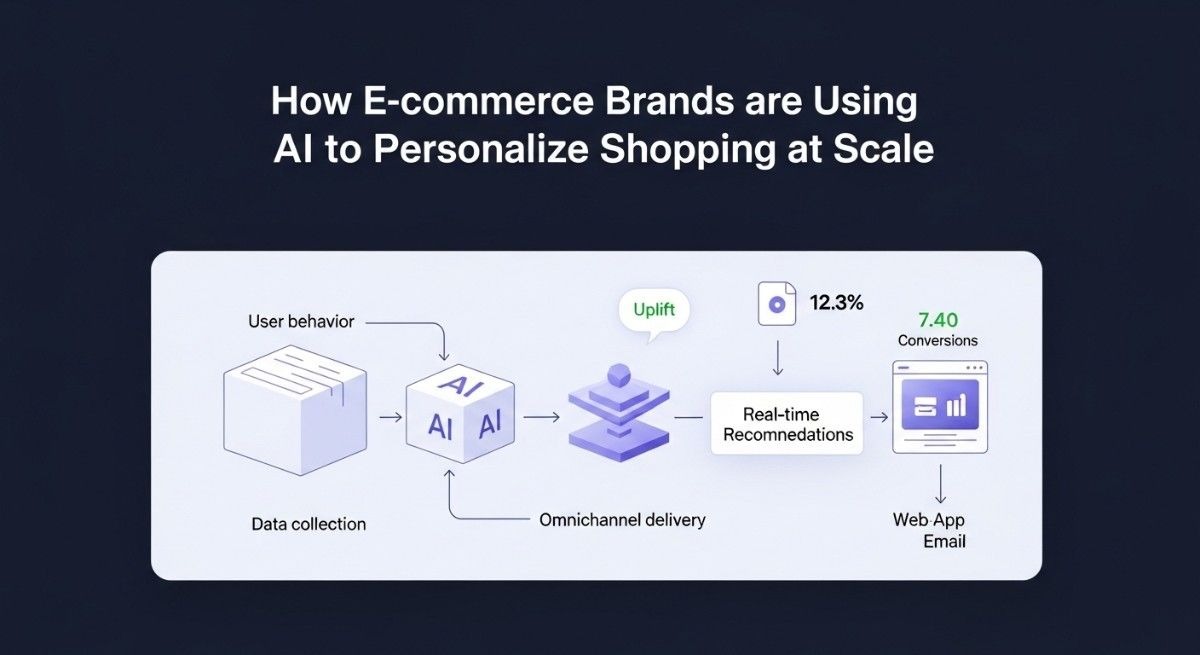
E-commerce brands now leverage AI personalize shopping experiences for millions of customers simultaneously. Machine learning algorithms analyze browsing behavior, purchase history, and demographic data. The technology predicts what each customer wants before they search. Recommendations feel intuitive rather than random. The shopping journey adapts to individual preferences automatically.
This transformation is reshaping retail profitability and customer loyalty. Brands using AI personalization see conversion rates jump 20-30% on average. Cart abandonment decreases while average order values climb. Customer lifetime value increases through targeted retention strategies. The competitive advantage belongs to retailers who master personalization at scale.
This guide explores how leading e-commerce brands implement AI-powered personalization. You’ll discover specific strategies that drive measurable results. Real examples show what works across different retail categories. By the end, you’ll understand how to apply these techniques to your online store.
Table of Contents
Understanding AI-Powered Personalization in E-commerce
Personalization means showing each customer content tailored to their unique preferences. Traditional approaches used simple rules like “customers who bought X also bought Y.” These basic systems lacked nuance and context. Modern AI personalization considers hundreds of variables simultaneously. The sophistication creates shopping experiences that feel genuinely individualized.
Machine learning models process vast amounts of customer data in real-time. Every click, scroll, and search informs the personalization engine. The AI identifies patterns humans would never notice. It understands seasonal preferences, price sensitivity, and brand affinity. These insights drive decisions about what to show each visitor.
The Evolution from Rules-Based to AI-Driven Systems
Early personalization relied on manual segmentation. Marketers created customer groups based on demographics or purchase frequency. Everyone in a segment received identical treatment. This approach worked when customer bases numbered in thousands. It completely breaks down at modern e-commerce scale.
Rules-based engines added some sophistication through if-then logic. If a customer bought running shoes, show athletic apparel. These systems required constant manual updates. Rules multiplied exponentially as catalogs grew. Maintaining thousands of rules became impossible. The systems remained rigid and predictable.
AI personalization learns continuously from customer interactions. The models improve automatically as more data accumulates. No human intervention is necessary for the system to adapt. Seasonal trends, emerging preferences, and market shifts get incorporated organically. The personalization evolves alongside customer behavior.
Key Technologies Powering Personalization
Collaborative filtering analyzes patterns across your entire customer base. The AI identifies customers with similar preferences and behavior. If Customer A and Customer B share 80% of their purchase history, they likely want similar products. The system recommends items that one bought to the other. This technique powers Amazon’s famous “customers who bought this” feature.
Content-based filtering examines product attributes and customer preferences. The AI learns which features matter to each shopper. One customer prioritizes organic ingredients while another focuses on price. The system matches product characteristics to individual preference profiles. Recommendations align with what each customer values most.
Deep learning models process multiple data types simultaneously. They combine browsing behavior, purchase history, demographic information, and contextual signals. Time of day, device type, and referral source all factor into decisions. These neural networks find complex patterns that simpler algorithms miss. The sophistication drives superior personalization accuracy.
Data Sources That Enable Personalization
Behavioral data captures every customer interaction on your site. Page views, search queries, time spent on products, and cart additions reveal intent. The AI learns from both purchases and non-purchases. Abandoned carts indicate interest despite some barrier. Saved items show future purchase consideration. This interaction data provides the richest personalization signals.
Transactional data shows actual purchase decisions and spending patterns. Order frequency, average order value, and product categories reveal customer segments. Repeat purchases indicate brand loyalty and replenishment needs. Cross-category purchases suggest lifestyle and interests. Transaction history enables predictive modeling of future behavior.
Demographic and profile information adds context to behavioral patterns. Age, location, and gender influence product preferences. Income level affects price sensitivity. Family status determines relevant product categories. This structured data enhances the personalization models when combined with behavioral signals.
Product Recommendations That Actually Convert
Product recommendations represent the most visible AI personalization feature. Done well, recommendations feel helpful and intuitive. Poor recommendations annoy customers and waste screen real estate. The difference between good and bad recommendations directly impacts revenue.
Leading e-commerce brands generate 20-35% of their revenue through AI-powered recommendations. These suggestions appear on homepages, product pages, cart pages, and email campaigns. The placement strategy matters as much as recommendation quality. Contextual relevance determines whether customers engage with suggestions.
Homepage Personalization Strategies
Your homepage greets millions of unique visitors with different needs. Generic featured products satisfy almost nobody. AI personalization tailors the entire homepage to each visitor’s profile. Returning customers see products aligned with their browsing history. New visitors see trending items or category bestsellers.
Real-time personalization adjusts homepage content as visitors browse. Someone who views athletic shoes sees related fitness products on return visits. The homepage becomes a dynamic landing page optimized for conversion. Bounce rates drop when visitors immediately see relevant products. Engagement metrics improve across the board.
Seasonal and temporal factors influence homepage personalization. AI models understand that swimwear appeals more in summer. Holiday shopping behavior differs from regular patterns. Time-of-day influences product preferences for some categories. The personalization engine incorporates these temporal dimensions automatically.
Dynamic Product Page Recommendations
Product pages represent high-intent moments in the customer journey. Visitors viewing a specific product are actively shopping. Related product suggestions can increase order value significantly. The AI determines which complementary items or alternatives to display. Strategic recommendations convert browsers into buyers.
Cross-sell recommendations suggest complementary products that enhance the main item. Cameras trigger recommendations for memory cards, lenses, and tripods. The AI learns which combinations customers actually purchase together. Irrelevant suggestions get filtered out automatically. Conversion rates on cross-sell recommendations often exceed 10%.
Upsell recommendations present premium alternatives to the viewed product. The AI calculates which higher-priced items appeal to each customer segment. Price-sensitive shoppers see modest upgrades. Value-focused customers see premium options. The targeting ensures upsells feel appropriate rather than pushy. Acceptance rates improve through intelligent segmentation.
Cart and Checkout Optimization
Shopping carts represent the final hurdle before purchase completion. Cart abandonment averages 70% across e-commerce sites. AI personalization reduces abandonment through strategic interventions. Last-minute product suggestions increase order values. Reassurance messaging addresses common purchase barriers.
Abandoned cart recovery campaigns use AI to personalize timing and content. The system determines optimal send times based on individual behavior patterns. Subject lines reference specific products left in carts. Dynamic pricing or offers might appear for price-sensitive customers. Recovery rates improve 15-25% with AI-powered personalization.
One-click add-ons at checkout boost impulse purchases. The AI suggests small, complementary items that won’t trigger purchase reconsideration. Frequently bought together combinations appear prominently. The suggestions feel helpful rather than salesy. Average order values increase by 8-12% through intelligent checkout recommendations.
Personalized Email and Marketing Campaigns
Email marketing remains one of the highest-ROI channels for e-commerce. Generic batch-and-blast campaigns generate declining results. AI personalization transforms email from mass communication to individual conversations. Open rates, click rates, and conversion rates all improve dramatically.
Personalized email campaigns generate 6x higher transaction rates than generic sends. The difference comes from relevance and timing. Each recipient sees products they actually want. Emails arrive when customers are most likely to engage. The combination creates email experiences that feel custom-crafted.
Triggered Email Personalization
Browse abandonment emails target visitors who viewed products without purchasing. The AI determines which products to feature and when to send. Timing varies based on category urgency and individual behavior. Fashion items might trigger emails within 2 hours. Considered purchases like electronics might wait 24 hours.
Post-purchase emails leverage AI to personalize shopping experiences beyond the initial sale. Thank you emails include recommendations for complementary products. The AI predicts what customers will need next based on their purchase. Replenishment reminders arrive at optimal times. Cross-sell opportunities feel natural rather than aggressive.
Re-engagement campaigns target inactive customers with personalized incentives. The AI analyzes why customers stopped shopping. Price-sensitive customers might receive discount codes. Customers who purchased seasonal items see relevant new arrivals. The personalization addresses specific barriers to re-engagement.
Segment-of-One Marketing
Traditional segmentation groups customers into broad categories. AI enables treating each customer as a unique segment. Every email recipient sees different products, offers, and messaging. This “segment-of-one” approach maximizes relevance for every individual. The technology makes mass customization economically feasible.
Dynamic content blocks change based on recipient profiles. Product grids show different items to different customers. Hero images reflect individual style preferences. Promotional offers vary by price sensitivity. A single email campaign generates thousands of unique variations automatically.
Send-time optimization uses AI to determine when each customer engages most. Morning people receive emails at 7 AM. Evening browsers get messages at 8 PM. The system learns individual patterns over time. Open rates improve 20-30% through timing personalization alone.
Predictive Product Recommendations in Email
AI models predict which products each customer will likely purchase next. These predictions power email recommendations with uncanny accuracy. The suggestions feel intuitive because they match customer intent. Recipients often think “I was just looking for that” when opening emails.
Replenishment predictions identify when customers will need consumable products. Beauty products, vitamins, and pet supplies follow predictable purchase cycles. AI learns each customer’s unique replenishment timing. Reminder emails arrive exactly when customers are running low. Conversion rates on replenishment emails exceed 40% for some brands.
Seasonal and lifecycle predictions anticipate major life events. The AI identifies customers likely shopping for babies, moving, or starting college. Product recommendations reflect these life stages. The personalization demonstrates understanding beyond purchase history. Customers appreciate brands that recognize their changing needs.
Search and Discovery Personalization
Site search represents a critical conversion pathway. Customers who search convert at 2-3x the rate of browsers. Generic search results fail to account for individual preferences. AI personalization tailors search results to each shopper’s profile. The most relevant products surface first.
Personalized search improves conversion rates by 15-30% compared to generic algorithms. The lift comes from surfacing products customers actually want. Search becomes more forgiving of vague queries. Natural language processing understands customer intent better. The shopping experience feels more intuitive overall.
Personalized Search Result Ranking
Search result order matters enormously to conversion rates. Customers rarely scroll past the first page. AI reranks search results based on individual preferences and behavior. Two customers searching “blue shoes” see different products first. One gets athletic styles while another sees dress shoes.
The personalization considers past purchases and browsing history. A customer who always buys Nike sees Nike products ranked higher. Someone who shops sales sees discounted items first. Price range preferences influence result ordering. The customization happens invisibly and instantly.
Contextual signals like device and location inform search personalization. Mobile shoppers might see different results than desktop users. Geographic location influences product availability and shipping times. Seasonal factors affect relevance of certain products. The AI synthesizes all these variables simultaneously.
Natural Language Query Understanding
Traditional search required exact product name matches. Customers frustrated by “no results found” messages abandon sites. AI-powered natural language processing understands conversational queries. “Waterproof hiking boots for winter” returns relevant results despite imprecise phrasing.
Semantic search understands synonyms and related concepts. “Sneakers,” “trainers,” and “athletic shoes” return similar results. Color variations like “navy” and “dark blue” match appropriately. Size conversions happen automatically. The forgiving search reduces customer friction significantly.
Query reformulation suggests better search terms when initial queries fail. The AI recognizes common misspellings and typos automatically. It suggests alternative product categories when searches are too narrow. Guided search helps customers find what they want faster. Exit rates from search results pages drop dramatically.
Visual Search and AI-Powered Discovery
Visual search lets customers upload images to find similar products. Fashion and home decor brands benefit enormously from this capability. Customers see an outfit on Instagram and upload the image. The AI identifies similar items in your catalog. This breakthrough eliminates the difficulty of describing visual preferences.
AI-powered discovery surfaces products customers didn’t know existed. Recommendation engines suggest items based on visual similarity. The technology identifies style patterns in browsing behavior. Customers discover products they love but never would have searched for. This serendipitous discovery mimics the best aspects of in-store shopping.
Pricing and Promotion Personalization
Price sensitivity varies dramatically across customers. Some shoppers prioritize value while others seek premium products. AI enables dynamic pricing and personalized promotions. Each customer sees offers optimized for their behavior and preferences. Revenue optimization happens without alienating price-sensitive customers.
Dynamic pricing and personalized promotions increase margins by 5-10% on average. The impact comes from showing full prices to value-focused customers. Price-sensitive shoppers receive targeted discounts. This surgical approach to promotions protects margins while maintaining conversion rates.
AI-Driven Discount Strategies
Blanket discounts erode margins unnecessarily. Many customers would purchase at full price. AI identifies which customers need incentives to convert. Personalized discounts target only those likely to abandon without an offer. This precision maintains profitability while driving conversions.
The AI determines optimal discount levels for each customer. Some shoppers convert with 10% off. Others require 20-30% incentives. The models test different discount levels and learn what works. Conversion uplift gets balanced against margin impact. The system finds the sweet spot for each segment.
Timing personalization ensures discounts arrive when customers need them most. Cart abandoners might receive offers within hours. Window shoppers get promotions after multiple visits. The trigger points vary by customer behavior. Precision timing maximizes promotional effectiveness.
Promotional Product Selection
Not all products should appear in every promotion. AI selects which items to discount for each customer. Fast-moving products go to deal hunters. Slow-moving inventory targets frequent buyers who’ll try new items. The personalization clears inventory while maintaining customer satisfaction.
Category-specific promotions target customers with demonstrated interest. Running gear goes to fitness enthusiasts. Electronics promotions target tech-focused shoppers. This relevance makes promotions feel like personalized offers. Response rates improve dramatically compared to category-wide sales.
Price Testing and Optimization
AI systems continuously test price points across customer segments. The models identify elasticity for different products and audiences. Some categories support premium pricing for certain customers. Other products require competitive pricing to drive volume. The optimization happens automatically.
Competitive pricing algorithms monitor rival websites in real-time. The AI adjusts your prices to maintain competitiveness. It considers factors beyond simple price matching. Shipping costs, return policies, and brand perception factor into decisions. The dynamic optimization protects market share and margins simultaneously.
Measuring Success and ROI
AI personalization requires investment in technology and data infrastructure. Executives rightfully demand proof of return on investment. Measuring impact requires tracking specific metrics across the customer journey. The right KPIs demonstrate personalization value clearly.
Leading brands report 10-30% revenue increases from AI personalization implementations. The returns justify the investment within 6-12 months typically. Long-term benefits include increased customer lifetime value. The competitive advantages compound over time as systems improve.
Key Performance Indicators
Conversion rate improvement represents the most direct personalization impact. Compare conversion rates for personalized versus control experiences. A/B testing isolates the effect of personalization. Typical improvements range from 15-35% depending on baseline performance. Track conversion rates at both session and user levels.
Average order value measures basket size increases from recommendations. Cross-sell and upsell suggestions should drive larger purchases. Calculate the incremental revenue per session from personalization. Even small percentage increases generate massive revenue at scale. Monitor AOV across different personalization tactics separately.
Customer retention and repeat purchase rates indicate long-term personalization value. Personalized experiences create loyalty and habit formation. Track cohort retention comparing personalized versus non-personalized customers. Lifetime value metrics demonstrate cumulative personalization impact. These long-term metrics justify continued investment.
Attribution and Testing Methodologies
A/B testing isolates personalization impact from other factors. Control groups see generic experiences while test groups receive personalization. Statistical significance requires sufficient sample sizes. Run tests for full purchase cycles to capture delayed conversions. Proper testing methodology ensures accurate ROI calculations.
Multivariate testing optimizes multiple personalization elements simultaneously. Test different recommendation algorithms, placements, and designs together. The combinations reveal interaction effects between variables. This sophisticated testing maximizes overall performance. It requires more traffic but yields better insights.
Holdout groups maintain unpersonalized experiences permanently. Compare long-term metrics between holdout and personalized populations. This approach measures cumulative effects over time. It accounts for learning and improvement in personalization systems. Holdout analysis provides the cleanest ROI measurement.
Cost Considerations
Technology costs include AI platform licensing and infrastructure. Cloud computing expenses scale with traffic volume. Most platforms charge based on API calls or sessions processed. Budget for both base fees and variable usage costs. Calculate per-customer costs to evaluate margins.
Implementation costs cover integration, data preparation, and testing. Expect 3-6 months for initial deployment. Internal resources need training on the systems. Ongoing optimization requires dedicated personnel. Factor in these labor costs when calculating ROI. Many brands find the investment pays back within a year.
Privacy and Ethical Considerations
AI personalization depends on customer data collection and analysis. Privacy concerns and regulations constrain what brands can do. Balancing personalization with privacy protection is essential. Ethical practices build trust while enabling AI to personalize shopping experiences effectively.
Consumers express contradictory attitudes about personalization. 90% want personalized experiences but 70% worry about data privacy. This tension requires careful navigation. Transparency about data practices builds trust. Giving customers control over their data maintains good relationships.
Regulatory Compliance Requirements
GDPR in Europe mandates strict consent for data processing. Customers must explicitly opt-in to personalization. You must explain what data you collect and why. Customers can request data deletion at any time. Non-compliance carries fines up to 4% of global revenue. Build compliance into personalization systems from the start.
CCPA and emerging US privacy laws create similar requirements. California residents have rights to know what data you collect. They can opt-out of data sales to third parties. Many brands adopt CCPA practices nationwide. Anticipate stricter regulations coming to more jurisdictions. Design systems that can adapt to changing laws.
Cookie consent requirements affect tracking capabilities. Third-party cookies are disappearing across browsers. First-party data becomes more valuable for personalization. Invest in direct relationships with customers. Email addresses and accounts provide better data than cookies.
Building Customer Trust
Transparency about AI usage builds trust with customers. Explain how personalization improves their experience. Show the value they receive from sharing data. Make privacy policies understandable. Technical jargon alienates customers.
Data controls give customers agency over personalization. Let them adjust privacy settings easily. Provide options to opt-out of certain data uses. Allow customers to review their data profiles. These controls demonstrate respect for privacy. Trust increases when customers feel in control.
Value exchange makes data sharing feel fair. Exclusive discounts or early access reward customers who share data. Loyalty programs provide tangible benefits. Customers accept personalization when they receive clear value. Make the exchange explicit rather than assuming consent.
Read More :-Transforming Healthcare with HIPAA-Compliant AI Automation
Conclusion

E-commerce brands face intense competition for customer attention and dollars. Generic shopping experiences no longer satisfy modern consumers. Personalization has evolved from nice-to-have to competitive necessity. Brands failing to personalize lose customers to those who do.
AI technology makes it possible to personalize shopping experiences at unprecedented scale. Machine learning algorithms analyze millions of data points per customer. The systems identify patterns and preferences humans could never detect. Personalization happens in real-time across every customer touchpoint. The sophistication creates truly individualized experiences.
Leading retailers leverage AI to personalize shopping across product recommendations, search, email, and pricing. Homepage experiences adapt to each visitor’s preferences and history. Product recommendations drive 20-35% of revenue through relevant suggestions. Email campaigns achieve 6x higher conversion through personalization. Search results rank based on individual customer profiles.
The business impact of AI personalization is substantial and measurable. Conversion rates improve 15-35% through targeted experiences. Average order values increase from strategic cross-selling and upselling. Customer retention strengthens through relevant, timely engagement. Revenue lifts of 10-30% are common within the first year. These results justify the technology investments required.
Implementation requires commitment to data infrastructure and ongoing optimization. Brands must collect and integrate customer data across systems. AI platforms need proper integration with existing e-commerce stacks. Testing and refinement continue indefinitely as systems learn. The investment pays dividends through sustained competitive advantages.
Privacy considerations must balance personalization benefits with customer trust. Transparent data practices and customer controls are essential. Regulatory compliance protects against legal risks. Ethical personalization respects customer preferences and boundaries. Trust-building enables the data collection that powers personalization.
Start your personalization journey with high-impact, low-complexity implementations. Product recommendations on key pages deliver quick wins. Email personalization requires minimal technical integration. These initial successes build organizational momentum. Expand to more sophisticated personalization as capabilities mature.
The future of e-commerce belongs to brands that master AI-powered personalization. Customer expectations continue rising as technology improves. Generic experiences feel increasingly inadequate. Competitive pressure forces adoption across retail categories. Early movers gain advantages that compound over time.
Take action now to implement AI personalization in your e-commerce operations. Evaluate platform options that fit your technical capabilities. Start with pilot programs in high-traffic areas. Measure results rigorously to prove business value. Scale successful implementations across your customer journey.
Your customers already expect you to understand and anticipate their needs. AI gives you the tools to meet those expectations at scale. The brands winning in e-commerce use AI to personalize shopping experiences that feel crafted for each individual. Join them in transforming generic online retail into personalized shopping journeys. Your revenue growth and customer loyalty depend on it.