Introduction
Buildings consume nearly 40% of global energy. A huge portion of that energy goes to waste every single day. AI for energy optimization in smart buildings is changing that reality — fast. This blog breaks down exactly how it works, why it matters, and what the future holds.
40%Global energy used by buildings
30%Average waste in commercial buildings
$50B+Projected smart building market by 2030
25% Energy savings with AI integration
Table of Contents
What Makes a Building “Smart”?
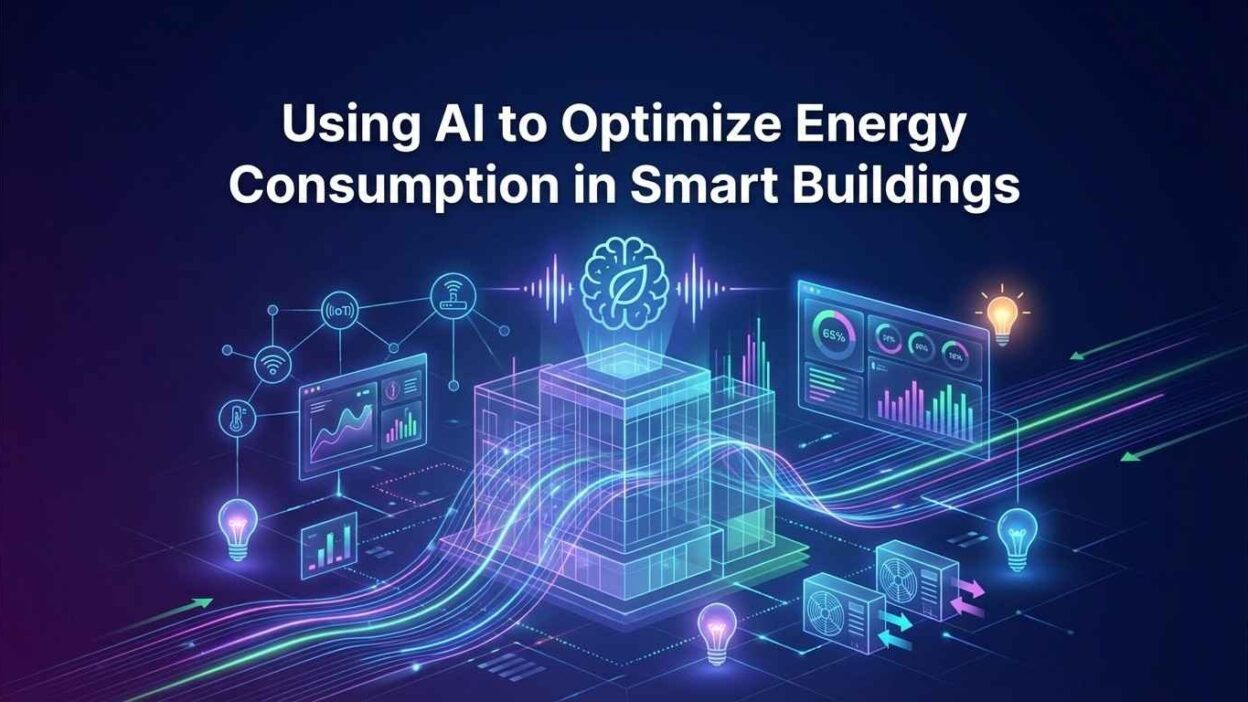
A smart building uses sensors, connected devices, and software to manage its internal systems. These systems include lighting, HVAC, elevators, security, and water management. Every component communicates with a central platform. That platform collects data and makes decisions in real time.
Traditional buildings operate on fixed schedules. Smart buildings respond to actual conditions. They know when a room is empty. They know when outdoor temperatures shift. They adjust automatically. That ability to adapt is what makes AI for energy optimization in smart buildings so powerful.
Many facility managers still use manual controls or outdated automation systems. These systems cannot process large amounts of data quickly. They miss patterns humans cannot easily see. AI fills that gap with precision and speed.
The Role of IoT Sensors in Smart Infrastructure
IoT sensors form the nervous system of any smart building. They measure temperature, humidity, occupancy, CO2 levels, and light intensity. These sensors generate thousands of data points every hour. That data feeds directly into the AI engine.
Without sensors, AI has nothing to work with. With sensors, AI sees everything happening inside a building at all times. This real-time awareness makes intelligent decision-making possible. Energy is directed where it is needed and reduced where it is not.
Centralized Energy Management Systems
A central Energy Management System (EMS) ties all data together. It collects sensor readings, weather forecasts, occupancy patterns, and utility rates. AI processes all of this information simultaneously. It then recommends or automatically executes energy-saving actions.
Modern EMS platforms use machine learning algorithms. These algorithms improve over time. The system learns the unique patterns of each building. This makes AI for energy optimization in smart buildings increasingly accurate with every passing week.
How AI for Energy Optimization in Smart Buildings Actually Works
AI does not just automate tasks. It learns, predicts, and decides. In the context of smart buildings, AI analyzes enormous data streams in real time. It identifies inefficiencies that no human manager could catch manually. Then it acts — or alerts the team to act.
There are three core functions that define how AI delivers results in this space.
Predictive Analytics and Load Forecasting
AI studies historical energy usage data from a building. It combines that data with external inputs like weather conditions and local energy prices. Then it forecasts future energy demand with high accuracy. This is called predictive load management.
For example, AI knows a meeting room fills up every Tuesday at 9 AM. It begins cooling that room 20 minutes before people arrive. The room is comfortable on arrival without wasting energy throughout the night. This kind of scheduling precision is a key benefit of AI for energy optimization in smart buildings.
HVAC Optimization Through Machine Learning
Heating, ventilation, and air conditioning consume up to 50% of a building’s total energy. AI targets this area with the most impact. Machine learning models analyze occupancy data, outside weather, and thermal load. They determine the most efficient HVAC settings at any given moment.
This is not a one-time calibration. AI continuously adjusts HVAC operations throughout the day. It balances comfort and efficiency in real time. Buildings using AI-driven HVAC systems report energy savings between 20% and 35% in controlled case studies.
Lighting Control and Natural Light Integration
Smart lighting systems go far beyond motion sensors. AI combines occupancy data with natural light levels. It dims artificial lights when sunlight is sufficient. It turns lights off automatically in empty zones. It adjusts color temperature throughout the day to support occupant focus and wellbeing.
This precision reduces lighting energy consumption by up to 40%. For large commercial buildings, those savings add up to significant cost reductions annually. AI for energy optimization in smart buildings makes every lumen count.
Key Technologies Powering AI Energy Optimization
Several technological pillars support AI-driven energy management. Understanding them helps building owners and facility managers make informed investment decisions.
Digital Twins
A digital twin is a virtual replica of a physical building. It mirrors every system — HVAC, electrical, plumbing, and structural. AI runs simulations on the digital twin before making changes to the real building. This eliminates guesswork and reduces the risk of costly errors.
Facility managers use digital twins to test energy-saving scenarios. They can see the projected impact before committing resources. This capability makes AI for energy optimization in smart buildings both smarter and safer from an operational standpoint.
Edge Computing for Real-Time Decisions
Edge computing processes data directly on-site rather than sending it to a distant cloud server. This reduces latency dramatically. In a smart building, real-time decisions matter enormously. A 10-second delay in adjusting HVAC during a sudden outdoor temperature spike wastes energy.
Edge AI devices handle immediate responses. Cloud AI handles long-term learning and pattern recognition. Together, they create a fast and intelligent energy management system.
Natural Language Processing for Facility Management
Modern AI platforms include voice and text interfaces. Facility managers can speak or type a command and the system responds. “Reduce energy consumption in Zone B by 15% until 6 PM” — and it happens immediately. NLP removes technical barriers. It makes AI accessible to every building operator regardless of their technical background.
Real-World Benefits of AI for Energy Optimization in Smart Buildings
Theory is useful. Results are better. Companies around the world are already seeing measurable improvements from AI-powered energy systems. Here is what the data shows.
Dramatic Cost Reduction
Energy is one of the largest operating expenses for any commercial property. AI slashes this cost consistently. Buildings using AI for energy optimization in smart buildings report utility bill reductions between 20% and 40% in the first year alone. For a large commercial tower spending $1 million annually on energy, that means saving up to $400,000 every year.
Those savings compound over time. As the AI learns more about the building’s patterns, its decisions improve. The longer the system operates, the more efficient it becomes.
Lower Carbon Footprint
Reducing energy consumption directly reduces carbon emissions. Buildings account for about 28% of global CO2 emissions from operations. AI-optimized buildings cut emissions significantly without sacrificing occupant comfort. This matters to investors, tenants, and regulators alike.
Many jurisdictions now require buildings to meet strict energy performance standards. AI helps building owners stay compliant. It provides detailed energy reports that satisfy audit requirements. Sustainability certifications like LEED and BREEAM become easier to achieve.
Enhanced Occupant Comfort
Energy efficiency and comfort are not opposites. AI proves that both can exist simultaneously. Occupants in AI-managed buildings report better air quality, more consistent temperatures, and improved lighting conditions. Satisfied occupants are more productive. That productivity translates directly to business value for tenants.
Tenant retention rates improve in buildings that use smart energy systems. This benefits property owners through stable rental income and reduced vacancy costs.
Predictive Maintenance and Fewer Breakdowns
AI monitors equipment performance continuously. It detects abnormal patterns that signal an impending failure. A chiller running slightly hotter than normal, a pump drawing more current than expected — AI notices these signs weeks before a breakdown occurs.
Facility teams get early warnings and can schedule maintenance proactively. Emergency repairs are expensive. Planned maintenance is far cheaper. Avoided downtime adds another financial layer to the ROI of AI for energy optimization in smart buildings.
Challenges in Implementing AI Energy Optimization
No technology comes without obstacles. Building owners and managers need to understand the challenges before committing to an AI energy strategy.
High Upfront Investment
Installing sensors, upgrading networking infrastructure, and licensing AI software requires capital. For older buildings, retrofitting can be particularly costly. The payback period varies by building type and energy prices.
Most projects recover their investment within three to five years. Government grants and green financing options are increasingly available. The long-term ROI of AI for energy optimization in smart buildings is strong — but the initial commitment is real.
Data Privacy and Cybersecurity
Smart buildings collect vast amounts of data. That data includes occupancy patterns, employee movements, and building usage habits. Securing this data is critical. A cyberattack on a building’s AI system can disable safety systems, unlock access controls, or manipulate environmental conditions.
Building owners must work with reputable vendors who prioritize security. Regular software updates, encrypted communications, and access controls are non-negotiable in any smart building deployment.
Integration with Legacy Systems
Most existing buildings rely on older, proprietary equipment. Integrating new AI platforms with legacy HVAC controllers, lighting systems, and electrical panels requires custom engineering work. Not every piece of old equipment communicates using modern protocols.
Skilled system integrators bridge these gaps. The process takes time and expertise. Skipping this step leads to incomplete data and suboptimal AI performance.
Industry Use Cases Across Different Building Types
Different building types benefit from AI energy management in different ways. Here is a closer look at how various sectors apply this technology.
Commercial Office Buildings
Office buildings have predictable weekday patterns but highly variable occupancy. AI detects when floors are half-empty during holidays or remote work periods. It scales down HVAC and lighting immediately. This prevents energy waste during low-occupancy periods. AI for energy optimization in smart buildings in the commercial sector delivers some of the highest percentage savings available.
Healthcare Facilities
Hospitals must maintain strict environmental conditions at all times. They cannot afford HVAC failures or lighting outages. AI keeps systems running at peak performance. It predicts failures before they happen and maintains compliance with healthcare environmental standards. AI also helps hospitals manage energy costs, which are among the highest of any building type.
Retail and Shopping Centres
Retail environments have fluctuating footfall throughout the day and across seasons. AI adjusts cooling and lighting in real time based on customer flow data. During quiet periods, energy consumption drops automatically. During peak hours, comfort levels stay high to encourage longer visits and higher spending.
Residential High-Rises and Multi-Family Buildings
Apartment buildings face a unique challenge. Individual unit owners control their own thermostats. But common areas, elevators, and shared systems are managed centrally. AI optimizes shared systems while providing residents with smart controls for their own units. Whole-building energy benchmarks improve significantly with this combined approach.
The Future of AI for Energy Optimization in Smart Buildings
The next decade will bring even deeper integration between AI and building systems. Several emerging trends will define where this industry heads.
Grid-Interactive Buildings
Smart buildings are evolving from energy consumers into active grid participants. AI enables buildings to communicate with local utility grids. During peak demand periods, the building can reduce its load automatically. During off-peak hours, it can charge battery storage systems or run intensive operations. This flexibility earns financial incentives and supports grid stability.
AI for energy optimization in smart buildings will play a central role in creating a more resilient and sustainable energy infrastructure globally.
Integration with Renewable Energy Sources
Solar panels and battery storage systems are becoming standard in smart buildings. AI decides when to use solar power, when to store it, and when to draw from the grid. It makes these decisions based on weather forecasts, energy prices, and building demand. The result is a building that runs on clean energy as much as physically possible.
AI and Net-Zero Building Goals
Governments and corporations worldwide are committing to net-zero carbon targets. Smart buildings powered by AI are essential tools for reaching those goals. Certification bodies are updating their standards to recognize AI-managed buildings. Investors increasingly value green certifications when assessing property portfolios.
Buildings that deploy AI for energy optimization in smart buildings strategies today position themselves ahead of incoming regulations and market expectations.
Autonomous Building Management
The ultimate goal is a fully autonomous building. One that manages itself without constant human oversight. AI makes all routine energy decisions. Humans focus on strategic planning and unusual situations. Several commercial buildings in Europe and Asia are already close to this model. Full autonomy is achievable within this decade for purpose-built facilities.
How to Get Started with AI Energy Optimization
Many building owners feel overwhelmed by the complexity of AI implementation. A practical approach reduces that complexity significantly.
Start with an Energy Audit
Before deploying any AI technology, understand current energy usage patterns. A professional energy audit reveals where waste occurs and which systems consume the most energy. This data becomes the baseline for measuring AI performance.
Deploy Sensors and Connect Your Systems
Install occupancy sensors, smart meters, and environmental monitors throughout the building. Connect HVAC, lighting, and electrical systems to a central network. This connectivity is the foundation upon which AI operates. Without complete data, AI cannot reach its full potential in delivering AI for energy optimization in smart buildings results.
Choose the Right AI Platform
Select an AI platform built specifically for building energy management. Look for vendors with proven case studies, strong integration capabilities, and reliable customer support. The platform should offer both automated controls and clear dashboards for facility managers. Transparency in AI decision-making builds trust with building operators.
Train Your Facility Management Team
AI does not replace human expertise. It enhances it. Facility managers need training to interpret AI recommendations and intervene when necessary. Teams that understand how the AI thinks make better operational decisions. They also identify opportunities the AI might miss in unusual building scenarios.
Frequently Asked Questions
What is AI for energy optimization in smart buildings?
It refers to the use of artificial intelligence technologies — including machine learning, predictive analytics, and automation — to manage and reduce energy consumption across all building systems. AI processes real-time sensor data and makes intelligent decisions to minimize waste while maintaining occupant comfort.
How much energy can AI save in a commercial building?
Studies show that AI-powered energy management systems reduce energy consumption by 20% to 40% in commercial buildings. The exact figure depends on building size, existing system age, occupancy patterns, and how deeply the AI integrates with building controls.
Is AI energy optimization only for new buildings?
No. Retrofitting existing buildings with sensors and AI platforms is entirely possible. Many vendors specialize in upgrading older buildings. The process requires more planning and custom integration work, but the energy and cost savings apply equally to older structures.
What is the payback period for AI energy optimization investment?
Most buildings recover their investment within three to five years. High energy-cost environments and large commercial properties often see payback within two years. Government grants and green financing programs can shorten this period further.
How does AI handle unexpected events like sudden weather changes?
AI continuously monitors weather data and adjusts building systems in real time. It does not rely solely on scheduled programs. When an unexpected cold front arrives or temperatures spike, the AI recalculates optimal settings immediately and executes changes without human input.
Is occupant data collected by smart building AI systems private?
Reputable AI platforms anonymize occupancy data and comply with applicable privacy regulations like GDPR. Individual identities are not tracked. Aggregate occupancy patterns are what matter for energy optimization purposes. Building owners should verify data privacy practices with every vendor they evaluate.
Can AI-powered smart buildings qualify for green certifications?
Yes. Certifications like LEED, BREEAM, and ENERGY STAR recognize AI-driven energy management as a qualifying strategy. AI also generates the detailed reporting required during certification audits, making the documentation process significantly easier for building owners.
Read More:-Integrating Phidata for Assistant-Based Financial Data Analysis
Conclusion

Buildings are not passive structures anymore. They are active systems that can think, adapt, and improve. AI for energy optimization in smart buildings is one of the most impactful applications of artificial intelligence available today. It cuts costs. It reduces emissions. It improves comfort. It protects equipment.
The technology exists right now. The business case is proven. Thousands of buildings worldwide already operate with AI-driven energy management at their core. The question is not whether to adopt this approach. The question is how quickly your organization can get started.
Building owners who act now gain a competitive advantage. They lock in lower operating costs ahead of rising energy prices. They meet incoming regulatory requirements before enforcement begins. They attract tenants and investors who prioritize sustainability.
The future of buildings is intelligent. AI for energy optimization in smart buildings is not a future concept — it is today’s most practical path to a smarter, greener built environment.