Introduction
TL;DR Education faces a critical challenge today. Students learn at different paces. Traditional classrooms struggle to accommodate individual needs. Teachers manage dozens of learners simultaneously.
Every student deserves customized instruction. Some grasp concepts quickly. Others need additional time and support. One-size-fits-all approaches leave many behind.
AI for EdTech transforms this landscape dramatically. Technology enables truly personalized education. Algorithms adapt to individual learning styles. Progress tracking happens in real-time.
Schools worldwide embrace these innovations. Universities deploy adaptive learning platforms. K-12 institutions integrate intelligent tutoring systems. Results show remarkable improvements.
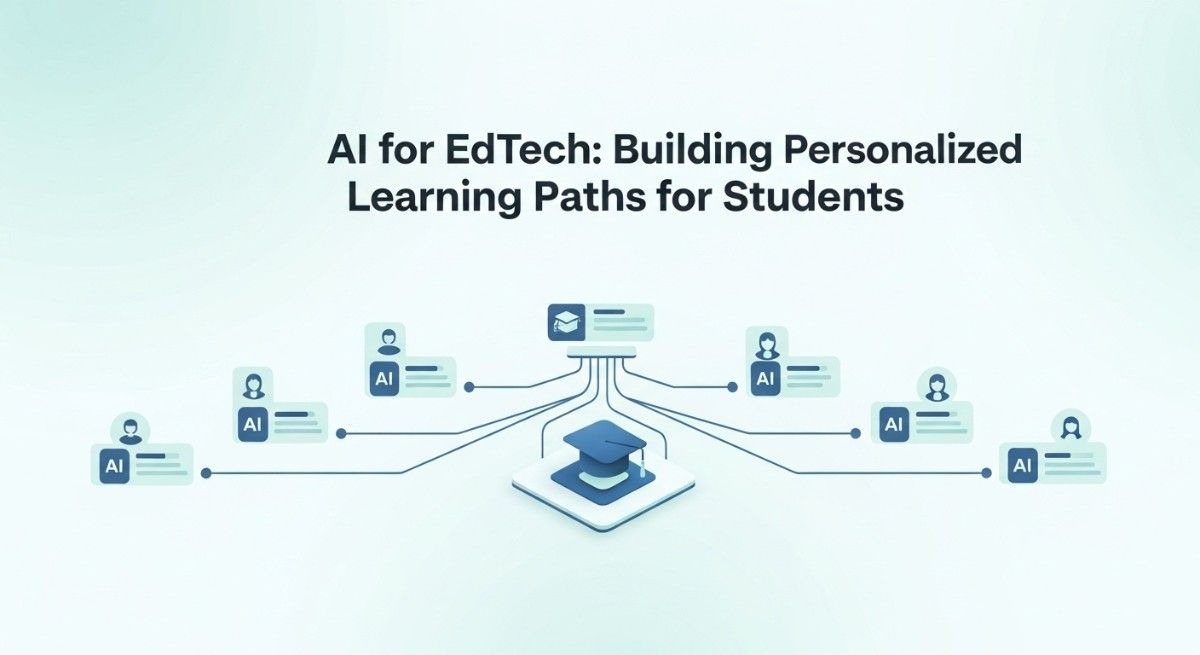
This guide explores how AI for EdTech creates personalized learning paths. You’ll discover implementation strategies. You’ll learn about successful applications. You’ll understand the technology reshaping education.
Table of Contents
The Evolution of Educational Technology
Classroom technology advanced gradually over decades. Blackboards gave way to overhead projectors. Computers entered schools in the 1980s. The internet revolutionized information access.
Early educational software offered basic drills. Programs tested memorization and recall. Interactivity remained limited. One correct answer satisfied the system.
Adaptive learning emerged in the 2000s. Software adjusted difficulty based on performance. Branching paths created customized experiences. Student engagement improved noticeably.
Modern AI for EdTech represents a quantum leap. Machine learning analyzes learning patterns comprehensively. Natural language processing enables conversational interfaces. Computer vision assesses student expressions and attention.
Why Personalization Matters in Education
Students arrive with diverse backgrounds. Prior knowledge varies significantly. Learning preferences differ fundamentally. Interests and motivations span wide ranges.
Traditional instruction targets the middle. Advanced students feel bored. Struggling learners fall further behind. Engagement suffers across the spectrum.
Personalized learning addresses individual needs. Content adapts to current skill levels. Pacing matches comprehension speed. Materials align with interests.
Research demonstrates powerful outcomes. Personalized approaches increase retention rates. Students master concepts more thoroughly. Achievement gaps narrow measurably.
Motivation increases when learning fits. Students experience appropriate challenge levels. Success builds confidence naturally. Engagement remains high consistently.
Teachers gain valuable insights. AI for EdTech tracks detailed progress. Interventions target specific needs. Instructional time becomes more effective.
Current Challenges in Traditional Education
Classroom sizes limit individual attention. Teachers manage 25-30 students typically. Personal interaction time stays minimal. Individual needs go unmet often.
Curriculum moves at fixed paces. Calendar schedules drive progression. Some students need more time. Others could advance faster.
Assessment happens infrequently. Tests occur weekly or monthly. Learning gaps emerge between evaluations. Corrective action comes too late.
Resource constraints affect quality. Schools lack specialized materials. Teachers need professional development. Budget limitations restrict options.
Standardization reduces flexibility. District policies mandate uniformity. State standards determine content. Innovation faces bureaucratic hurdles.
How AI for EdTech Creates Personalized Learning
Artificial intelligence analyzes student data continuously. Algorithms identify patterns in performance. Systems adapt content delivery dynamically. Learning becomes truly individualized.
The technology operates through several mechanisms. Data collection gathers interaction details. Machine learning models process information. Recommendation engines suggest next steps.
Student Profiling and Assessment
AI for EdTech begins with comprehensive profiling. Initial assessments establish baseline knowledge. Learning style inventories reveal preferences. Interest surveys guide content selection.
Diagnostic testing identifies strengths and weaknesses. Adaptive questioning pinpoints exact skill levels. The system avoids redundant easy questions. Challenging items stretch understanding appropriately.
Continuous assessment monitors progress constantly. Every interaction provides performance data. Systems track response times carefully. Error patterns reveal misconceptions.
Multimodal assessment captures complete pictures. Written responses show reasoning processes. Voice interactions demonstrate verbal skills. Clickstream data reveals engagement levels.
Emotional states affect learning significantly. AI for EdTech uses sentiment analysis. Facial recognition detects frustration or confusion. Systems adjust when students struggle.
Adaptive Content Delivery
Content libraries contain varied materials. Multiple explanations address different learning styles. Visual learners receive diagrams and videos. Verbal processors get detailed text.
Difficulty levels adjust automatically. Mastery of concepts unlocks harder material. Struggles trigger additional support resources. Scaffolding builds understanding incrementally.
Pacing responds to individual needs. Fast learners accelerate through content. Those needing reinforcement get extra practice. Nobody feels rushed or held back.
Learning paths branch based on choices. Interest-driven options maintain engagement. Career goals influence content selection. Relevance increases motivation naturally.
Real-world applications connect to concepts. AI for EdTech finds relevant examples. Local contexts make material relatable. Abstract ideas become concrete.
Real-Time Feedback and Support
Immediate feedback accelerates learning. Students know instantly if answers are correct. Explanations clarify misconceptions immediately. Learning loops close quickly.
Hints guide without revealing answers. Progressive prompts scaffold thinking. Students develop problem-solving skills. Independence grows through supported practice.
Natural language processing enables conversations. Students ask questions anytime. AI tutors explain concepts patiently. Clarification happens on demand.
Peer collaboration gets facilitated intelligently. Systems match students for group work. Complementary skills create effective teams. Social learning enhances understanding.
Progress visualization motivates learners. Dashboards show achievement clearly. Goal tracking maintains focus. Gamification elements add engagement.
Key Technologies Powering Personalized Learning
Multiple AI technologies combine synergistically. Each contributes unique capabilities. Integration creates powerful educational tools. Understanding components helps evaluation.
Machine Learning Algorithms
Supervised learning predicts student performance. Historical data trains predictive models. Systems forecast which topics need reinforcement. Early intervention prevents failure.
Unsupervised learning discovers patterns. Clustering groups similar learners. Hidden relationships emerge from data. Insights guide instructional design.
Reinforcement learning optimizes teaching strategies. Algorithms test different approaches. Successful methods get reinforced. Systems improve continuously.
Deep learning handles complex data. Neural networks process multiple inputs. Image recognition assesses written work. Speech recognition evaluates pronunciation.
AI for EdTech uses collaborative filtering. The technology recommends content like streaming services. Students with similar profiles get matched suggestions. Discovery of relevant material improves.
Natural Language Processing
Text analysis evaluates written assignments. Systems assess grammar and structure. Vocabulary usage gets measured. Writing quality receives detailed feedback.
Sentiment analysis detects emotional states. Frustration triggers supportive interventions. Excitement indicates optimal challenge. Engagement monitoring informs adjustments.
Question answering creates virtual tutors. Students pose questions naturally. AI interprets intent accurately. Responses provide helpful explanations.
Automated essay scoring saves teacher time. Rubrics guide evaluation consistently. Feedback addresses specific weaknesses. Students receive timely responses.
Language translation breaks barriers. Students learn in native languages. Content becomes globally accessible. Multilingual support expands reach.
Data Analytics and Visualization
Learning analytics track detailed metrics. Time spent per activity gets recorded. Attempt counts reveal difficulty levels. Success rates measure mastery.
Predictive analytics forecast outcomes. Early warning systems identify at-risk students. Intervention recommendations guide teachers. Prevention beats remediation.
Dashboards present information clearly. Teachers see class-wide patterns. Administrators monitor program effectiveness. Students track personal progress.
Data mining reveals hidden insights. Successful learning sequences get identified. Ineffective content gets flagged. Continuous improvement becomes systematic.
Privacy protection remains paramount. Data encryption secures information. Access controls limit exposure. Compliance with regulations stays mandatory.
Implementing AI for EdTech in Schools
Successful deployment requires careful planning. Technology alone doesn’t ensure success. Organizational change management matters greatly. Stakeholder buy-in proves essential.
Infrastructure Requirements
Network capacity must support AI applications. Bandwidth demands increase significantly. Cloud services require reliable connectivity. Local caching mitigates limitations.
Device availability affects accessibility. One-to-one programs work best. Shared devices reduce personalization. BYOD policies offer alternatives.
Data storage needs grow rapidly. Student interaction data accumulates quickly. Secure cloud storage provides scalability. Backup systems prevent data loss.
Computing power requirements vary. Cloud-based AI for EdTech reduces local demands. Edge computing offers hybrid approaches. Cost considerations guide decisions.
Technical support becomes critical. Staff training prevents frustrations. Help desk resources assist troubleshooting. Vendor support supplements internal capabilities.
Teacher Training and Support
Professional development builds competency. Workshops introduce platform features. Ongoing coaching reinforces skills. Communities of practice share strategies.
Mindset shifts require attention. Teachers become facilitators and guides. Direct instruction decreases somewhat. New roles feel uncomfortable initially.
Data literacy needs development. Interpreting analytics requires skills. Acting on insights demands judgment. Training programs address these needs.
Workload concerns deserve acknowledgment. Initial implementation increases effort. Efficiency gains emerge gradually. Long-term benefits justify investment.
Collaboration among educators helps. Sharing experiences accelerates adoption. Troubleshooting together solves problems. Collective wisdom improves outcomes.
Student and Parent Engagement
Clear communication sets expectations. Parents need to understand changes. Student orientation builds confidence. Demonstrations show benefits clearly.
Digital citizenship education matters. Responsible technology use requires teaching. Privacy awareness protects students. Online safety becomes essential.
Access equity demands attention. Home internet availability varies. Schools provide resources proactively. Digital divide concerns get addressed.
Feedback loops inform improvements. Student input guides refinements. Parent surveys reveal concerns. Responsive adjustments build trust.
Change resistance happens naturally. Patience and persistence pay off. Early successes create momentum. Celebration of wins maintains enthusiasm.
Real-World Applications of AI for EdTech
Schools worldwide implement personalized learning. Success stories inspire broader adoption. Diverse contexts demonstrate versatility. Results validate the approach.
K-12 Implementation Examples
Elementary schools use adaptive math programs. Software adjusts to individual levels. Students progress at personal paces. Teacher dashboards highlight needs.
DreamBox Learning serves millions of students. The platform personalizes math instruction. Engagement rates exceed traditional methods. Achievement gains measure significantly.
Middle schools deploy intelligent tutoring systems. Carnegie Learning provides cognitive tutors. Algebra students receive individualized support. Success rates improve markedly.
High schools implement comprehensive platforms. Summit Learning powers personalized instruction. Students develop self-directed skills. College readiness increases measurably.
Language learning benefits tremendously. Duolingo adapts to learner progress. Speech recognition improves pronunciation. Gamification maintains motivation.
Higher Education Success Stories
Universities personalize introductory courses. Large lectures benefit most. AI for EdTech supplements instruction. Pass rates increase substantially.
Arizona State University scaled adaptive learning. Developmental math courses use technology. Completion rates jumped dramatically. Student satisfaction improved.
Georgia State University reduced achievement gaps. AI-powered advising identifies struggling students. Proactive interventions prevent dropouts. Graduation rates rose significantly.
Medical schools use AI simulation. Clinical reasoning gets practiced safely. Diagnostic skills develop systematically. Patient outcomes improve ultimately.
Online degree programs rely heavily. Personalization keeps distance learners engaged. Adaptive assessments ensure mastery. Completion rates rival traditional programs.
Special Education Applications
Individualized Education Plans benefit greatly. AI for EdTech tracks IEP goals precisely. Progress monitoring becomes automatic. Documentation requirements get simplified.
Assistive technologies integrate seamlessly. Text-to-speech supports reading disabilities. Speech-to-text aids writing challenges. Communication barriers diminish.
Autism spectrum learners gain support. Social skills training uses AI. Emotion recognition helps understanding. Visual schedules reduce anxiety.
Learning disabilities receive targeted help. Dyslexia interventions adapt precisely. Multisensory approaches get personalized. Reading skills improve measurably.
Gifted students avoid boredom. Acceleration happens automatically. Enrichment materials match interests. Potential gets realized fully.
Measuring Success and Impact
Evidence validates AI for EdTech investments. Multiple metrics demonstrate effectiveness. Quantitative and qualitative data matter. Comprehensive evaluation guides decisions.
Academic Performance Metrics
Standardized test scores show improvements. Students using personalized learning outperform peers. Effect sizes reach educationally significant levels. Achievement gaps narrow consistently.
Course completion rates increase. Struggling students finish successfully. Dropout prevention works effectively. More learners reach goals.
Time to mastery decreases. Efficient learning paths reduce redundancy. Students advance through material faster. Calendar time shortens for same outcomes.
Content retention improves long-term. Personalized approaches build deeper understanding. Knowledge transfers to new contexts. Learning endures beyond assessments.
Skill development accelerates noticeably. Critical thinking advances systematically. Problem-solving abilities strengthen. Metacognitive skills emerge naturally.
Engagement and Motivation Indicators
Attendance improves when learning fits. Students show up more consistently. Class participation increases. Active involvement becomes normal.
Time on task extends substantially. Appropriate challenge maintains focus. Flow states occur more frequently. Distraction decreases measurably.
Student surveys reveal satisfaction. Learners appreciate personalized approaches. Frustration levels drop significantly. Confidence grows steadily.
Teacher observations confirm changes. Classroom atmosphere improves. Student agency increases visibly. Independence develops naturally.
Behavioral incidents decrease. Engagement reduces disruptions. Relevance maintains interest. Disciplinary referrals drop.
Long-Term Outcomes
College enrollment rates climb. Better preparation increases applications. Acceptance rates improve. Persistence through degrees strengthens.
Career readiness advances. Skills align with workforce needs. Employability increases. Lifetime earnings potential grows.
Equity gaps close measurably. Historically underserved students benefit most. Access to quality instruction expands. Opportunity barriers diminish.
Lifelong learning habits form. Students develop self-regulation. Curiosity gets nurtured. Growth mindsets take root.
Addressing Concerns and Challenges
AI for EdTech faces legitimate questions. Privacy worries deserve attention. Equity issues require proactive solutions. Quality concerns need addressing.
Data Privacy and Security
Student data requires maximum protection. FERPA compliance stays mandatory. COPPA rules govern young learners. GDPR affects international operations.
Encryption protects data in transit. Secure servers prevent breaches. Access controls limit exposure. Regular audits ensure compliance.
Transparency builds trust appropriately. Privacy policies need clarity. Parents understand data usage. Opt-out options exist reasonably.
Vendor vetting proves essential. Security practices need verification. Third-party assessments provide assurance. Contracts specify protections clearly.
Data minimization reduces risk. Collect only necessary information. Retention policies limit storage. Deletion happens systematically.
Algorithmic Bias and Fairness
Training data affects algorithm behavior. Historical bias gets perpetuated potentially. Underrepresented groups face disadvantages. Careful curation prevents problems.
Regular audits check for bias. Performance metrics disaggregate by demographics. Disparities get investigated thoroughly. Corrections happen promptly.
Diverse development teams help. Multiple perspectives catch issues. Inclusive design processes work better. Representation matters greatly.
Human oversight remains crucial. Teachers monitor AI recommendations. Professional judgment overrides systems. Technology augments rather than replaces.
Transparency enables accountability. Explainable AI shows reasoning. Stakeholders understand decisions. Trust builds through openness.
Digital Divide Considerations
Internet access varies by location. Rural areas face connectivity challenges. Low-income families lack devices. Equity requires proactive solutions.
Schools provide hotspots and devices. Lending programs increase access. Community partnerships expand resources. Federal funding supports initiatives.
Offline capabilities extend reach. Downloaded content works without internet. Synchronization happens when connected. Functionality persists during outages.
Mobile-first design improves accessibility. Smartphones are more common than computers. Responsive interfaces work everywhere. Data usage stays minimal.
Public-private partnerships bridge gaps. Technology companies donate equipment. Internet providers offer discounted service. Community organizations facilitate access.
The Future of AI for EdTech
Innovation continues rapidly. Emerging technologies expand possibilities. Integration deepens over time. Education transformation accelerates.
Emerging Technologies
Virtual reality creates immersive experiences. Historical events come alive. Scientific concepts become tangible. Engagement reaches new levels.
Augmented reality overlays information. Real-world exploration gets enhanced. Interactive learning happens anywhere. Physical and digital blend seamlessly.
Blockchain credentials verify achievements. Micro-credentials document skills. Secure transcripts follow learners. Portability increases dramatically.
Quantum computing promises breakthroughs. Complex simulations become feasible. Optimization problems solve faster. New applications emerge.
Brain-computer interfaces seem futuristic. Neural feedback could guide instruction. Cognitive load monitoring becomes possible. Ethical questions loom large.
Evolving Pedagogy
Competency-based education gains traction. Mastery matters more than time. Students advance upon demonstration. Pacing becomes truly flexible.
Project-based learning integrates well. AI for EdTech supports complex projects. Resources get curated automatically. Collaboration tools facilitate teamwork.
Microlearning delivers bite-sized content. Short sessions fit busy schedules. Mobile access enables learning anywhere. Knowledge builds incrementally.
Social-emotional learning receives attention. AI monitors well-being indicators. Support systems activate proactively. Whole child development matters.
Lifelong learning becomes normal. Education extends beyond formal schooling. Continuous upskilling meets workforce needs. Learning never stops.
Frequently Asked Questions About AI for EdTech
What is AI for EdTech and how does it work?
AI for EdTech applies artificial intelligence to education. Systems analyze student data continuously. Algorithms personalize content and pacing. Machine learning adapts to individual needs. Technology creates customized learning experiences.
How does personalized learning differ from traditional teaching?
Traditional teaching uses one-size-fits-all approaches. Entire classes receive identical instruction. Personalized learning adapts to each student. Content matches individual skill levels. Pacing responds to comprehension speed. Materials align with personal interests.
Is AI for EdTech suitable for all age groups?
AI for EdTech works across educational levels. Elementary students use age-appropriate interfaces. Middle schoolers gain increasing independence. High school learners develop self-direction. College students benefit from adaptive courses. Lifelong learners access personalized training.
How much does implementing AI for EdTech cost?
Costs vary widely by solution. Free platforms exist for basic features. Comprehensive systems require licensing fees. Per-student pricing ranges from $5-50 annually. Infrastructure upgrades add expenses. Long-term savings offset initial investments.
Do teachers become obsolete with personalized learning?
Teachers remain absolutely essential. Technology augments rather than replaces. Educators guide and mentor students. Human connection matters tremendously. Professional judgment overrides algorithms. Teaching becomes more effective and rewarding.
How long does implementation take?
Timeline depends on scale and readiness. Pilot programs launch within months. District-wide rollouts take years. Infrastructure preparation comes first. Teacher training happens gradually. Full integration requires patience.
What evidence supports AI for EdTech effectiveness?
Research demonstrates significant benefits. Randomized controlled trials show improvements. Meta-analyses confirm positive effects. Case studies document success stories. Standardized test scores increase measurably. Engagement and retention improve consistently.
How does AI for EdTech address learning disabilities?
Personalization benefits special needs tremendously. Systems adapt to individual challenges. Multisensory approaches get deployed automatically. Assistive technologies integrate seamlessly. Progress monitoring becomes precise. Interventions target specific needs.
What about student data privacy?
Privacy protection receives highest priority. Encryption secures all information. Compliance with regulations stays mandatory. Transparent policies build trust. Parental consent gets obtained. Data minimization reduces risks.
Can AI for EdTech reduce educational inequality?
Personalization holds tremendous promise. Historically underserved students benefit most. Access to quality instruction expands. Individual needs get met regardless of background. Achievement gaps narrow measurably. Equity requires intentional design.
Read More:-Automating Lead Qualification: Using AI to Filter Your CRM 24/7
Conclusion
AI for EdTech revolutionizes education fundamentally. Personalized learning paths serve every student effectively. Technology adapts to individual needs precisely. Educational outcomes improve dramatically.
Traditional one-size-fits-all instruction fails many learners. Diverse students need customized approaches. AI for EdTech makes this possible at scale. Every child receives appropriate instruction.
The technology operates through multiple mechanisms. Student profiling establishes baselines. Adaptive content adjusts continuously. Real-time feedback accelerates learning. Progress tracking informs interventions.
Machine learning powers personalization. Algorithms identify patterns in performance. Natural language processing enables conversations. Data analytics reveal insights. Integration creates powerful tools.
Implementation requires careful planning. Infrastructure must support applications. Teachers need training and support. Students and parents require engagement. Change management ensures success.
Real-world results validate approaches. K-12 schools show measurable improvements. Universities increase completion rates. Special education students thrive. Achievement gaps narrow consistently.
Evidence demonstrates clear benefits. Academic performance increases significantly. Engagement and motivation improve. Long-term outcomes strengthen. Return on investment justifies costs.
Challenges deserve serious attention. Data privacy requires protection. Algorithmic bias needs monitoring. Digital divide demands solutions. Ongoing vigilance maintains quality.
The future looks remarkably promising. Emerging technologies expand possibilities. Pedagogical approaches evolve. Education transforms fundamentally. AI for EdTech leads this revolution.
Every student deserves personalized instruction. Learning should match individual needs. Progress should happen at appropriate paces. Success should reach all learners.
AI for EdTech delivers on this promise. Technology enables what humans alone cannot. Scale meets personalization effectively. Quality education becomes universally accessible.
Schools must embrace these innovations. Investment in AI for EdTech pays dividends. Students achieve more than ever before. Teachers work more effectively. Educational equity advances measurably.
Start exploring personalized learning today. Evaluate available platforms carefully. Pilot programs reveal potential. Success stories inspire broader adoption. The journey begins with commitment.
AI for EdTech represents education’s future. Personalized learning paths benefit everyone. Students, teachers, and society gain. The transformation has already begun. Your participation shapes outcomes.
Implement thoughtfully and strategically. Prioritize student needs always. Maintain focus on learning outcomes. Technology serves educational goals. Human wisdom guides implementation.
The potential seems limitless. Every learner can thrive. Education becomes truly personalized. AI for EdTech makes this vision real. The future of learning has arrived.