Introduction
TL;DR Non-profit organizations face an ongoing challenge. Limited budgets must stretch across multiple urgent priorities while donor expectations continue rising.
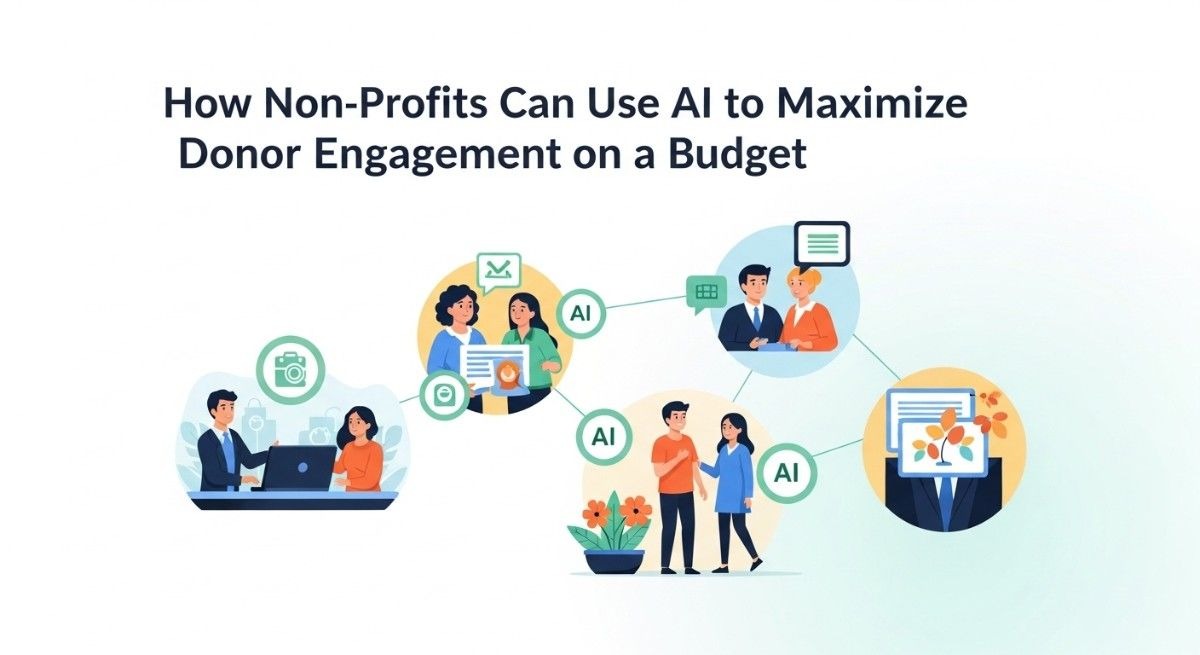
AI for donor engagement has emerged as a game-changing solution for resource-constrained organizations. These technologies democratize capabilities previously available only to large institutions with massive marketing budgets.
Your donors expect personalized communication and immediate responses. Manual processes cannot keep pace with these demands at scale.
Artificial intelligence tools now cost a fraction of what they did just two years ago. Many powerful platforms offer free tiers specifically designed for non-profit use cases.
This comprehensive guide reveals practical strategies for implementing AI without breaking your already-tight budget. You’ll discover real tools, proven approaches, and actionable steps your organization can take immediately.
Table of Contents
Understanding AI’s Role in Modern Donor Engagement
Donor relationships form the lifeblood of non-profit sustainability. Maintaining these connections requires consistent, meaningful communication that feels personal rather than generic.
Traditional engagement methods demand substantial staff time. Writing individual thank-you notes, researching donor interests, and personalizing appeals consume hours that small teams cannot spare.
Artificial intelligence automates repetitive tasks while maintaining the personal touch donors value. The technology analyzes patterns in donor behavior and predicts future actions with remarkable accuracy.
Machine learning algorithms identify which donors might stop giving before it happens. Early intervention becomes possible when you spot warning signs in engagement data.
Natural language processing enables chatbots that answer donor questions instantly. Your supporters get immediate responses regardless of time zones or staff availability.
Predictive analytics forecast which donors are most likely to increase contributions. Your team focuses outreach efforts where they’ll generate maximum impact.
Sentiment analysis reads between the lines in donor communications. Understanding emotional tone helps you respond appropriately to concerns and enthusiasm alike.
AI for donor engagement operates continuously without breaks or vacations. The technology works overnight and weekends maintaining relationships when your staff cannot.
The cost barrier that once prevented small organizations from using these tools has collapsed. Cloud-based AI platforms offer pay-as-you-go pricing that scales with your organization’s size.
Free and Low-Cost AI Tools Every Non-Profit Should Know
Accessible technology options exist for organizations at every budget level. Many companies offer special non-profit pricing or completely free access.
ChatGPT provides powerful language generation capabilities without cost for basic use. Your team can draft donor communications, create social media content, and generate email campaigns.
The free tier handles most small to medium non-profit needs adequately. Paid versions unlock additional features for organizations requiring advanced capabilities.
Mailchimp includes AI-powered send time optimization in their free plan. The system determines when individual subscribers are most likely to open emails.
Segmentation features group donors based on behavior patterns automatically. Your messages reach the right people at the optimal moments.
Canva offers AI design assistance through their free non-profit program. Creating professional graphics for social media and email campaigns becomes simple.
The Magic Write feature generates copy suggestions for your designs. Brand consistency improves when AI maintains your visual identity across materials.
Google Analytics provides AI-driven insights into website visitor behavior. Understanding which content resonates with potential donors informs your strategy.
Predictive metrics forecast future donor actions based on current engagement patterns. These insights guide resource allocation decisions effectively.
HubSpot’s free CRM includes basic AI features for contact management. Lead scoring identifies the most engaged potential donors automatically.
Email tracking shows which messages generate the strongest responses. This data helps refine your communication approach continuously.
Grammarly ensures all donor communications maintain professional quality. The AI catches errors and suggests improvements to tone and clarity.
Consistency in written communication builds trust with your donor base. Error-free, well-crafted messages reflect well on your organization’s professionalism.
Personalizing Donor Communications at Scale
Generic mass emails alienate modern donors who expect individualized attention. Personalization dramatically improves engagement rates and donation conversion.
AI for donor engagement analyzes individual donor histories to customize messages. The technology references specific past contributions and areas of interest automatically.
Name personalization represents just the beginning of what’s possible. AI incorporates donation amounts, preferred causes, and engagement frequency into communications.
Behavioral triggers activate personalized message sequences. When a donor clicks a specific link, they receive related content matching their demonstrated interest.
Dynamic content blocks change based on donor characteristics. The same email template displays different images and text for different recipient segments.
Gift anniversary recognition happens automatically when AI tracks contribution dates. Acknowledging the one-year anniversary of someone’s first donation creates emotional connection.
Preferred communication channel selection ensures messages reach donors how they want. Some supporters prefer email while others engage more on social media.
Response time optimization sends messages when individual donors are most likely to engage. AI learns from past behavior to predict optimal contact moments.
Language and tone adaptation matches donor preferences and demographics. Younger donors might receive casual language while older supporters get formal communication.
Impact reporting becomes personalized based on contribution history. Donors see specific outcomes their gifts enabled rather than generic organizational updates.
Story selection algorithms choose narratives that resonate with individual values. Animal lovers receive different success stories than education advocates.
Implementing Chatbots for 24/7 Donor Support
Immediate response expectations have transformed donor service requirements. People expect answers to questions at any time of day or night.
AI-powered chatbots provide instant responses without requiring staff availability. Common questions about donation processes, tax receipts, and program information get answered immediately.
Many free chatbot platforms exist specifically designed for non-profit needs. ManyChat offers a free tier that handles basic conversation flows adequately.
The setup process requires no coding knowledge or technical expertise. Visual builders let you create conversation paths through simple drag-and-drop interfaces.
Frequently asked questions should form the foundation of your chatbot knowledge base. Analyzing your email inquiries reveals the most common donor questions.
Donation process guidance walks supporters through contributing step-by-step. Reducing friction in the giving process directly increases conversion rates.
Tax receipt information can be delivered automatically through chatbot interactions. Donors get immediate confirmation without waiting for staff to respond.
Event registration becomes seamless when chatbots handle the entire process. Supporters provide necessary information conversationally rather than filling out forms.
Volunteer opportunity matching connects interested supporters with relevant activities. The chatbot asks questions and suggests appropriate volunteer roles.
Crisis response capabilities allow chatbots to handle increased inquiry volume. Natural disasters or urgent campaigns often generate floods of questions.
Human handoff features transfer complex issues to staff members smoothly. The chatbot captures initial information before connecting the donor to a person.
Analytics from chatbot interactions reveal donor concerns and interests. This data informs your broader communication and program strategies.
Leveraging Predictive Analytics for Fundraising Success
Understanding future donor behavior allows proactive relationship management. Predictive models forecast actions before they occur.
Lapse prediction identifies donors at risk of stopping their support. AI for donor engagement analyzes patterns indicating decreased connection to your mission.
Warning signs include reduced email opens, website visit frequency decline, and longer gaps between gifts. Catching these signals early enables intervention.
Re-engagement campaigns target at-risk donors with personalized outreach. Your message acknowledges their importance and highlights new relevant initiatives.
Upgrade likelihood scores identify donors ready to increase contribution levels. Some supporters give modestly despite having capacity for larger gifts.
The AI analyzes wealth indicators, engagement level, and giving history. High-potential donors receive cultivation communications encouraging larger gifts.
Major gift prospect identification finds diamonds in your donor database. People with both capacity and affinity for your cause deserve special attention.
Automated research tools gather public information about donor prospects. LinkedIn profiles, property records, and business affiliations reveal capacity indicators.
Bequest marketing targeting reaches donors likely to include you in estate plans. Older donors with long giving histories represent prime planned giving prospects.
Campaign response prediction forecasts which donors will respond to specific appeals. This allows budget-efficient targeting of campaign communications.
Matching gift eligibility identification finds donors whose employers match contributions. Billions in matching funds go unclaimed annually because donors don’t realize they qualify.
Volunteer engagement scoring predicts which donors want hands-on involvement. Some supporters prefer writing checks while others seek active participation.
Creating Engaging Content with AI Writing Assistants
Consistent content creation strains the capacity of small non-profit teams. AI for donor engagement through quality content becomes achievable with writing assistants.
Blog post generation starts with AI creating initial drafts from topic outlines. Your team edits and adds specific organizational details to the framework.
The time savings allows more frequent content publication. Search engines reward websites that publish fresh, relevant content regularly.
Social media post creation becomes faster with AI suggestion tools. The technology generates multiple caption options for your team to choose from.
Platform-specific optimization ensures content fits each social network’s culture. LinkedIn posts differ from Instagram captions in tone and structure.
Email newsletter assembly uses AI to summarize recent activities and impact. The technology pulls highlights from your programs and creates cohesive narratives.
Subject line testing generates multiple options for A/B comparison. Testing reveals which approaches resonate most with your specific audience.
Thank-you message personalization happens at scale with AI assistance. Each donor receives a unique message reflecting their specific contribution and interests.
Appeal letter drafting starts with AI-generated emotional storytelling. The technology studies successful fundraising copy and applies those principles.
Grant proposal writing benefits from AI that structures arguments effectively. The assistant ensures you address all required elements comprehensively.
Annual report narratives get drafted faster with AI summarization tools. The technology condenses program data into readable success stories.
Video script creation for donor testimonials and impact videos becomes streamlined. AI structures compelling narratives that drive emotional connection.
Optimizing Email Campaigns Through Machine Learning
Email remains the most effective channel for donor communication. Machine learning dramatically improves campaign performance across multiple dimensions.
Send time optimization determines the best moment to reach each subscriber. Individual behavior patterns reveal when specific donors are most likely to engage.
Some supporters check email early morning while others browse evening hours. Sending to each person at their optimal time increases open rates significantly.
Subject line prediction scores your options before sending. AI trained on millions of emails forecasts which subjects will generate strongest open rates.
Testing multiple subject lines across small segments provides real performance data. The winning variant goes to the majority of your list.
Content relevance scoring ensures message alignment with donor interests. AI analyzes previous engagement to predict which topics will resonate.
Segmentation happens automatically based on multiple behavioral factors. Traditional manual segmentation consumes hours that AI completes in seconds.
Donation ask amount optimization suggests the right request for each donor. Too high scares people away while too low leaves money on the table.
AI calculates the optimal ask based on giving history and capacity indicators. Personalized amounts increase both conversion and average gift size.
Email frequency management prevents donor fatigue from too many messages. AI monitors engagement patterns to identify optimal contact cadence.
Some donors happily receive weekly updates while others prefer monthly communication. Respecting individual preferences improves long-term retention.
Re-engagement sequence triggering happens when AI detects declining engagement. Automated campaigns attempt to revive interest before donors lapse completely.
List cleaning identifies inactive subscribers who should receive different treatment. Re-permission campaigns or removal maintain list health and deliverability.
Using AI for Social Media Management and Growth
Social media presence demands consistent posting and rapid response. Small teams struggle to maintain active engagement across multiple platforms.
Content scheduling tools with AI suggest optimal posting times. The technology analyzes when your followers are most active and engaged.
Platform algorithms favor accounts that post when their audiences are online. Timing optimization increases organic reach without paid promotion.
Image and video selection gets assistance from AI visual analysis. The technology identifies which types of visual content generate strongest engagement.
Faces and emotional content typically outperform abstract imagery. Data-driven creative decisions replace guesswork.
Hashtag suggestions come from AI analyzing trending topics and relevant conversations. Appropriate hashtags expand your reach beyond existing followers.
Over-used hashtags bury your content in noise while niche tags reach targeted audiences. AI balances popularity and specificity effectively.
Comment response automation handles simple inquiries and appreciation. Donors commenting “Great work!” receive immediate acknowledgment without staff time.
Complex questions or concerns get flagged for human response. The AI knows when to escalate based on sentiment and content.
Influencer identification finds social media users who care about your cause. Micro-influencers with smaller but engaged audiences often provide better partnership value.
AI analyzes follower overlap and engagement patterns to suggest connections. Strategic partnerships amplify your message to new potential donors.
Content performance prediction scores posts before publication. The AI forecasts engagement levels based on similar past content.
Underperforming predictions trigger revisions before wasting posting opportunities. Each social update gets optimized for maximum impact.
Crisis monitoring alerts you to negative mentions or emerging issues. AI for donor engagement includes protecting your reputation through rapid response.
Sentiment analysis tracks how people feel about your organization online. Negative sentiment spikes require immediate investigation and response.
Streamlining Donor Data Management with AI
Clean, organized data enables all other engagement strategies. Messy databases with duplicate records and incomplete information undermine AI effectiveness.
Duplicate record detection merges multiple entries for the same donor. AI matches records even when names are spelled differently or addresses changed.
This cleanup improves data accuracy and prevents embarrassing duplicate solicitations. Donors feel valued when you clearly recognize their relationship history.
Data enrichment adds missing information from public sources automatically. Email addresses, phone numbers, and demographic details get filled in.
More complete records enable better personalization and segmentation. Each additional data point improves your ability to communicate relevantly.
Address standardization corrects formatting inconsistencies in contact information. Proper formatting reduces returned mail and improves delivery rates.
Tax receipt automation generates and sends acknowledgment letters without manual effort. AI pulls donation details and creates compliant documentation instantly.
Donation categorization assigns gifts to appropriate funds and campaigns automatically. Natural language processing reads payment notes to determine donor intent.
Engagement scoring calculates a single metric representing donor relationship strength. Multiple factors combine into an easy-to-understand number guiding outreach priority.
Recently donated, frequently engaged, highly responsive donors score highest. Lower scores trigger retention efforts while high scores indicate cultivation opportunities.
Compliance monitoring ensures donor data handling meets privacy regulations. GDPR, CCPA, and other laws impose requirements on how you store and use information.
AI flags potential compliance issues before they become legal problems. Automated audits provide peace of mind about regulatory adherence.
Measuring Impact and ROI of AI Initiatives
Demonstrating value justifies continued investment in new technologies. Specific metrics reveal whether AI for donor engagement delivers promised benefits.
Donor retention rate comparison before and after AI implementation shows impact. Even small percentage improvements translate to significant revenue over time.
Acquiring new donors costs five to seven times more than retaining existing supporters. Retention improvements directly affect your bottom line.
Average gift size tracking reveals whether personalization increases contribution amounts. Donors who feel understood and valued often give more generously.
Percentage increases in average gifts multiply across your entire donor base. A 10% increase across 1000 donors creates substantial additional revenue.
Email engagement metrics show open rates, click rates, and conversion improvements. These indicators reveal whether AI optimization actually enhances campaign performance.
Industry benchmarks provide context for your results. Non-profit email open rates average 25% while click rates hover around 2.5%.
Response time measurements track how quickly donors get answers to inquiries. Chatbot implementation should dramatically reduce average response time.
Immediate responses improve donor satisfaction scores and support conversion rates. People appreciate organizations that respect their time.
Staff time savings quantify efficiency gains from automation. Track hours saved on tasks like thank-you note writing and donor research.
Redirecting saved time to high-value activities like major donor cultivation multiplies impact. Your team accomplishes more with the same headcount.
Cost per dollar raised reveals fundraising efficiency improvements. Dividing total fundraising expenses by revenue shows how efficiently you operate.
AI should reduce this ratio over time as automation lowers operational costs. Efficiency improvements allow more money to fund programs.
Donor lifetime value calculation projects the total contribution a supporter will make. AI-driven engagement extends relationships and increases lifetime value substantially.
Small improvements compound over years of donor relationships. Retaining a donor just one year longer might mean thousands in additional revenue.
Overcoming Common Implementation Challenges
Organizations encounter predictable obstacles when adopting new technologies. Understanding these challenges in advance enables better planning and faster success.
Staff resistance stems from fear of job loss or forced learning. Team members worry AI will make their roles obsolete.
Education about AI as enhancement rather than replacement reduces anxiety. Emphasize how automation frees staff for more fulfilling strategic work.
Technical complexity intimidates non-technical teams. Concerns about setup and maintenance prevent organizations from starting.
Choosing user-friendly tools with visual interfaces removes technical barriers. Many modern AI platforms require no coding knowledge whatsoever.
Data quality issues undermine AI effectiveness. Algorithms produce poor results when fed incomplete or inaccurate information.
Initial data cleanup creates the foundation for successful AI deployment. Invest time upfront to organize and verify your donor database.
Budget constraints limit what organizations can invest initially. Even free tools require staff time for setup and learning.
Starting small with one or two high-impact use cases builds confidence. Early wins justify expanding AI usage across additional functions.
Integration challenges arise when connecting AI tools to existing systems. Your donor database may not easily connect to new platforms.
API connections and data export/import solve most integration problems. Many platforms offer pre-built integrations with popular non-profit software.
Privacy concerns worry boards and donors about data usage. Questions arise about how AI vendors use your donor information.
Carefully reviewing vendor privacy policies and choosing compliant providers addresses these concerns. GDPR and CCPA-compliant tools protect donor data appropriately.
Measuring success proves difficult without clear initial goals. Organizations deploy AI without defining what success looks like.
Establishing baseline metrics before implementation enables accurate impact measurement. Know your current performance to measure improvement.
Real-World Success Stories from Non-Profit Organizations
Concrete examples inspire confidence and provide implementation blueprints. These organizations achieved remarkable results with modest budgets.
The Humane Society implemented chatbots handling adoption inquiries. Response time dropped from 24 hours to immediate while staff focused on animal care.
Adoption rates increased 15% as potential pet parents got instant answers. The free chatbot paid for itself many times over in efficiency gains.
Feeding America used predictive analytics to identify lapsing donors. Targeted retention campaigns recovered 22% of at-risk supporters.
The intervention prevented $340,000 in lost annual revenue. Small AI investment generated massive return through donor retention.
Charity Water deployed AI email optimization for fundraising appeals. Send time personalization and subject line testing increased open rates 18%.
Higher engagement translated to 12% more donations from the same list size. Revenue increased substantially without expanding the donor base.
The Nature Conservancy leveraged AI writing assistants for grant proposals. Proposal quality improved while writing time decreased by 40%.
Grant success rate rose from 35% to 47% over two years. Faster, better proposals secured millions in additional funding.
Doctors Without Borders implemented AI for social media management. Automated posting and optimal timing grew followers 200% annually.
Increased visibility attracted new donors discovering the organization through social platforms. Digital presence expansion cost almost nothing.
Local food bank used AI for volunteer scheduling and matching. Volunteer retention improved 30% when people got assignments matching their interests and availability.
Better volunteer experiences reduced recruitment needs and improved program delivery. Technology enhanced human connections rather than replacing them.
Frequently Asked Questions
How much does AI for donor engagement actually cost for small non-profits?
Many powerful AI tools offer free tiers perfectly adequate for small organizations. ChatGPT, Mailchimp’s basic plan, Google Analytics, and Canva all provide free access. Budget $50-200 monthly for paid features as you grow. Most small non-profits implement effective AI for donor engagement for under $100 monthly.
Do we need technical staff or data scientists to use AI tools?
No. Modern AI platforms feature user-friendly interfaces requiring no coding skills. Visual builders, templates, and guides enable non-technical staff to deploy sophisticated automation. Most organizations successfully implement AI with existing team members after brief training.
Will donors feel like they’re talking to robots instead of real people?
When implemented thoughtfully, AI enhances rather than replaces human connection. Use automation for routine tasks while staff handle relationship building. Donors appreciate faster responses and personalized attention AI enables. The technology should be invisible, improving experience without feeling mechanical.
How long does it take to see results from AI implementation?
Some benefits appear immediately while others develop over months. Chatbots provide instant response time improvements on day one. Predictive analytics require weeks of data collection before generating reliable insights. Most organizations see measurable engagement improvements within 60-90 days.
What happens to our data when using AI vendor platforms?
Reputable AI vendors maintain strict privacy policies protecting your donor information. Choose providers that are GDPR and CCPA compliant. Read terms of service carefully and avoid vendors that claim ownership of your data. Many platforms process data without storing it permanently.
Can AI help with major donor cultivation and stewardship?
Absolutely. AI identifies major gift prospects in your database and predicts optimal cultivation strategies. The technology handles research and scheduling while relationship managers focus on personal connection. Wealth screening, engagement tracking, and communication personalization all support major gift programs.
How do we choose which AI tools to implement first?
Start with your biggest pain points and highest-impact opportunities. Organizations struggling with email engagement should prioritize email optimization tools. Those drowning in donor questions benefit most from chatbots. Assess where your team spends the most time and automate those functions first.
What if our donor database is messy and incomplete?
Data cleanup should precede major AI deployment. Many AI tools actually help clean data through duplicate detection and enrichment. Start cleanup manually for critical records then let AI assist with broader database improvement. Gradual enhancement works better than waiting for perfect data.
Read More:-The Guide to Setting Up Self-Hosted AI to Protect Your Intellectual Property
Conclusion

AI for donor engagement transforms how resource-constrained non-profits build and maintain supporter relationships. These technologies level the playing field between small organizations and large institutions with massive budgets.
The financial barrier to entry has collapsed dramatically. Free and low-cost tools provide capabilities that cost hundreds of thousands just years ago. Your organization can deploy sophisticated engagement strategies regardless of budget size.
Personalization at scale becomes achievable when AI handles routine customization. Donors receive communications that feel individually crafted rather than mass-produced. This personal touch dramatically improves engagement and retention.
Immediate response capabilities through chatbots meet modern donor expectations. Supporters get answers whenever questions arise regardless of staff availability. Better service translates directly to stronger relationships and increased giving.
Predictive analytics enables proactive relationship management. Identifying at-risk donors before they lapse allows timely intervention. Cultivation efforts focus on supporters most likely to respond positively.
Content creation efficiency frees staff for strategic activities. AI writing assistants handle first drafts while humans add organizational voice and specific details. More frequent, higher-quality communication strengthens donor connections.
Email optimization through machine learning improves campaign performance measurably. Send time personalization, subject line testing, and content relevance scoring increase open and conversion rates. The same list generates more revenue when contacted intelligently.
Social media management becomes sustainable for small teams through automation. Consistent posting, optimal timing, and engagement monitoring happen without overwhelming staff. Expanded reach attracts new supporters discovering your mission.
Data management improves through AI-powered cleanup and enrichment. Better information enables better personalization and targeting. Clean databases form the foundation for all engagement strategies.
Measurable results justify continued investment and expansion. Tracking retention rates, average gift sizes, and efficiency metrics demonstrates clear value. Early wins build organizational confidence in technology adoption.
Implementation challenges are surmountable with proper planning. Staff training, data preparation, and starting small overcome common obstacles. Organizations that persist through initial learning curves achieve substantial long-term benefits.
Real-world examples prove AI’s value across organization types and sizes. Food banks, environmental groups, animal welfare organizations, and health charities all achieve remarkable results. Your mission focus matters less than commitment to trying new approaches.
The competitive landscape makes AI adoption increasingly necessary. Donors compare their experience with your organization to every other interaction. Meeting evolving expectations requires leveraging available technology effectively.
Your mission deserves every advantage in attracting and retaining supporters. AI provides powerful tools amplifying your team’s impact without proportional cost increases. Every dollar saved on operations funds program delivery.
Start your AI journey today with a single tool addressing your biggest challenge. Success breeds confidence enabling gradual expansion into additional use cases. Small steps accumulate into transformative organizational capabilities.
The future of donor engagement belongs to organizations embracing intelligent automation. Those adopting AI early build sustainable competitive advantages. Your supporters, staff, and mission all benefit from enhanced engagement capabilities.
Take action now while many peers still hesitate. Early adopters gain years of learning and optimization before laggards begin. The technology will only become more central to non-profit operations over time.
AI for donor engagement is not a luxury for well-funded organizations alone. Budget-conscious non-profits access the same powerful tools through free and low-cost options. Your organization’s size should not limit your ambition or capability.
Human connection remains at the heart of non-profit work. Technology enhances rather than replaces authentic relationships with supporters. AI handles routine tasks so your team can focus on meaningful personal engagement that truly moves people.