Introduction
TL;DR Email remains the backbone of B2B sales communication. Sales professionals send hundreds of messages every week. Most of these emails never receive a response. The problem isn’t the quality of your product. The issue lies in how you communicate with prospects.
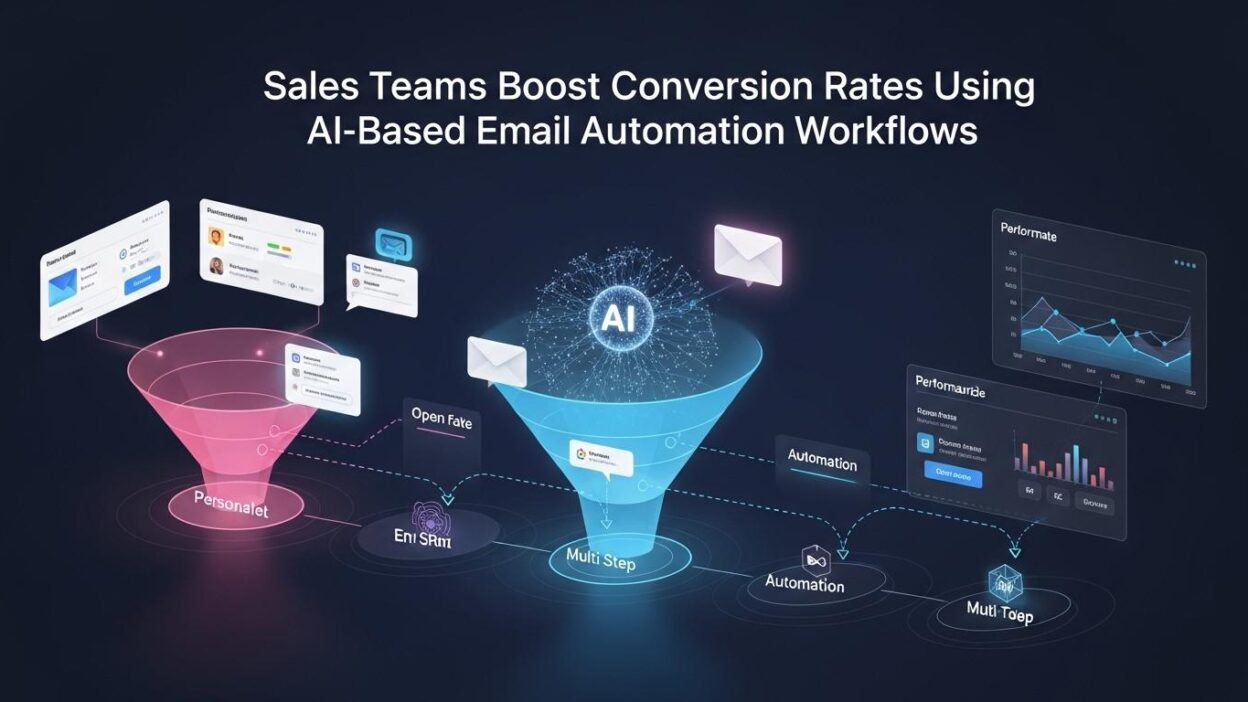
AI-based email automation workflows are changing the sales landscape. These intelligent systems learn from successful interactions. They adapt messaging based on recipient behavior. Sales teams using these tools report conversion rate increases of 30-50%.
Traditional email campaigns follow rigid schedules. They send the same message to everyone on a list. This approach ignores individual preferences and behaviors. Modern buyers expect personalized experiences. Generic emails get deleted without a second thought.
Smart automation tools analyze thousands of data points. They identify the best time to send each message. The systems determine which subject lines generate opens. They adjust content based on previous engagement. This level of customization was impossible just five years ago.
Sales teams waste countless hours on repetitive tasks. They manually follow up with prospects. They track responses in spreadsheets. They try to remember which message to send next. AI-based email automation workflows eliminate this busywork. Your team focuses on high-value conversations while technology handles routine communication.
Table of Contents
Understanding AI-Based Email Automation Workflows
Email automation existed before artificial intelligence entered the picture. Basic tools sent scheduled messages to predefined lists. They followed simple if-then rules. A prospect clicked a link, so the system sent a follow-up. These systems required constant manual updates.
AI transforms this entire process. Machine learning algorithms study your successful sales interactions. They identify patterns in emails that generate responses. The technology recognizes which phrases lead to meetings. It understands how timing affects engagement rates.
Natural language processing analyzes prospect responses. The system understands sentiment and intent. It categorizes replies as interested, neutral, or negative. Your workflow adjusts automatically based on these signals. Interested prospects receive accelerated follow-up. Uninterested contacts get removed from active sequences.
Predictive analytics forecast which leads will convert. The algorithms examine historical data from your CRM. They compare new prospects to previous successful deals. Your team prioritizes outreach to high-probability opportunities. Low-quality leads receive less attention and resources.
AI-based email automation workflows integrate with your existing tech stack. They pull data from your CRM, marketing platform, and sales tools. The system creates a unified view of each prospect. Every interaction informs the next touchpoint. Your messaging becomes more relevant with each exchange.
How AI Improves Email Personalization at Scale
Personalization drives email performance. Emails with personalized subject lines are 26% more likely to be opened. Messages addressing specific pain points generate 3x more responses. Manual personalization doesn’t scale beyond a handful of prospects.
AI analyzes prospect data from multiple sources. It reviews LinkedIn profiles, company websites, and social media activity. The system identifies recent company news and hiring patterns. It recognizes industry trends affecting the prospect’s business. This research happens in seconds instead of hours.
Dynamic content insertion goes beyond first names. AI-based email automation workflows customize entire paragraphs based on prospect characteristics. A manufacturing prospect receives different case studies than a retail contact. The technology matches your value proposition to their specific challenges.
Behavioral triggers activate personalized sequences. A prospect visits your pricing page three times in one week. The system recognizes buying intent. It automatically sends relevant testimonials and ROI calculators. Your sales rep receives an alert to make personal contact.
Send time optimization maximizes open rates. The AI studies when each recipient typically engages with email. Some prospects check messages early morning. Others respond better to afternoon outreach. Your emails arrive when they’re most likely to be seen.
Language adaptation matches your tone to recipient preferences. Some prospects respond to casual, friendly messaging. Others prefer formal, data-driven communication. The system identifies these patterns through response analysis. Your emails feel naturally suited to each individual.
Setting Up Your First AI-Powered Email Workflow
Start with a clear objective for your workflow. Are you nurturing cold leads? Re-engaging dormant prospects? Following up after demos? Each goal requires different messaging and timing. Define success metrics before building the workflow.
Segment your audience into specific groups. Group prospects by industry, company size, or buying stage. Create separate workflows for each segment. A startup founder needs different messaging than an enterprise executive. AI-based email automation workflows perform better with focused targeting.
Map the customer journey for each segment. Identify common touchpoints from awareness to decision. Determine how many emails each journey requires. Most effective sequences include 5-8 messages spread over several weeks. Plan content for each stage of awareness.
Write your initial email templates with personality. Avoid corporate jargon and buzzwords. Address specific problems your prospects face. Include clear calls to action. Ask questions that encourage replies. Your AI will optimize these templates over time.
Configure your AI parameters and learning goals. Set the system to test different subject lines. Allow variations in send times. Define which metrics matter most to your team. The technology needs clear direction to optimize effectively.
Connect all relevant data sources to your workflow. Link your CRM to provide prospect history. Integrate website tracking to monitor engagement. Connect your calendar for meeting scheduling. More data creates smarter automation.
Start your workflow with a small test group. Monitor performance closely during the first two weeks. Review which emails generate responses. Identify which prospects advance through your funnel. Make adjustments based on early results.
Key Features of Effective AI Email Automation Tools
Smart segmentation capabilities separate prospects automatically. The system groups contacts by behavior, not just demographics. Engaged prospects move to higher-priority workflows. Unresponsive contacts shift to re-engagement sequences. Your database organizes itself without manual intervention.
A/B testing runs continuously in the background. AI-based email automation workflows test subject lines against each other. They compare different opening paragraphs. The system identifies winners and applies them automatically. You don’t need to manually review test results.
Spam filter avoidance protects your sender reputation. AI analyzes which words and phrases trigger spam filters. It suggests alternatives that maintain your message intent. The system monitors deliverability rates across email providers. Your messages actually reach prospect inboxes.
Response detection categorizes replies instantly. The technology distinguishes between out-of-office messages and real responses. It identifies positive signals like meeting requests. Negative responses stop the workflow immediately. Your team only reviews messages requiring human attention.
CRM synchronization keeps all systems updated. New information flows automatically between platforms. Meeting bookings appear in your CRM instantly. Email interactions update contact records in real-time. Your data stays accurate without manual entry.
Analytics dashboards show workflow performance at a glance. Track open rates, click rates, and response rates by segment. Compare current campaigns to historical benchmarks. Identify which messages drive the most conversions. Make data-driven decisions about your outreach strategy.
Measuring Success with AI Email Automation
Open rates indicate whether your subject lines work. Industry average hovers around 20% for sales emails. AI-based email automation workflows typically achieve 30-40% open rates. Track this metric by segment and workflow. Identify which approaches generate the most opens.
Click-through rates measure content relevance. They show whether your message resonates with recipients. Strong sales emails achieve 5-8% click rates. Monitor which links receive the most attention. This data reveals what prospects find valuable.
Response rates matter more than opens or clicks. A response indicates genuine interest. Sales emails averaging 8-10% response rates perform well. AI-based email automation workflows frequently exceed 15% response rates. Focus optimization efforts on increasing this metric.
Meeting booking rates connect email performance to revenue. Track how many email conversations result in scheduled calls. Calculate the average number of touches before a meeting. Reduce this number through better targeting and messaging.
Conversion rates show ultimate workflow effectiveness. Measure how many email-sourced leads become customers. Compare conversion rates across different workflows. Identify which sequences generate the highest-quality opportunities.
Time to conversion reveals efficiency improvements. Track how long prospects spend in each workflow. Shorter cycles indicate more effective nurturing. AI-based email automation workflows typically reduce sales cycles by 20-30%.
Revenue attribution links automation efforts to business results. Calculate total revenue generated through automated workflows. Compare this against the cost of your automation tools. Strong ROI justifies continued investment in AI technology.
Common Challenges and How to Overcome Them
Email deliverability issues plague many automation efforts. Sending too many messages too quickly damages sender reputation. Warm up new email domains gradually. Start with small daily volumes. Increase slowly over several weeks. AI-based email automation workflows include deliverability monitoring to prevent problems.
Data quality problems undermine personalization efforts. Outdated contact information leads to bounced emails. Incorrect job titles result in irrelevant messaging. Clean your database before launching workflows. Remove invalid email addresses. Update contact information regularly.
Message fatigue occurs when prospects receive too many emails. They stop opening messages from your domain. Implement frequency caps to prevent oversaturation. Give prospects time between touchpoints. Monitor unsubscribe rates as an early warning signal.
Lack of content variety makes workflows feel robotic. Recipients recognize templated messages immediately. Create multiple versions of each email in your sequence. Test different approaches to the same topic. Keep messaging fresh and interesting.
Insufficient follow-up leaves opportunities on the table. Many sales are lost because reps don’t persist. Most deals require 5-8 touchpoints before conversion. AI-based email automation workflows ensure consistent follow-up without manual effort.
Integration complexity frustrates technical implementation. Multiple tools need to communicate seamlessly. Work with vendors offering pre-built integrations. Use middleware platforms to connect disparate systems. Invest time in proper setup to avoid future headaches.
Team adoption resistance slows implementation. Sales reps fear technology will replace them. Emphasize that automation handles busywork, not relationship building. Train your team thoroughly on new tools. Show quick wins to build confidence and enthusiasm.
Best Practices for AI Email Automation Success
Start with proven templates and frameworks. Don’t reinvent the wheel for your first workflows. Many industries have established best practices. Adapt successful approaches to your specific situation. AI-based email automation workflows work best when built on solid foundations.
Write like a human, not a marketer. Avoid corporate speak and empty phrases. Use contractions and casual language. Ask questions that invite responses. Your emails should feel like they come from a real person.
Test everything systematically. Subject lines, send times, and call-to-action placement all affect results. Change one variable at a time. Let tests run long enough to achieve statistical significance. Small improvements compound over time.
Monitor competitor activity regularly. Sign up for competitors’ email lists. Study their messaging and cadence. Identify gaps in their approach. Differentiate your outreach through superior personalization.
Refresh content quarterly to maintain relevance. Update case studies and statistics. Revise messaging to reflect current market conditions. Remove outdated references that date your emails.
Combine automation with personal outreach. AI-based email automation workflows handle initial touches and routine follow-up. Sales reps focus on high-value conversations. This hybrid approach maximizes efficiency and effectiveness.
Respect unsubscribe requests immediately. Honor opt-out preferences across all workflows. Maintaining list hygiene protects your sender reputation. Quality matters more than quantity in email marketing.
Advanced Strategies for Power Users
Multi-channel orchestration extends beyond email alone. Integrate LinkedIn messages, phone calls, and direct mail. AI-based email automation workflows coordinate timing across channels. A prospect ignores three emails but engages on LinkedIn. The system adjusts strategy automatically.
Predictive lead scoring prioritizes your best opportunities. AI analyzes engagement patterns and firmographic data. It assigns probability scores to each prospect. Your team focuses energy where conversion likelihood is highest.
Dynamic sequence branching creates personalized journeys. A prospect clicks on a specific product link. The workflow pivots to focus on that solution. Someone downloads a whitepaper receives related educational content. The path adapts to individual behavior.
Account-based marketing integration targets entire buying committees. AI-based email automation workflows coordinate outreach to multiple stakeholders. Messages align across decision-makers and influencers. The system ensures consistent messaging throughout the organization.
Revenue prediction models forecast pipeline impact. AI analyzes workflow performance and historical conversion data. It projects revenue from active campaigns. Sales leaders make informed resource allocation decisions.
Sentiment analysis monitors prospect emotional state. The technology detects frustration, enthusiasm, or confusion in responses. Workflows adjust tone and approach accordingly. Negative sentiment triggers human intervention.
Industry-Specific Applications
Technology companies leverage AI-based email automation workflows for product launch campaigns. The systems segment users by feature usage. Power users receive advanced tips and upgrade offers. Inactive accounts get re-engagement sequences. Conversion rates for upsells increase significantly.
Financial services firms use automation for client nurturing. Compliance requirements demand careful messaging. AI ensures all communications meet regulatory standards. The technology personalizes investment insights based on client portfolios. Response rates improve while maintaining compliance.
Healthcare providers implement workflows for appointment reminders. The systems reduce no-show rates through intelligent scheduling. They send personalized health tips based on patient conditions. AI-based email automation workflows improve patient engagement and outcomes.
Real estate agents use automation for lead follow-up. The technology tracks property viewing behaviors. It sends listings matching prospect preferences automatically. Open house reminders go out at optimal times. Agents close more deals with less manual outreach.
Manufacturing companies deploy workflows for quote follow-up. The systems recognize when prospects review proposals. They automatically send supporting documentation and case studies. Sales cycles shorten through timely, relevant communication.
Future Trends in Email Automation
Voice-activated email composition will simplify content creation. Sales reps dictate messages while driving between appointments. AI converts speech to properly formatted emails. The technology maintains consistent tone and messaging.
Augmented reality integration will enhance product demonstrations. AI-based email automation workflows will embed interactive 3D models in messages. Prospects explore products directly within their inbox. Engagement increases through immersive experiences.
Blockchain verification will combat email fraud and spoofing. Recipients will confirm sender authenticity instantly. Trust in email communication will improve. Deliverability rates will increase industry-wide.
Emotional AI will detect prospect mood through response analysis. Systems will adjust messaging tone in real-time. Frustrated prospects receive empathetic, solution-focused communication. Enthusiastic contacts get accelerated purchase pathways.
Quantum computing will enable real-time optimization at massive scale. AI-based email automation workflows will process billions of data points instantly. Personalization will reach levels currently impossible. Every email will be perfectly timed and targeted.
How to Choose the Right AI Email Automation Platform
Evaluate integration capabilities with your existing tools. The platform should connect seamlessly to your CRM. It needs to pull data from your marketing automation system. Difficult integrations create ongoing technical headaches.
Assess the learning curve for your team. Complex platforms sit unused after initial enthusiasm fades. Look for intuitive interfaces and strong training resources. Your team should become productive within days, not months.
Review the platform’s AI capabilities in detail. Not all systems offer true artificial intelligence. Some use basic if-then rules labeled as AI. Ask vendors to demonstrate machine learning in action.
Check deliverability rates and sender reputation management. The best AI-based email automation workflows include built-in deliverability optimization. They monitor spam complaints and bounce rates. Your messages actually reach recipient inboxes.
Compare pricing models carefully. Some platforms charge per contact. Others bill based on email volume. Calculate total cost based on your specific usage patterns. Hidden fees can make cheap platforms expensive.
Read customer reviews from companies similar to yours. Look for feedback about customer support quality. Technical issues will arise. Responsive support makes the difference between minor annoyances and major disruptions.
Request a trial period to test real-world performance. Send live campaigns through the platform. Evaluate ease of use with your actual workflows. Make purchasing decisions based on experience, not just demos.
Training Your Team on AI Email Automation
Begin with the why before teaching the how. Explain how automation amplifies their effectiveness. Show concrete examples of time savings. Address fears about job security directly. AI-based email automation workflows enhance human capabilities rather than replace them.
Start training with small pilot groups. Select enthusiastic early adopters as champions. Let them discover best practices through hands-on experience. They become internal advocates and peer trainers.
Create standard operating procedures for common tasks. Document workflow creation processes step-by-step. Build a knowledge base of troubleshooting solutions. Your team needs reference materials for ongoing success.
Hold regular optimization sessions to review performance. Celebrate wins from automated campaigns. Analyze what’s working and why. Continuous improvement becomes part of your culture.
Encourage experimentation and creative applications. Give team members permission to try new approaches. Not every test will succeed. Failed experiments provide valuable learning opportunities.
Provide ongoing education about AI capabilities. The technology evolves rapidly. Monthly updates keep your team informed about new features. They continue extracting value from your platform investment.
Measure training effectiveness through adoption metrics. Track how many workflows each rep creates. Monitor the quality of their email templates. Identify team members needing additional support.
Compliance and Privacy Considerations
GDPR requirements demand clear consent for email communication. AI-based email automation workflows must include unsubscribe mechanisms. They need to honor data deletion requests promptly. Non-compliance risks significant financial penalties.
CAN-SPAM regulations apply to all US business email. Include accurate sender information in every message. Honor opt-out requests within 10 business days. Avoid deceptive subject lines and headers.
CCPA gives California residents rights over their data. Your automation systems must allow data access and deletion. Maintain clear records of data collection and usage. Transparency builds trust with prospects and customers.
Industry-specific regulations add complexity. Financial services face strict communication rules. Healthcare providers must protect patient information. Your AI-based email automation workflows should include compliance checks before sending.
Data security protects both your company and your contacts. Encrypt prospect information at rest and in transit. Limit access to sensitive data. Regular security audits identify vulnerabilities.
Ethical AI usage maintains human oversight. Don’t let automation become completely autonomous. Review AI decisions periodically. Ensure your technology aligns with company values.
Transparent communication builds long-term relationships. Tell prospects when they’re interacting with automation. Explain how you use their data. Honesty differentiates your approach from competitors.
Frequently Asked Questions
What are AI-based email automation workflows?
AI-based email automation workflows are intelligent systems that send personalized emails based on prospect behavior. They use machine learning to optimize timing, content, and targeting. The technology learns from successful interactions. It continuously improves performance without manual intervention.
How much do AI email automation tools cost?
Pricing varies widely based on features and contact volume. Basic platforms start around $50 monthly. Enterprise solutions can exceed $1,000 per month. Calculate ROI based on time saved and increased conversion rates. Most tools pay for themselves within three months.
Can AI email automation replace sales representatives?
No, automation complements human sales professionals. The technology handles repetitive tasks like follow-up and scheduling. Sales reps focus on relationship building and complex problem-solving. The combination of AI efficiency and human connection produces the best results.
How long does implementation take?
Basic workflow setup takes 1-2 weeks. Complex implementations spanning multiple systems require 4-6 weeks. Most teams see positive results within the first month. Full optimization happens over 3-6 months of continuous refinement.
What open rates should I expect?
AI-based email automation workflows typically achieve 30-40% open rates. This exceeds traditional email campaigns by 10-15 percentage points. Results vary by industry and audience. B2B technology emails often see higher engagement than consumer campaigns.
Is email automation suitable for small businesses?
Yes, small businesses benefit significantly from automation. They lack resources for large sales teams. Technology levels the playing field against bigger competitors. Many platforms offer affordable plans for smaller contact databases.
How do I avoid my emails being marked as spam?
Maintain good list hygiene by removing invalid addresses. Avoid spam trigger words in subject lines. Include clear unsubscribe options in every email. AI-based email automation workflows include deliverability monitoring to protect sender reputation.
Read More:-The Future of Work: How AI Automation Creates Jobs Instead of Replacing Them
Conclusion

Sales success depends on consistent, personalized communication at scale. Manual processes can’t keep pace with modern buyer expectations. Your team needs technology that amplifies their efforts without sacrificing authenticity.
AI-based email automation workflows transform how sales teams engage prospects. They eliminate repetitive tasks that consume valuable selling time. Your representatives focus on high-value conversations while automation handles routine touchpoints. Conversion rates increase by 30-50% when implemented correctly.
The technology continues evolving rapidly. Early adopters gain significant competitive advantages. They build relationships more efficiently than competitors stuck in manual processes. Their prospects receive timely, relevant communication at every stage of the buying journey.
Implementation requires thoughtful planning and execution. Start with clear objectives and focused segments. Test systematically and optimize continuously. Train your team thoroughly and celebrate early wins. Success comes from the combination of powerful technology and skilled professionals.
The future of sales belongs to teams embracing intelligent automation. AI-based email automation workflows are no longer optional for competitive organizations. They represent the new standard for professional sales communication. Your team can either lead this transformation or struggle to catch up.
Take the first step today. Evaluate platforms suited to your needs. Start with one simple workflow. Learn what works for your specific audience. Scale successful approaches across your entire sales operation.
Your prospects expect personalized experiences. Your team deserves tools that amplify their effectiveness. AI-based email automation workflows deliver both outcomes simultaneously. The question isn’t whether to adopt this technology. The question is how quickly you can implement it to start seeing results.Retry