TL;DR Small business owners face a constant challenge. They need to do more with less. Resources are limited. Time is precious. Competition grows fiercer every day.
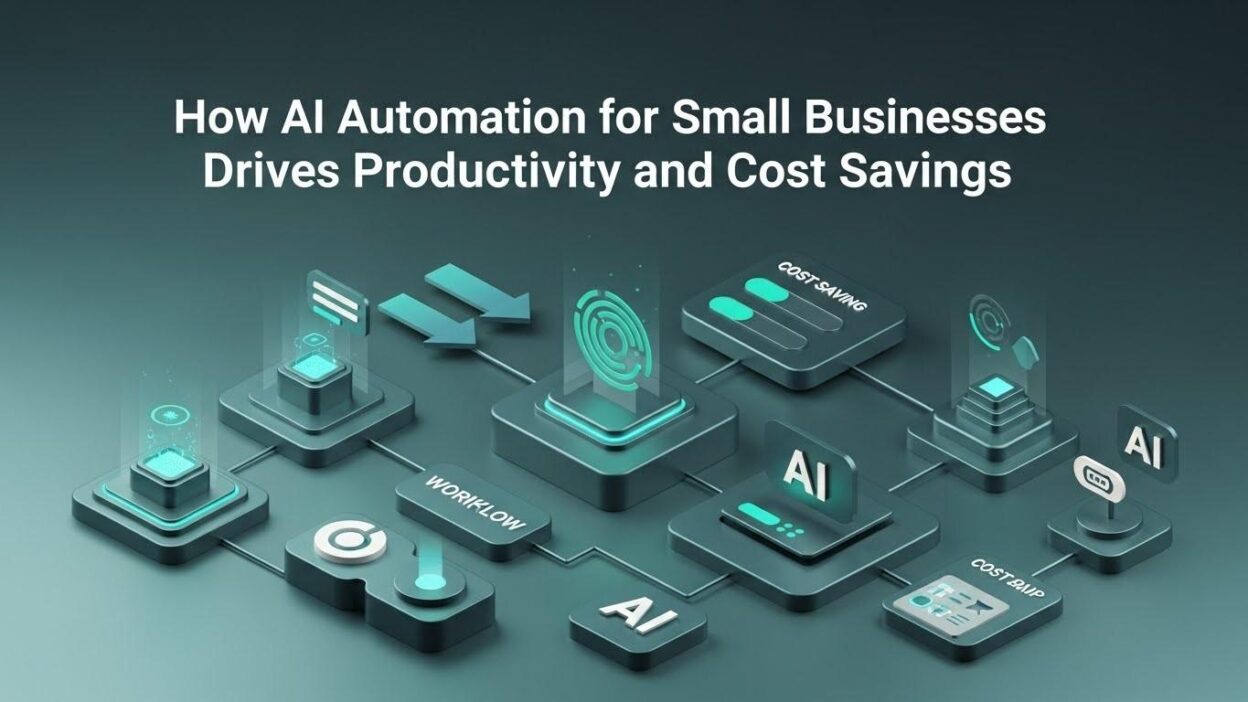
AI automation for small businesses offers a powerful solution. It transforms how companies operate. Tasks that once took hours now complete in minutes. Costs that strained budgets drop significantly.
This technology isn’t just for tech giants anymore. Small businesses across industries are discovering its benefits. They’re streamlining operations. They’re cutting expenses. They’re competing with larger companies on equal footing.
The results speak volumes. Productivity soars. Profits increase. Business owners finally have time to focus on growth instead of repetitive tasks.
Table of Contents
Understanding AI Automation and Its Relevance to Small Businesses
AI automation combines artificial intelligence with automated processes. The technology handles routine tasks without human intervention. It learns from patterns. It makes decisions based on data. It improves over time through machine learning.
Small businesses traditionally relied on manual processes. Employees spent hours on data entry. They managed inventory by hand. They responded to every customer inquiry individually. This approach consumed valuable time and resources.
AI automation for small businesses changes this dynamic completely. The technology takes over repetitive work. Your team focuses on strategic activities instead. Customer service chatbots answer common questions instantly. Inventory systems predict stock needs automatically. Accounting software categorizes expenses without manual input.
The market has evolved rapidly. Solutions once costing hundreds of thousands now fit small business budgets. Cloud-based platforms offer subscription models. Setup requires minimal technical expertise. Integration with existing tools happens seamlessly.
Small business owners no longer need IT departments to implement these solutions. User-friendly interfaces make adoption simple. Training takes days instead of months. Support teams guide you through every step.
The Technology Behind AI Automation
AI automation relies on several key technologies working together. Machine learning algorithms analyze patterns in your business data. Natural language processing understands customer messages. Computer vision reads documents and images. Predictive analytics forecasts future trends.
These technologies sound complex. The actual usage remains straightforward. You don’t need to understand the coding behind the scenes. The systems work intuitively. They adapt to your specific business needs.
Cloud computing powers most modern solutions. Your data stays secure on remote servers. You access tools from any device with internet connection. Updates happen automatically in the background. No manual installations are required.
Why Small Businesses Need Automation Now
The business landscape has shifted dramatically. Customer expectations have risen. Response times must be instant. Service quality needs to be consistent. Competition operates 24/7 online.
Manual processes cannot keep pace. Your competitors are already automating. They respond faster to customer needs. They operate more efficiently. They scale without proportionally increasing costs.
AI automation for small businesses levels the playing field. You gain capabilities previously reserved for large corporations. Your small team accomplishes what once required dozens of employees. You serve customers around the clock without hiring night shifts.
Economic pressures add urgency. Labor costs continue rising. Skilled workers become harder to find. Profit margins face constant squeeze. Automation provides a sustainable path forward.
How AI Automation Drives Productivity in Small Businesses
Productivity defines business success. More output from the same resources means higher profits. AI automation for small businesses delivers this advantage across multiple areas.
Employee time represents your most valuable resource. AI automation eliminates hours spent on mundane tasks. Your team redirects energy toward creative problem-solving. They build customer relationships. They develop new products. They drive innovation.
Consider a typical workday. Employees arrive and check emails. They enter data from yesterday’s sales. They update inventory records. They process routine customer requests. These tasks consume half the morning before meaningful work begins.
Automation handles these activities before employees arrive. Data syncs automatically overnight. Customer queries receive instant responses. Inventory updates in real-time as sales occur. Your team starts each day focusing on high-value activities immediately.
Streamlining Administrative Tasks
Administrative work drains resources in every small business. Scheduling appointments takes multiple back-and-forth emails. Expense reports require manual categorization. Invoicing involves repetitive data entry. These tasks are necessary but not productive.
AI automation transforms administrative efficiency. Scheduling tools check everyone’s calendar and propose meeting times automatically. Expense management software reads receipts and categorizes spending instantly. Invoicing systems generate and send bills based on completed work.
Payroll processing becomes seamless. Time tracking integrates with payment systems. Tax calculations happen automatically. Direct deposits process without manual intervention. Errors decrease substantially since human input is minimized.
Document management improves dramatically. AI systems organize files based on content. Search functions find information instantly. Version control prevents confusion. Compliance requirements are tracked automatically.
Your administrative costs drop while accuracy improves. Processing time for routine tasks falls by 70-80%. Your team handles more work without adding staff. Bottlenecks disappear from your workflow.
Enhancing Customer Service Operations
Customer service makes or breaks small businesses. Every interaction shapes your reputation. Quick responses lead to happy customers. Delays drive them to competitors.
AI automation for small businesses revolutionizes customer service. Chatbots handle initial inquiries 24/7. They answer common questions instantly. They collect necessary information before routing to human agents. They never take breaks or call in sick.
Response times drop from hours to seconds. Customer satisfaction scores increase measurably. Your human team handles complex issues requiring empathy and creativity. Simple queries get resolved automatically.
Email management becomes more efficient. AI systems categorize incoming messages by urgency and topic. They draft initial responses to routine questions. They flag critical issues requiring immediate attention. Your inbox stays organized effortlessly.
Phone systems benefit too. AI receptionists greet callers professionally. They route calls to appropriate team members. They take messages when nobody’s available. They schedule appointments directly into your calendar.
Social media monitoring happens automatically. AI tracks brand mentions across platforms. It alerts you to negative comments requiring response. It identifies sales opportunities from customer conversations. Your online reputation stays protected.
Optimizing Marketing Campaigns
Marketing requires constant testing and adjustment. Small businesses struggle to analyze campaign performance effectively. Manual tracking misses important patterns. Optimization decisions rely on guesswork.
AI automation brings data-driven precision to marketing. Email campaigns automatically segment audiences based on behavior. Send times optimize for each recipient’s engagement patterns. Subject lines test variations to identify top performers.
Social media posting schedules itself. AI analyzes when your audience is most active. It suggests content types that generate best engagement. It repurposes successful posts across platforms automatically.
Ad spending becomes more efficient. AI monitors campaign performance in real-time. It shifts budgets toward high-performing channels automatically. It pauses underperforming ads before wasting money. Return on ad spend improves significantly.
Content creation gets assistance from AI tools. They generate blog post outlines. They suggest headline variations. They optimize content for search engines. They identify trending topics in your industry.
Lead scoring happens automatically. AI analyzes prospect behavior to predict purchase likelihood. Sales teams focus on hottest leads first. Follow-up sequences trigger based on prospect actions. Conversion rates improve substantially.
Improving Inventory and Supply Chain Management
Inventory management challenges every product-based business. Too much stock ties up cash. Too little means lost sales. Predicting demand accurately seems impossible.
AI automation for small businesses solves inventory headaches. Predictive algorithms analyze historical sales patterns. They account for seasonality and trends. They factor in external variables like weather and events. Stock recommendations become remarkably accurate.
Reordering happens automatically when inventory hits predetermined thresholds. The system considers supplier lead times. It accounts for upcoming promotions or seasonal demand. It prevents both stockouts and overstock situations.
Supply chain visibility improves dramatically. AI tracks shipments across multiple carriers. It predicts delivery dates accurately. It alerts you to potential delays. You can inform customers proactively instead of reacting to complaints.
Supplier management becomes data-driven. AI tracks vendor performance metrics. It identifies patterns in quality issues or delivery problems. It recommends when to switch suppliers based on concrete data. Your procurement decisions improve continuously.
Warehouse operations gain efficiency. AI optimizes product placement for fastest picking. It generates efficient picking routes for orders. It schedules staff based on predicted order volume. Labor costs decrease while fulfillment speed increases.
Cost Savings Through AI Automation for Small Businesses
Every dollar saved flows directly to your bottom line. AI automation for small businesses delivers substantial cost reductions across operations. These savings compound over time as systems learn and improve.
The initial investment in automation pays back quickly. Most small businesses see return on investment within 6-12 months. The ongoing savings continue year after year. Total cost of ownership remains far below hiring additional staff.
Labor represents the largest expense for most small businesses. Automation doesn’t necessarily replace employees. It multiplies their effectiveness. One person accomplishes what previously required three or four. You grow revenue without proportionally growing payroll.
Reducing Labor Costs
Labor costs extend beyond salaries. You pay for benefits, training, payroll taxes, and workplace expenses. These add 25-40% on top of base wages. Turnover creates additional recruitment and onboarding costs.
AI automation for small businesses addresses these costs directly. Tasks requiring full-time employees become automated processes. A customer service chatbot costs less per month than one hour of employee wages. Yet it works 24/7 without breaks or overtime.
Data entry that occupied two full-time positions now happens automatically. Document processing that required dedicated staff completes instantly. Scheduling coordination that consumed administrative hours occurs without human intervention.
You avoid the hidden costs of human error. Mistakes in data entry create expensive problems downstream. Missed appointments frustrate customers and waste time. Incorrect inventory counts lead to stockouts or overstock. Automation maintains consistent accuracy.
Training costs decrease substantially. New employees need less onboarding when automation handles routine tasks. They become productive faster. You spend less on ongoing training for repetitive processes. Your training budget focuses on developing strategic skills.
Overtime expenses virtually disappear for automated processes. The software handles workload spikes without additional cost. Holiday and sick leave don’t impact automated operations. You gain predictable, controlled labor expenses.
Minimizing Operational Errors
Errors cost small businesses tremendously. A wrong invoice creates collection problems. An incorrect shipment loses a customer. A missed appointment damages your reputation. Human error is inevitable with manual processes.
AI automation eliminates most operational errors. Software doesn’t forget steps. It doesn’t transpose numbers. It doesn’t misread information. Accuracy rates exceed 99% for most automated tasks.
Accounting errors decrease dramatically. AI categorizes transactions consistently. It catches duplicate entries. It identifies anomalies requiring review. Your books stay accurate without constant reconciliation.
Order processing becomes error-free. Addresses verify automatically. Inventory checks happen before confirmation. Shipping information transfers without mistakes. Returns and refunds decrease due to fulfillment accuracy.
Compliance violations carry expensive penalties. AI systems track regulatory requirements automatically. They flag potential issues before they become problems. They maintain required documentation consistently. Audit preparation becomes straightforward.
The cost of fixing errors often exceeds the original task cost. You spend time investigating what went wrong. You communicate with affected customers. You process refunds or corrections. You potentially lose the customer relationship. Automation prevents these cascading costs.
Optimizing Resource Allocation
Resource allocation challenges every small business owner. Which projects deserve attention? Where should you invest limited funds? What activities actually drive revenue?
AI automation provides data-driven answers. Analytics dashboards show exactly where time goes. You identify bottlenecks dragging down productivity. You spot inefficiencies wasting resources. Decision-making becomes objective rather than intuitive.
Energy costs decrease with smart automation. Climate control systems adjust based on occupancy. Lighting responds to natural light levels. Equipment powers down during idle periods. Utility bills drop noticeably.
Software licensing costs optimize. AI tracks actual usage of various tools. You eliminate redundant subscriptions. You right-size plans based on real needs. Technology spending becomes lean and effective.
Marketing budgets stretch further. AI identifies which channels deliver best returns. It reallocates spending automatically toward top performers. You stop wasting money on ineffective campaigns. Customer acquisition costs decrease substantially.
Space utilization improves in physical locations. AI analyzes traffic patterns and usage data. You make informed decisions about layout and capacity. You avoid paying for unused square footage. Facility costs align with actual needs.
Decreasing Customer Acquisition Costs
Acquiring new customers costs 5-7 times more than retaining existing ones. Yet many small businesses focus disproportionately on new customer acquisition. This approach drains marketing budgets quickly.
AI automation for small businesses improves both acquisition and retention. Targeted campaigns reach ideal customers more effectively. Personalization increases conversion rates. You spend less to acquire each customer.
Lead qualification happens automatically. AI scores prospects based on likelihood to purchase. Your sales team focuses energy on qualified leads only. Time wasted on poor-fit prospects disappears. Close rates improve significantly.
Retargeting campaigns run automatically. AI identifies visitors who didn’t convert. It serves them relevant ads across platforms. It adjusts messaging based on their specific interests. Return visits and conversions increase.
Customer retention improves through automated engagement. AI triggers personalized emails based on purchase history. It identifies at-risk customers before they churn. It recommends relevant products at optimal times. Lifetime customer value increases substantially.
Referral programs operate seamlessly with automation. The system identifies satisfied customers likely to refer others. It sends referral requests at optimal moments. It tracks referrals and distributes rewards automatically. Word-of-mouth marketing scales effectively.
Implementing AI Automation in Your Small Business
Implementation determines whether automation succeeds or fails. Many small businesses approach it incorrectly. They try to automate everything at once. They choose wrong tools for their needs. They skip proper planning.
Successful AI automation for small businesses follows a strategic process. You identify highest-impact opportunities first. You select appropriate tools carefully. You implement gradually and measure results. You adjust based on real outcomes.
The goal isn’t replacing humans. The goal is augmenting human capabilities. Your team should embrace automation as a helpful assistant. Resistance often comes from fear of job loss. Clear communication about automation’s purpose prevents this concern.
Identifying Automation Opportunities
Start by mapping current workflows. Document how tasks flow through your organization. Note time spent on each activity. Identify pain points and bottlenecks. Recognize repetitive tasks consuming significant hours.
Prioritize opportunities based on two factors. First, time savings potential. Second, ease of implementation. Quick wins build momentum and demonstrate value. Complex projects can wait until you’ve gained experience.
Customer-facing processes deserve early attention. These directly impact revenue and satisfaction. Automated responses to common questions provide immediate value. Streamlined ordering processes increase conversions. Improved follow-up boosts retention.
Back-office operations offer substantial savings. Data entry, document processing, and reporting consume enormous time. These tasks are highly automatable. They provide measurable results quickly. Staff appreciate being freed from tedious work.
Look for consistency requirements. Processes requiring exact adherence to steps are perfect for automation. AI doesn’t cut corners or skip steps. It maintains quality standards perfectly every time.
Consider error-prone activities. Human mistakes in certain tasks create expensive problems. Automation eliminates these risks. The reduction in errors alone justifies implementation costs.
Choosing the Right AI Tools
The automation tool market is crowded and confusing. Thousands of options exist. Marketing claims sound similar. Pricing models vary wildly. Selection feels overwhelming for small business owners.
Start with your specific needs rather than features. Don’t buy tools because they’re popular. Buy solutions that address your documented pain points. Feature-rich platforms waste money if you use only basic functions.
Integration capability matters tremendously. Your new tools must work with existing systems. Data should flow between platforms automatically. Switching tools completely disrupts operations. Seek solutions designed for easy integration.
Scalability protects your investment. Your business will grow. Your chosen tools should grow with you. Check whether pricing and features accommodate expansion. Avoid platforms that force migration as you scale.
User-friendliness affects adoption success. Complex interfaces frustrate your team. They’ll resist using the system. Look for intuitive designs requiring minimal training. Test the interface before committing.
Support quality separates good vendors from great ones. You’ll need help during implementation and beyond. Responsive, knowledgeable support prevents costly downtime. Check reviews specifically mentioning customer service quality.
Cost structure matters for small business budgets. Subscription models provide predictability. Watch for hidden fees during implementation. Calculate total cost of ownership over three years. Compare this against time and money savings.
Training Your Team
Technology succeeds only when people use it properly. The best automation tools fail without adequate training. Your team needs both technical skills and mindset adjustment.
Start training before official launch. Give people time to explore the system without pressure. Create practice scenarios using non-critical data. Let them make mistakes and learn in a safe environment.
Identify automation champions within your team. Some employees embrace technology eagerly. They become peer trainers and encourage others. Their enthusiasm spreads throughout the organization.
Focus training on benefits rather than features. Show how automation makes their jobs easier. Demonstrate time savings on tasks they personally handle. Help them envision their workday improving.
Address concerns honestly and directly. Some fear job security. Reassure them that automation handles tasks, not replaces people. Explain how their roles will evolve toward more interesting work. Be transparent about any organizational changes.
Provide ongoing support beyond initial training. Questions arise during actual use that didn’t surface in training. Make help easily accessible. Create documentation covering common scenarios. Schedule regular check-ins to address issues.
Celebrate wins publicly. When automation delivers results, share the success. Recognize team members who use it effectively. Show concrete examples of time saved or errors prevented. Positive reinforcement encourages continued adoption.
Measuring Success and ROI
Implementation is just the beginning. Measuring results proves value and guides improvements. AI automation for small businesses should demonstrate clear return on investment.
Establish baseline metrics before implementation. Document current performance levels. Track time spent on tasks being automated. Note error rates and associated costs. Measure customer satisfaction scores. These baselines enable accurate comparison.
Set specific, measurable goals for each automated process. Don’t just aim for “better” results. Target concrete improvements like “reduce response time by 50%” or “decrease data entry time by 20 hours weekly.”
Track financial impact carefully. Calculate direct cost savings from reduced labor hours. Add savings from decreased errors. Include revenue increases from improved customer satisfaction. Compare total savings against implementation and subscription costs.
Monitor adoption rates across your team. Unused automation delivers zero value. If adoption lags, investigate why. Address technical issues quickly. Provide additional training where needed. Adjust workflows to encourage usage.
Customer feedback reveals automation’s impact on experience. Survey customers about response times and service quality. Monitor satisfaction scores before and after implementation. Track complaint rates and types. Positive changes validate your investment.
Productivity metrics show operational improvements. Measure tasks completed per employee. Track average time to completion. Note reduction in overtime hours. Document increase in capacity without adding staff.
Review results quarterly and adjust accordingly. Some automations exceed expectations. Others underperform. Double down on successes. Troubleshoot or replace disappointments. Continuous improvement maximizes your investment.
Real-World Examples of AI Automation Success
Theory sounds promising. Real results prove the concept. Small businesses across industries achieve remarkable outcomes with AI automation for small businesses. These examples demonstrate practical applications and measurable benefits.
E-Commerce Store Transformation
A family-owned online retailer struggled with growth. Orders increased 300% over two years. Their five-person team worked evenings and weekends. Mistakes multiplied under pressure. Customers complained about slow responses.
They implemented inventory automation first. The system predicted demand and generated purchase orders automatically. Stockouts decreased by 85%. Overstock situations disappeared completely.
Customer service chatbots handled common questions about shipping and returns. Response time dropped from 4 hours to instant. The human team focused on complex issues. Satisfaction scores jumped 40 points.
Order processing automated completely. Information flowed from website to warehouse to shipping without manual data entry. Processing time per order fell from 15 minutes to 90 seconds. Error rates dropped from 5% to 0.3%.
The results were dramatic. They doubled revenue without adding staff. Profit margins improved by 12%. Employee stress decreased noticeably. The owners finally took their first vacation in three years.
Professional Services Firm Efficiency
A consulting firm with 12 employees drowned in administrative work. Scheduling consumed hours of back-and-forth emails. Proposal creation took days. Billing happened inconsistently. Revenue suffered despite full client pipelines.
They automated scheduling first. Clients selected meeting times from available slots. Calendar invitations sent automatically. Reminder emails triggered at optimal times. Scheduling time dropped by 90%.
Proposal generation became template-based with AI customization. The system pulled relevant project details and pricing automatically. Proposals that took 6 hours now required 45 minutes. Quality and consistency improved.
Time tracking integrated with project management. Billable hours captured automatically from calendar events. Invoice generation happened at month-end without manual input. Cash flow improved as billing became timely.
The firm increased capacity by 35% without hiring. Consultants spent more time with clients and less on paperwork. Project profitability rose 18%. Employee satisfaction improved significantly.
Restaurant Operations Streamlining
A local restaurant chain with three locations struggled with inconsistent operations. Food costs varied wildly between locations. Scheduling created constant conflicts. Customer feedback got lost.
Inventory automation tracked ingredient usage in real-time. The system compared actual usage against recipe standards. It identified waste sources immediately. Food costs decreased 8% in three months.
Scheduling automation considered employee availability and predicted customer traffic. It generated fair schedules meeting labor law requirements. Manager time spent on scheduling dropped 75%. Employee satisfaction with schedules improved.
Review monitoring aggregated feedback from multiple platforms. AI identified common complaint themes. It alerted management to urgent issues. Response rates to reviews increased from 20% to 95%.
Online ordering integrated directly with kitchen operations. Orders flowed automatically to preparation stations. No more lost tickets or transcription errors. Accuracy improved and speed increased noticeably.
The owners expanded to a fourth location using the same staff size. Per-location revenue increased 22%. Customer retention rates improved substantially. The business became profitable enough to consider franchising.
Common Challenges and How to Overcome Them
AI automation for small businesses isn’t always smooth. Challenges arise during implementation and operation. Understanding common obstacles helps you navigate them successfully. Preparation prevents many problems entirely.
Most difficulties stem from poor planning rather than technology limitations. Small businesses rush implementation without adequate groundwork. They underestimate change management needs. They choose wrong tools for their requirements.
The good news is that every challenge has proven solutions. Other small businesses have overcome identical obstacles. Learning from their experiences saves time and frustration.
Budget Constraints
Small business budgets are tight. Automation seems expensive upfront. Monthly subscriptions add up across multiple tools. Implementation consulting costs surprise many owners.
Overcome budget limitations through phased implementation. Don’t automate everything simultaneously. Start with one or two high-impact processes. Use the savings to fund additional automation. Build gradually rather than all at once.
Many vendors offer small business pricing tiers. These provide essential features at reduced rates. You sacrifice some advanced capabilities but gain core functionality. Upgrade later as your business and budget grow.
Free trials let you test before committing. Most platforms offer 14-30 day free access. Test thoroughly during this period. Confirm the tool solves your specific problem. Cancel if it doesn’t deliver promised value.
Open-source alternatives exist for many automation needs. These require more technical skill but eliminate subscription costs. Community support replaces vendor customer service. This approach works if you have tech-savvy team members.
Calculate ROI before dismissing tools as too expensive. A $500 monthly subscription that saves 40 labor hours pays for itself immediately. Don’t compare subscription cost to zero. Compare it to the alternative cost of manual processes.
Resistance to Change
Employees often resist new technology. They’re comfortable with current processes. Automation feels threatening. Learning new systems seems burdensome.
Combat resistance through early involvement. Include employees in tool selection. Ask them about pain points automation should address. Give them voice in implementation decisions. People support what they help create.
Communicate the “why” behind automation clearly. Explain how it benefits them personally. Show how it eliminates tasks they dislike. Emphasize that automation handles boring work so they can do interesting work.
Provide adequate training and support. Resistance often masks fear of looking incompetent. Remove this fear through comprehensive training. Make help easily accessible. Create psychological safety for asking questions.
Start with volunteers for initial rollout. Some employees embrace change eagerly. Let them adopt automation first. Share their positive experiences with others. Success stories from peers overcome skepticism.
Address job security concerns directly. Be honest about automation’s purpose. If automation reduces needed staff, acknowledge this transparently. If it simply redirects effort, make that clear. Uncertainty breeds resistance more than truth does.
Integration Issues
Small businesses use multiple software tools. CRM, accounting, inventory, website, email marketing – each serves specific purposes. New automation must work with existing tools. Integration failures create data silos and duplicate work.
Prioritize tools with robust integration capabilities. Check whether platforms offer pre-built connections to your existing software. API availability indicates integration flexibility. Connector platforms like Zapier bridge many integration gaps.
Start with your core business system. Most small businesses have one central platform for operations. Ensure new automation integrates with this system first. Secondary integrations can follow later.
Data migration deserves careful attention. Moving information from old systems to new requires planning. Clean data before migration. Verify accuracy after transfer. Budget extra time for this critical step.
Consult integration specialists if needed. Upwork and similar platforms connect you with experts. A few hours of professional help prevents weeks of frustration. Integration consulting costs less than you’d expect.
Accept that some manual bridges remain necessary. Perfect integration across all tools is unrealistic. You might export data from one system and import to another occasionally. This is fine if it reduces overall manual work.
Data Security Concerns
Automation involves sharing business data with third-party platforms. This raises legitimate security concerns. Customer information requires protection. Financial data must stay confidential. Data breaches damage reputation severely.
Choose vendors with strong security credentials. Check for SOC 2 compliance. Verify they follow industry-standard encryption practices. Review their data breach history and response procedures. Security should weigh heavily in vendor selection.
Understand where your data resides. Some platforms store data in the cloud. Others keep it on your servers. Cloud storage isn’t inherently insecure but requires trust in the vendor. On-premise solutions give more control but require more management.
Implement access controls rigorously. Not every employee needs access to all systems. Set permissions based on job requirements. Regularly audit who has access to what. Revoke access immediately when employees leave.
Train staff on security basics. Phishing attacks target small businesses increasingly. Employees must recognize suspicious emails and links. Strong password practices prevent many breaches. Security awareness reduces risk significantly.
Regular backups protect against data loss. Automation makes backup scheduling easy. Test restoration procedures periodically. Know exactly how to recover if systems fail. Backup integrity matters more than backup existence.
Future Trends in AI Automation for Small Businesses
AI automation technology evolves rapidly. Capabilities expanding monthly open new possibilities. Small businesses benefit as tools become more powerful and accessible. Understanding emerging trends helps you plan future investments.
The cost of automation continues decreasing. Tools that required enterprise budgets five years ago now cost a few hundred dollars monthly. This trend will accelerate. AI automation for small businesses becomes more affordable continuously.
Ease of use improves constantly. Early automation required programming knowledge. Modern tools feature intuitive interfaces and visual workflow builders. Future platforms will need even less technical expertise. Natural language interfaces let you describe what you want in plain English.
Voice-Activated Business Operations
Voice assistants are entering business environments. You already use Alexa or Siri at home. Similar technology will manage business operations. Voice commands will trigger complex workflows.
Imagine arriving at your store and saying “show me yesterday’s sales.” Instantly you see reports without touching a computer. Need to schedule a meeting? Ask your AI assistant to find a time that works for everyone.
Voice data entry will transform field operations. Technicians dictate service notes while working. Delivery drivers report issues without stopping to type. Information captures faster and more accurately than manual entry.
Accessibility improves dramatically with voice interfaces. Employees with physical limitations gain equal access to systems. Everyone completes tasks more naturally. The learning curve flattens significantly.
Predictive Analytics Becoming Standard
Current automation handles what’s happening now. Future systems will predict what happens next. Predictive analytics will guide every business decision.
Cash flow forecasting will become remarkably accurate. AI will analyze payment patterns, seasonal trends, and market conditions. You’ll know exactly how much money you’ll have next month. Planning becomes precise rather than guesswork.
Customer churn prediction will identify at-risk accounts before they leave. AI will detect subtle behavior changes indicating dissatisfaction. You’ll intervene proactively. Retention rates will improve substantially.
Demand forecasting will revolutionize inventory management. Systems will consider hundreds of variables humans can’t process. Weather forecasts, social media trends, economic indicators, and historical patterns combine. Stock levels will optimize automatically.
Maintenance prediction will prevent equipment failures. AI will monitor performance metrics. It will schedule maintenance before breakdowns occur. Downtime will decrease dramatically. Repair costs will fall.
Hyper-Personalization at Scale
Customers expect personalized experiences. Mass marketing no longer works. Current personalization is rudimentary. Future AI will create truly individual experiences.
Every customer interaction will adapt to that specific person. Website content will rearrange based on visitor interests. Product recommendations will consider purchase history, browsing behavior, and life stage. Email content will customize beyond just using their name.
Pricing may become individually optimized. AI will determine price sensitivity for each customer. It will balance revenue maximization with fairness and retention. Dynamic pricing will feel natural rather than manipulative.
Communication timing will optimize for each relationship. Some customers prefer morning emails. Others engage more at night. AI will learn and adapt. Open rates and conversion rates will improve substantially.
Product development will incorporate individual feedback at scale. AI will analyze thousands of customer comments. It will identify desired features and improvements. Your product roadmap will align with actual customer needs.
Autonomous Business Processes
Current automation handles specific tasks. Future systems will manage entire workflows independently. Human oversight remains but direct involvement decreases.
Accounts payable will operate autonomously. Invoices will arrive, verify against purchase orders, and pay automatically. Only exceptions requiring judgment will flag for human review. Processing time and costs will approach zero.
Hiring processes will become largely automated. AI will source candidates, screen applications, and schedule interviews. It will assess cultural fit and skill alignment. Hiring managers focus only on final selection among qualified candidates.
Supply chain management will operate with minimal human input. AI will monitor inventory, predict demand, place orders, and negotiate pricing. It will handle routine supplier communications. Your role shifts to strategic vendor relationships only.
Marketing campaigns will design, deploy, and optimize themselves. AI will create variations, test performance, and iterate continuously. It will allocate budget across channels dynamically. Marketers become strategists rather than executors.
Frequently Asked Questions
What is AI automation for small businesses?
AI automation for small businesses uses artificial intelligence to handle repetitive tasks without human intervention. The technology learns from patterns in your business data. It makes decisions based on rules you establish. It improves continuously through machine learning algorithms. Small businesses use it for customer service, marketing, inventory management, and administrative work.
How much does AI automation cost for small businesses?
Costs vary widely based on specific needs and chosen tools. Basic automation tools start around $50-100 per month. Comprehensive platforms range from $200-500 monthly. Custom solutions can cost more. Most small businesses achieve positive ROI within 6-12 months. Savings from reduced labor and errors quickly offset subscription costs.
Will AI automation replace my employees?
AI automation typically augments employees rather than replaces them. It handles repetitive, time-consuming tasks. Your team focuses on activities requiring human judgment and creativity. Some businesses grow without adding staff. Others redirect employees to higher-value work. Job roles evolve but rarely disappear completely.
How long does it take to implement AI automation?
Implementation time depends on complexity and scope. Simple tools like chatbots deploy in days. Basic workflow automation takes 2-4 weeks. Comprehensive systems across multiple departments require 2-3 months. Phased approaches let you start seeing benefits quickly while continuing implementation.
Do I need technical expertise to use AI automation?
Modern automation tools require minimal technical knowledge. Most feature intuitive interfaces and visual workflow builders. Setup involves configuration rather than programming. Vendors provide implementation support and training. Basic computer skills suffice for most platforms. Complex customization might need expert help.
Can AI automation work with my existing software?
Most automation platforms integrate with popular business software. Check integration capabilities during tool selection. Pre-built connectors exist for common platforms like QuickBooks, Salesforce, and Shopify. API access enables custom integrations. Connector platforms like Zapier bridge many gaps.
Is my business data secure with AI automation?
Reputable automation vendors prioritize data security. Look for SOC 2 compliance and industry-standard encryption. Review vendor security practices carefully. Understand where data is stored. Implement strong access controls internally. Choose vendors with solid security track records.
What business processes should I automate first?
Start with repetitive, time-consuming tasks that follow consistent rules. Customer service responses to common questions offer quick wins. Data entry and document processing save substantial time. Email marketing automation improves effectiveness. Choose processes causing current pain points.
How do I measure ROI from AI automation?
Track time saved on automated tasks. Calculate labor cost reduction. Monitor error rate improvements. Measure customer satisfaction changes. Compare subscription costs against total savings. Most businesses see 300-500% ROI within the first year. Document baseline metrics before implementation.
What happens if the AI makes mistakes?
AI systems include error handling and human oversight points. Critical decisions typically require human approval. Systems learn from corrections to improve. Error rates in properly configured automation stay below 1%. Mistakes cost less than manual process errors. Regular monitoring ensures quality.
Read More:-Proven Ways Intelligent Automation Workflow Orchestration Transforms Mid-Size Business Operations
Conclusion

AI automation for small businesses represents a fundamental shift in how companies operate. The technology delivers measurable improvements in productivity and substantial cost savings. Small businesses implementing automation compete effectively with much larger competitors.
The barriers to entry have dropped dramatically. Tools once requiring six-figure investments now fit modest budgets. Complex implementation processes have simplified to user-friendly experiences. Technical expertise is helpful but no longer necessary.
Your business faces increasing pressure from every direction. Customer expectations continue rising. Competition intensifies constantly. Profit margins face perpetual squeeze. Labor costs climb while skilled workers become scarcer. Traditional approaches cannot sustain growth in this environment.
AI automation for small businesses provides a proven path forward. Companies across industries achieve remarkable results. Productivity doubles without doubling staff. Costs decrease while service quality improves. Business owners regain time to focus on strategy and growth.
The question isn’t whether to adopt automation. The question is how quickly you can implement it effectively. Your competitors are already gaining these advantages. Delay means falling further behind.
Start small but start now. Identify one painful, repetitive process consuming excessive time. Research appropriate automation tools. Implement and measure results. Use initial wins to build momentum for broader adoption.
The future belongs to small businesses that embrace AI automation strategically. Technology amplifies human capabilities rather than replacing them. Your team becomes more effective, more satisfied, and more focused on what matters. Your business becomes more efficient, more profitable, and more competitive.
AI automation for small businesses isn’t coming tomorrow. It’s here today. The tools exist. The results are proven. The only remaining question is whether you’ll join the automation revolution or watch from the sidelines as others surge ahead.
Take the first step today. Your more productive, more profitable future awaits.